
The growth of artificial intelligence has fueled the need to build large data centers that use millions of gallons of water every day to cool high-tech equipment. Officials and water experts will discuss AI and more at a regional stormwater summit in Southfield on Oct. 16, 2026.
Jim Nash is Oakland County’s water resources commissioner. He’s concerned about what happens when those facilities discharge the water they use.
“There’s potential contamination of heavy metals,” Nash says. “So, we have to make sure that anything coming out of these facilities is not going to be polluting.”
Nash also says data centers could threaten underground aquifers in areas where people have water pumps instead of municipal water.
AI has an upside
But he says AI can be a helpful tool in managing stormwater. Oakland County uses it to inspect the insides of pipes.
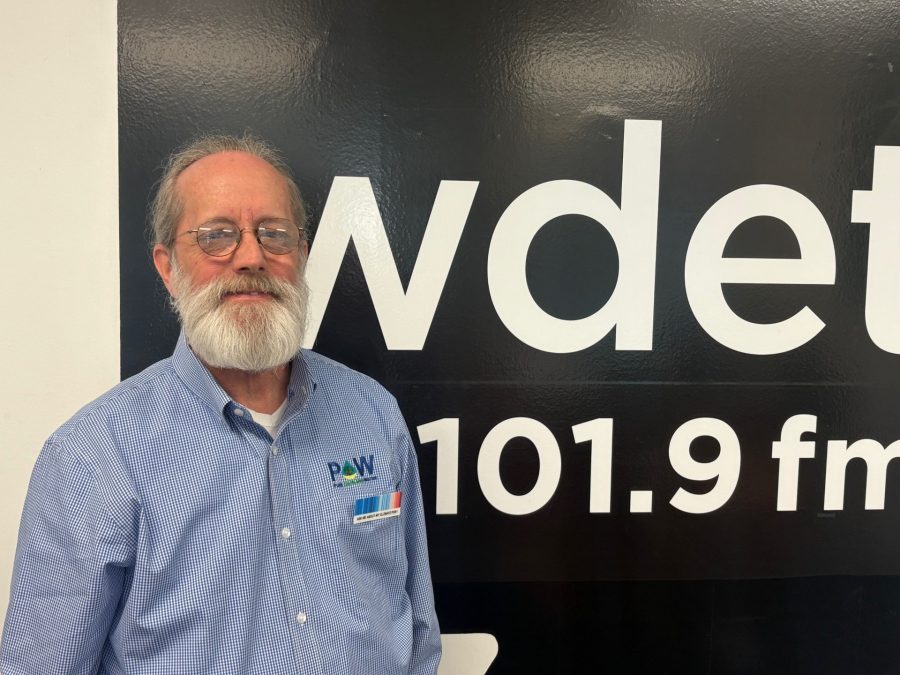 Oakland County Water Resources Commissioner Jim Nash visits WDET
“We used to do it with people looking at videos,” Nash says. “We’ve used AI and we can train it so (AI) can see things that people can’t see as fast.”
As for fears that enemies of the United States could use AI to attack municipal water systems, Nash says he is prepared.
“Oakland County has a very effective IT security team, and we do a lot to make sure our systems are secure,” he says. “We’ve never had a significant breach.”
Nature can mitigate flooding
AI is not the only challenge to managing stormwater. Heavy rainstorms in recent years have caused flooding and overwhelmed Metro Detroit’s sewer and drainage systems.
Nash says green infrastructure can help absorb that water and keep it out of sewers. Oakland County just finished a new stormwater project in Pontiac. He says some parks in the city would become muddy and useless after heavy rain.
“We’ve changed this using native plants, using all the features of green infrastructure to collect that water,” he says. “It’s a very aesthetically pleasing way of doing it.”
Oakland County also pays residents up to $2,000 to put green infrastructure such as trees, gardens, and rain barrels to absorb stormwater.
Nash says the annual stormwater summit promotes regional cooperation.
“Storm water does not follow political borders,” he says. “Where the water flows really matters and all the communities in Oakland County and regionally are working together.”
The summit takes place at Lawrence Technological University. Admission is $35.