
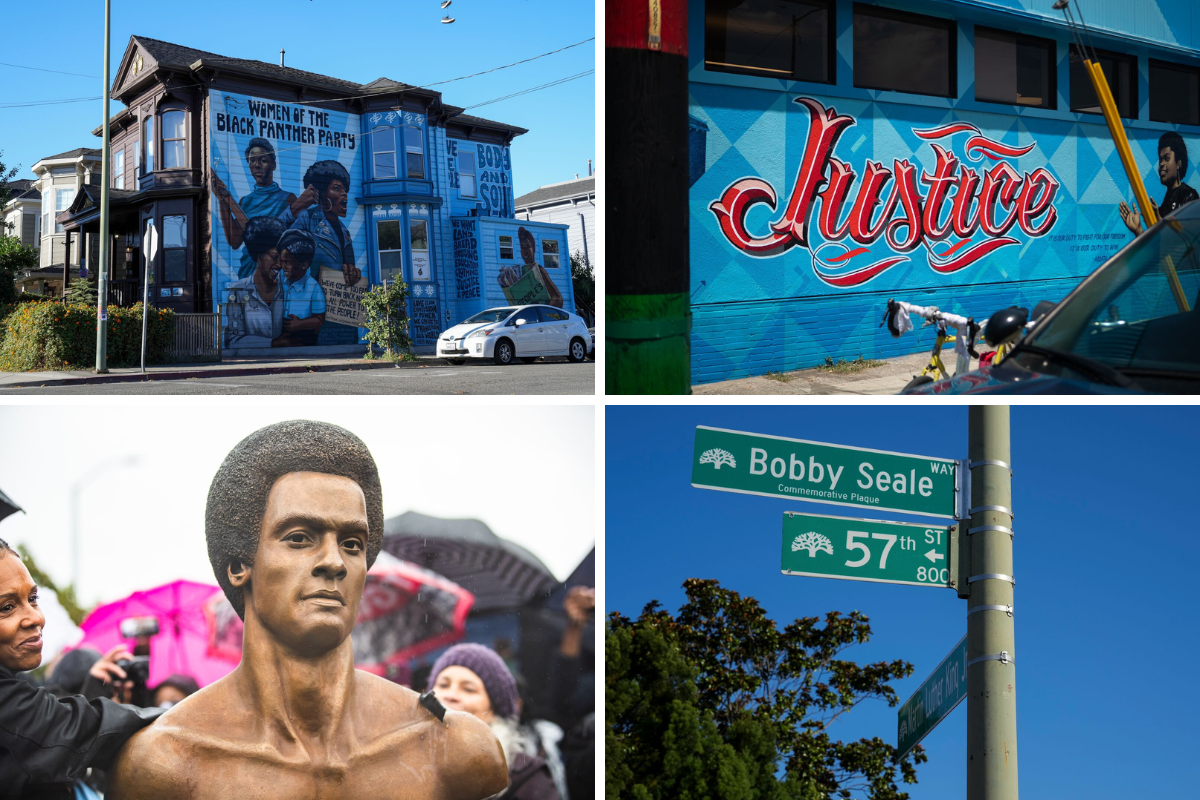
This October marks 60 years since the founding of the Black Panther Party, the revolutionary organization launched in Oakland by two friends from Merritt College, Bobby Seale and Huey P. Newton. That’s when the organizers released their influential Ten-Point Program laying out the party’s primary goals, which included the right to decent housing, free healthcare and an end to police brutality.
In the wake of an FBI campaign of infiltration and disruption, and facing internal financial and legal problems, the party dissolved in 1982. But the Panthers left an imprint on social programs and revolutionary thinking across the country and around the world, and have a storied history in the Town.
Here we offer a roadmap for a walking, cycling or driving tour of the Black Panther Party’s Oakland, guiding you on where to find the sites of historic party protests and programs; commemorations including murals and street signs; and the Black Panther museum. The list isn’t comprehensive — we’ve mostly avoided private residences, for example, or the sites where party members were killed. Some of what we’ve included are public locations, while others are now home to new businesses. Each helps give a sense of the Panthers’ history and legacy.
Downtown
Mural honoring Bobby Seale and Huey P. Newton
7th and Washington streets
Start near Old Oakland by visiting an interactive 30-foot-long mural that honors Newton and Seale, the Black Panther Party’s founders. The artists Timothy B., Kiss My Black Arts and Mali Byers painted the mural, teaming up with archivist Damien McDuffie, who created an augmented reality app, Black Terminus, to bring the painting to life. People who visit the site can download the app and point it at the mural to explore additional graphics and video. This isn’t the only Black Panther mural that Black Terminus brings to life; others include the Women of the Black Panther Party and the Seize the Time.
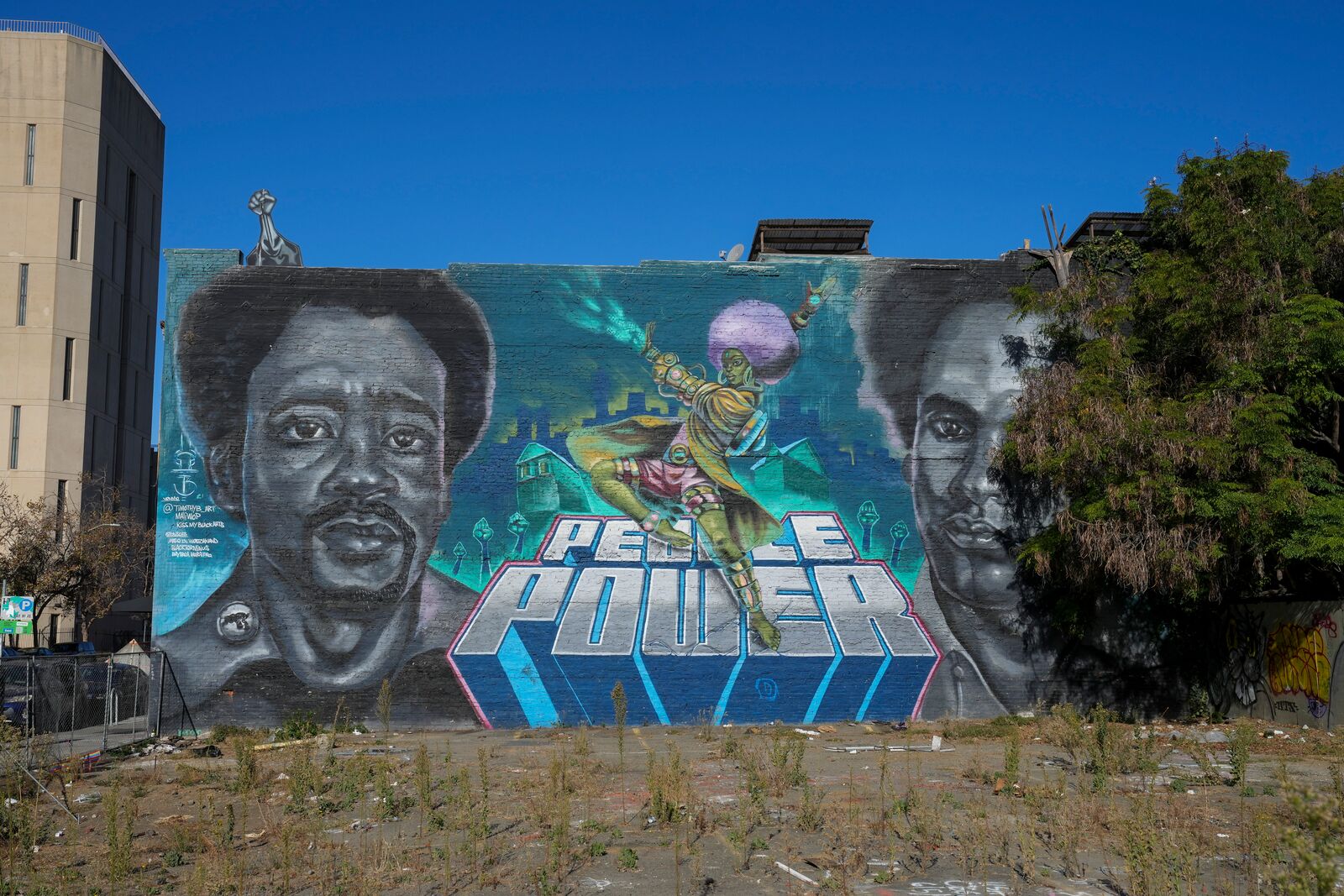 A mural honors Bobby Seale and Huey P. Newton at the corner of 7th and Washington streets. Credit: Godofredo Vasquez for The Oaklandside
Black Panther Party Museum
1427 Broadway
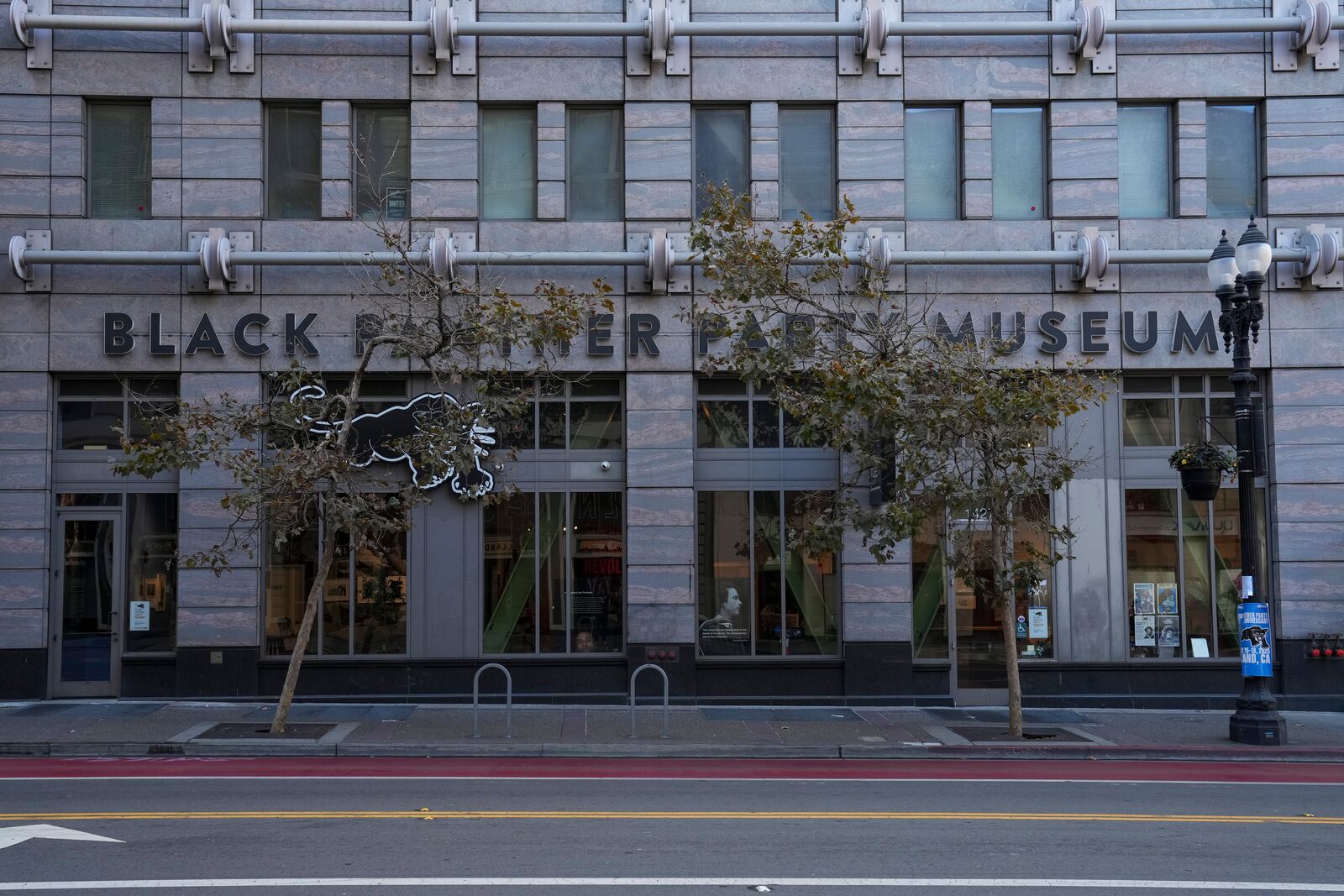 The Black Panther Party Museum in Oakland. Credit: Godofredo Vasquez for The Oaklandside
From the mural, walk up Broadway toward 14th Street to visit the museum, which opened its doors in January 2024. The museum is the vision of the Dr. Huey P. Newton Foundation, a nonprofit co-founded in 1995 by Fredrika Newton, a former Panther and Newton’s widow, and David Hillard, the party’s former chief of staff. The museum, led by Xavier Buck, has hosted dozens of community events. It’s open Wednesday through Saturday, 10 a.m. to 3 p.m., and entrance is free.
Black Panther Party Boulevard
Broadway between 14th and 17th streets
When you walk out of the museum, you’ll notice the latest landmark honoring the party. On Oct. 6, 2026, District 3 councilmember Carroll Fife introduced legislation to commemoratively rename this stretch of Broadway to honor the Panthers. The signs are scheduled to go up with a commemoration on Saturday, October 17, at 11:30 a.m..
Reneé C. Davidson Courthouse
1225 Fallon St.
Never miss a story. Sign up for The Oaklandside’s free daily newsletter.
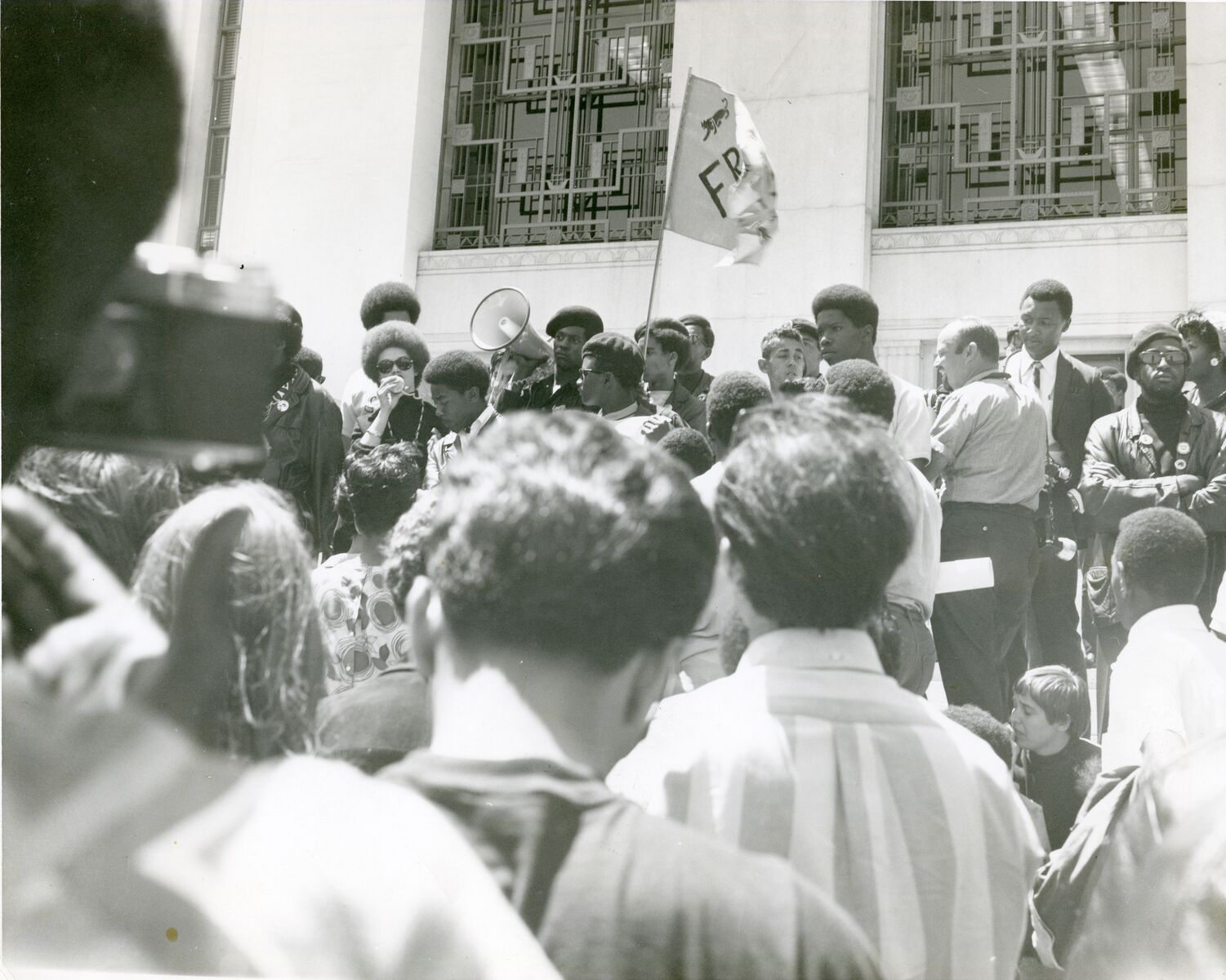 Kathleen Cleaver and members of the Black Panther Party hold a rally in front of Alameda County courthouse, circa 1960s. Credit: Oakland Post Photograph Collection, African American Museum & Library at Oakland, Oakland Public Library
Head down to 12th Street and go left seven blocks to reach the Reneé C. Davidson Courthouse. From 1967 to 1970, the Alameda County Courthouse was the site of “Free Huey” protests during the murder trial of Newton, who was accused of killing Oakland police officer John Frey. (Newton was convicted on the lesser charge of manslaughter, a conviction that was later thrown out.) At one such protest, on July 15, 1968, two dozen police officers forcibly removed Black Panthers and other activists from the courthouse steps. After his release from prison in 1970, Newton addressed thousands of supporters just steps away.
West Oakland
Women of the Black Panther Party mural
831 Center St.
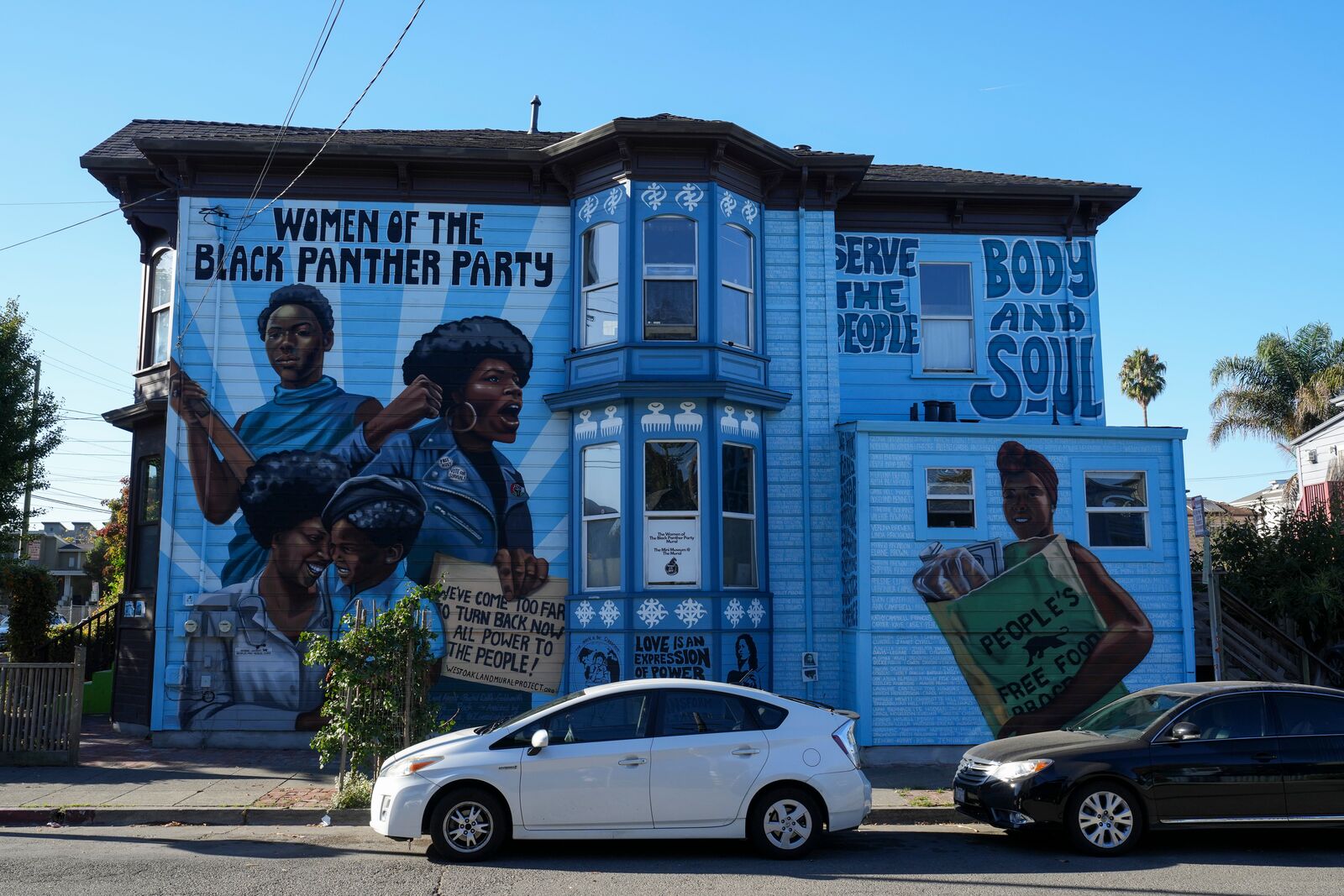 This large mural on the wall of a private home centers Black women engaged in voting rights, self-defense and health care work. Credit: Godofredo Vasquez for The Oaklandside
West Oakland, the historic home of Oakland’s Black community, is ground zero for Black Panther landmarks, including this mural on the side of a private home. In 2020, West Oakland resident Jilchristina Vest set out to bring more visibility to the contributions of Black women in Oakland, particularly the Black Panther Party members and volunteers who led many of the organization’s community survival programs — from free groceries to free breakfast programs — and accounted for an estimated two-thirds of the organization. Vest decided to use the side of her home facing 9th Street as a canvas for a mural. The large artwork by Rachel Wolfe-Goldsmith centers on three Black women engaged in voting rights, self-defense and health care work, reflecting three of the party’s founding principles.
Dr. Huey P. Newton Way
9th and Center streets
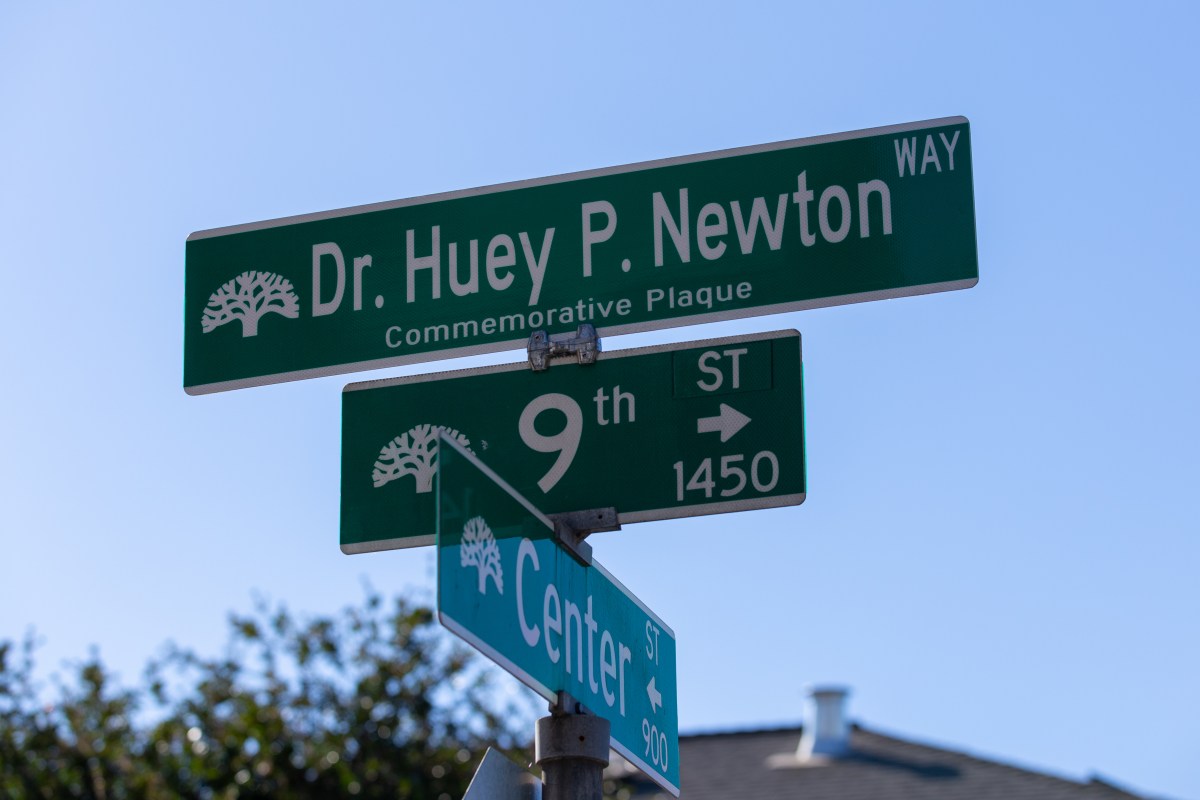 Dr. Huey P. Newton Way was designated in 2021 at the corner of 9th and Center streets in West Oakland. Credit: Godofredo Vasquez for The Oaklandside Credit: Amir Aziz/The Oaklandside
Go one block left on 9th Street to see the first Oakland street to be renamed to honor the Panthers. In the summer of 2020, then District 3 councilmember Lynette Gibson McElhaney introduced a resolution to rename this intersection after Newton, who died in 1989. In February 2021, residents, activists, city officials and community leaders gathered here to dedicate a three-block section of 9th Street as Huey P. Newton Way.
Dr. Huey P. Newton sculpture
9th Street and Mandela Parkway
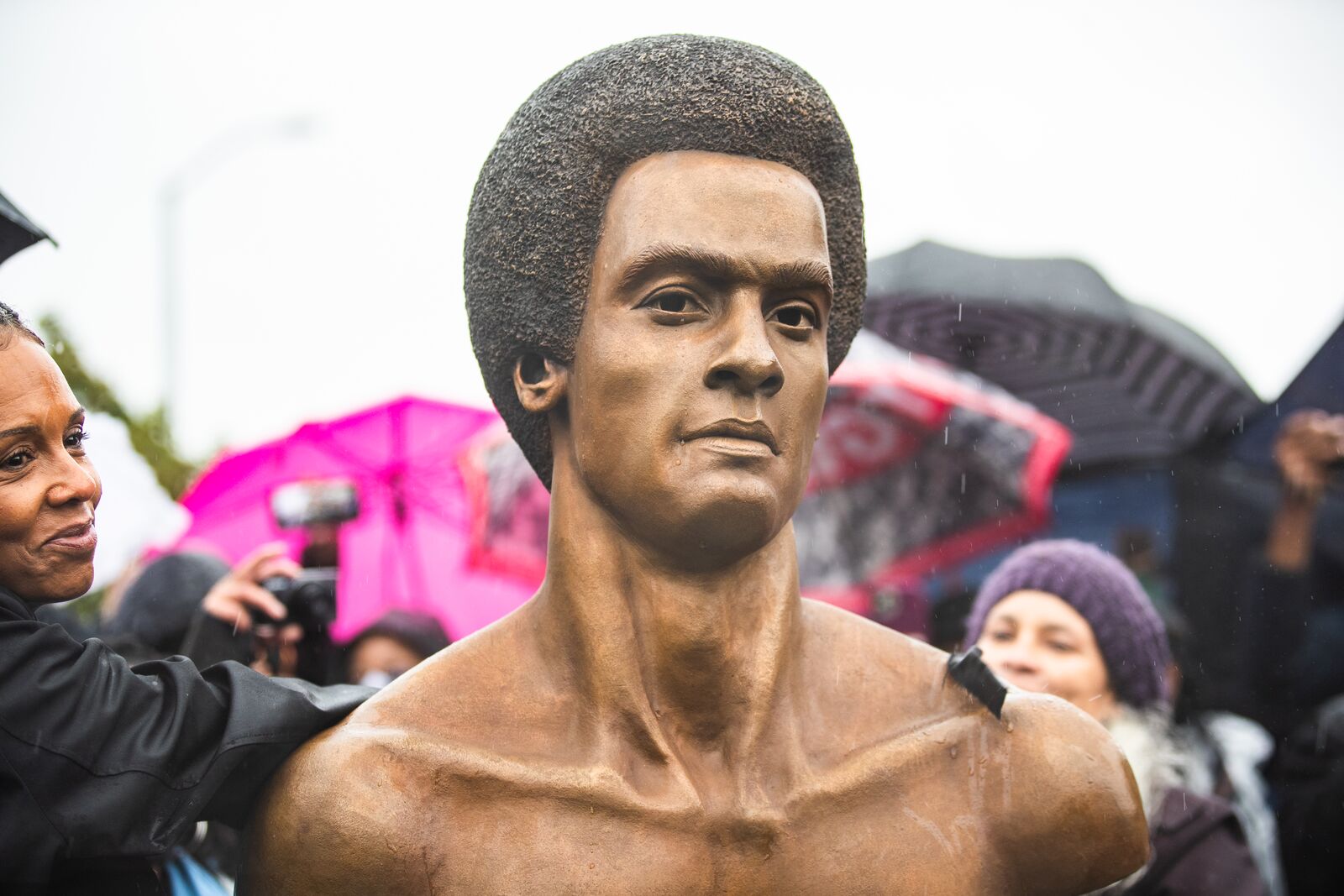 Artist Dana King unveiled her sculpture of Huey Newton as part of the Black Panther Party’s 55th anniversary celebration in 2021. Credit: Amir Aziz/The Oaklandside
Keep walking along 9th Street/Dr. Huey P. Newton Way toward Mandela Parkway to see a sculptural Panther tribute. In the fall of 2021, as part of the party’s 55th anniversary, the Dr. Huey P. Newton Foundation, led at the time by Fredrika Newton, unveiled a bronze bust of Newton created by artist and former KPIX reporter Dana King.
Untitled mural
7th and Wood streets
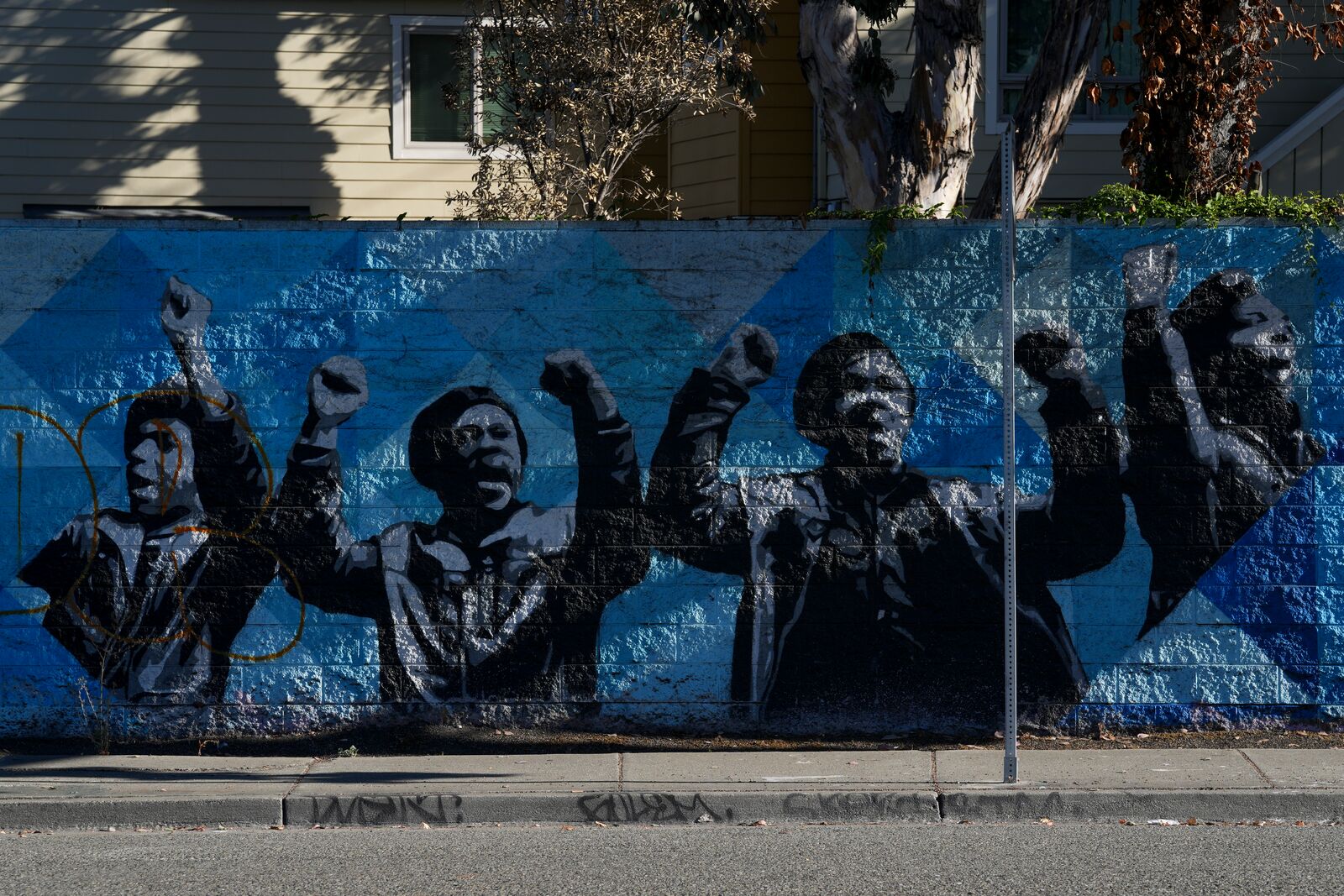 A Black Panther Party mural at the intersection of 7th and Wood streets. Credit: Godofredo Vasquez for The Oaklandside
Over in West Oakland, this untitled mural is tricky to access unless you are driving. It’s located off 7th and Wood streets, and there, right at the Interstate 880 entrance, you’ll see it. The photo-realist mural, one of over a dozen murals by Oakland artist Refa One, depicts party members wearing leather jackets and berets with their fists in the air. This piece is a collaboration between Refa, his son Madow Futur, Aeos One and Maliwop. Refa, founder of the AeroSoul art collective, has deep ties to the Panthers: Both of his parents were rank-and-file members, and his father, Ducho Dennis, was the party’s official photographer.
Serve the People mural
14th and Peralta streets
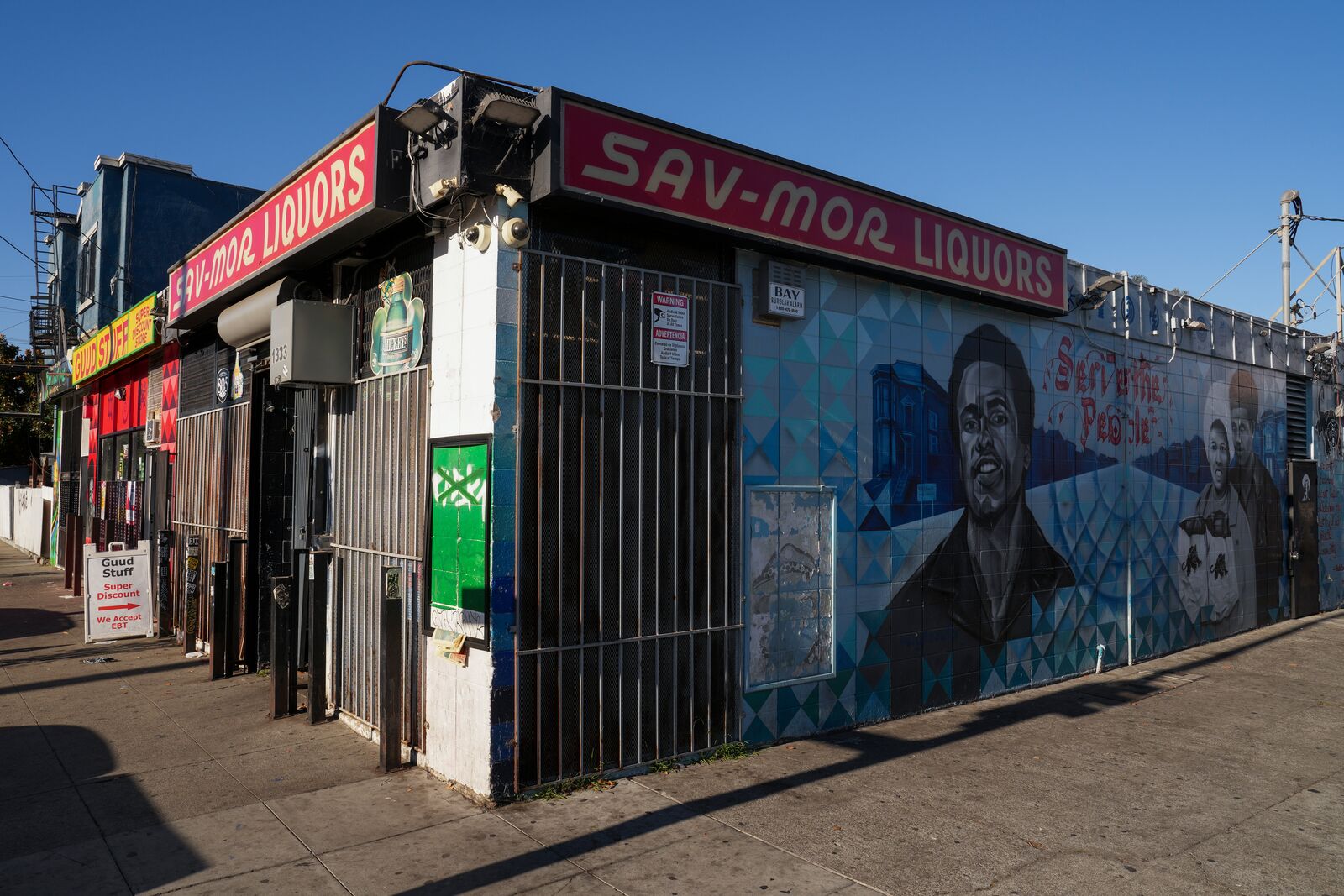 The first Black Panther Party mural in Oakland to be painted by Black people. Credit: Godofredo Vasquez for The Oaklandside
Head from 7th Street toward Peralta Street about six blocks for a glimpse of another of Refa One’s murals. In 2017, he joined forces with the artist Batsh Lo to produce the first Black Panther Party mural in Oakland to be painted by Black people. The mural on the exterior wall of Sav-Mor Liquors depicts Newton against a blue background with African Adinkra symbols along the top, next to the iconic Panther phrase “Serve the People.”
Bobby Hutton Grove
1651 Adeline St.
Walk up Peralta, then go right a few blocks, to reach DeFremery Park, the site of multiple Black Panther Party protests, gatherings and outreach programs. In 2016, then councilmember McElhaney introduced a resolution to rename a grove of trees at the park to honor Bobby Hutton, the first official member of the Black Panther Party, who was shot and killed by Oakland police in 1968 at age 17. The grove is located just west of 16th and Adeline streets.
Seize the Time mural
2601 San Pablo Ave.
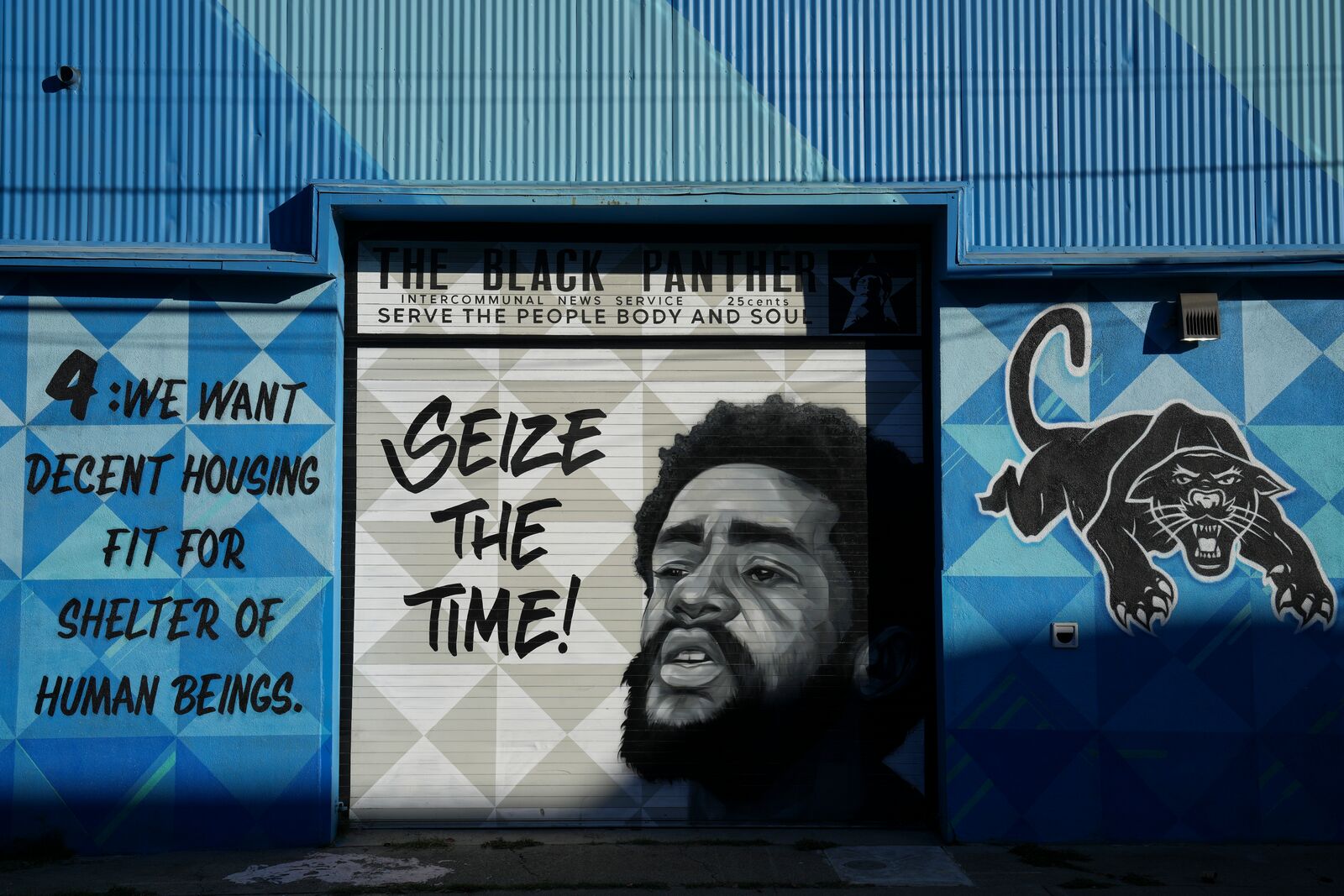 The Homeless Action Center commissioned the Aerosoul collective to cover its building with a series of community murals. Credit: Godofredo Vasquez for The Oaklandside
Your next stop, another mural, is almost a mile away; get there by going west on 18th Street and up Market Street to San Pablo Avenue. In 2021, the Homeless Action Center commissioned the Aerosoul collective to cover both sides of its building with a series of community murals. They are dedicated to the themes “Moms for Housing,” which honors the collective of Black women who occupied an Oakland home to fight for equitable housing in 2019; “Justice,” which depicts women of the Black Panther Party alongside a quote by Harlem party member Assata Shakur: “It is our duty to fight for our freedom. It is our duty to win”; and “Seize the Time,” the slogan of the party’s newspaper, which depicts Newton and Seale alongside one plank of the party’s 10-point platform: “We want decent housing for shelter of human beings.”
Site of the Free Breakfast Program
2624 West St.
Walk one block east on 27th Street to reach the site of one of the Panthers’ most ambitious community programs, which operated out of St. Augustine’s Episcopal Church. The Free Breakfast Program, launched in 1969, fed children before school for free so they wouldn’t go hungry. On its first day, the Panthers fed 11 children with a menu consisting of chocolate milk, eggs, meat, cereal and fresh oranges. By the end of the year, the program was feeding 20,000 children in cities across the country, five days a week. The program helped to put pressure on the federal government to expand its own lunch assistance plan across the country. By 1975, Congress made the school lunch program permanent. St. Augustine later merged with Trinity Episcopal Church; the combined congregations now hold services at 521 29th St.
Community Food Market mural
3105 San Pablo Ave.
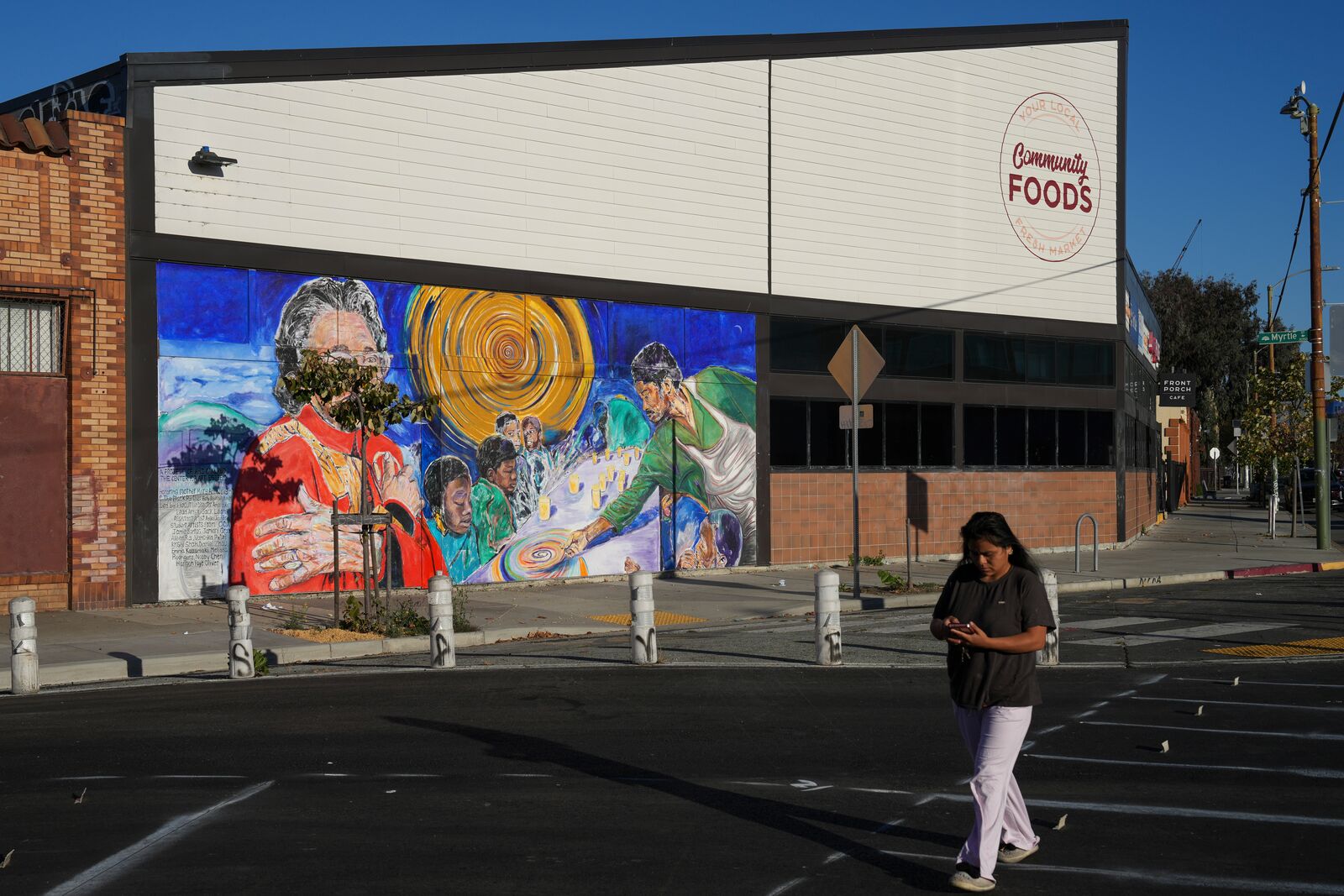 A mural honors Mary Ann “Mother” Wright, an activist who fed West Oakland residents for over three decades and pays tribute to the Black Panther Party’s free breakfast program. Credit: Godofredo Vasquez for The Oaklandside
Return to San Pablo Avenue, and about four and a half blocks north you’ll see another mural. In 2022, artist Jack Leamy collaborated with the Center for ArtEsteem and Community Vision to create this mural on the wall of what was then Community Foods, a crowd-funded grocery store that opened in 2019 and shuttered in 2022. The mural honors Mary Ann “Mother” Wright, a West Oakland activist who fed West Oakland residents for over three decades until her death in 2009, and pays tribute to the party’s free breakfast program.
North Oakland
The former Kasper’s Hot Dogs
4521 Telegraph Ave.
Huey P. Newton grew up a few blocks away from the former hot dog joint and frequented it with his family and other party members. The food spot shuttered in 2003. In January 2026, the funky triangular building reopened as Winky Dinky Dogs. A few years earlier, the Temescal Roots Project began developing the idea of a permanent art installation adjacent to this building to honor the party’s legacy; several artists submitted proposals and Oakland artist Shomari Smith was commissioned to do the installation, work that is still pending.
A Panther stoplight
55th and Market streets
Start in North Oakland at 55th and Market streets to witness a very early example of the Panthers’ lasting local impact. One of the party’s first community safety initiatives was a June 1967 campaign for a street light at this intersection, which had been the site of several pedestrian accidents. Meanwhile, Panther members began acting as crossing guards, safeguarding children as they went to and from what was then Santa Fe Elementary School. By that August, the traffic light was installed. Look up, and you can see a commemorative plaque honoring this initiative on the pole.
First Black Panther Party office
5618 Martin Luther King Jr. Way
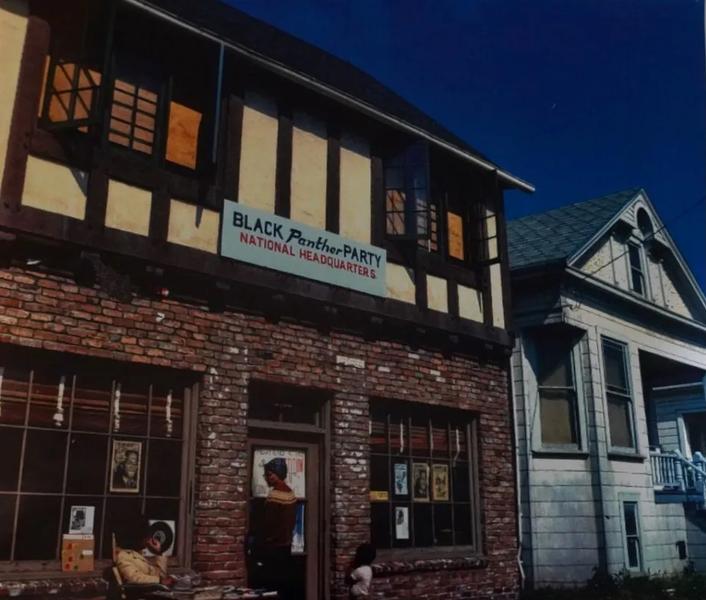 An image of the Black Panther Party’s national headquarters on Martin Luther King Jr. Way, then Grove Street, in North Oakland. Credit: courtesy of the archives of Billy X. Jennings
Go east two blocks on 55th Street and then turn up Martin Luther King Jr. Way a block and a half. Here, on New Year’s Day 1967, just a few months after being formed, the Black Panther Party opened the organization’s first office on what was then called Grove Street. This HQ became the hub of party activities. The office was famously shot at by Oakland Police on Sept. 10, 1968. In 1996, long after the party disbanded, Oakland rapper and community activist Kim Cloud opened All Good Bakery on the site, where he displayed Black Panther memorabilia, including original copies of The Black Panther newspaper and a copy of the Party’s Ten-Point Program. In 2022, in the face of plans to redevelop the site, community members sought to preserve the building as a historical landmark, but an analysis conducted by an Oakland preservation architect found that it did not meet the threshold for preservation. The bakery shut its doors in January 2026.
Bobby Seale Way
57th Street and Martin Luther King Jr. Way
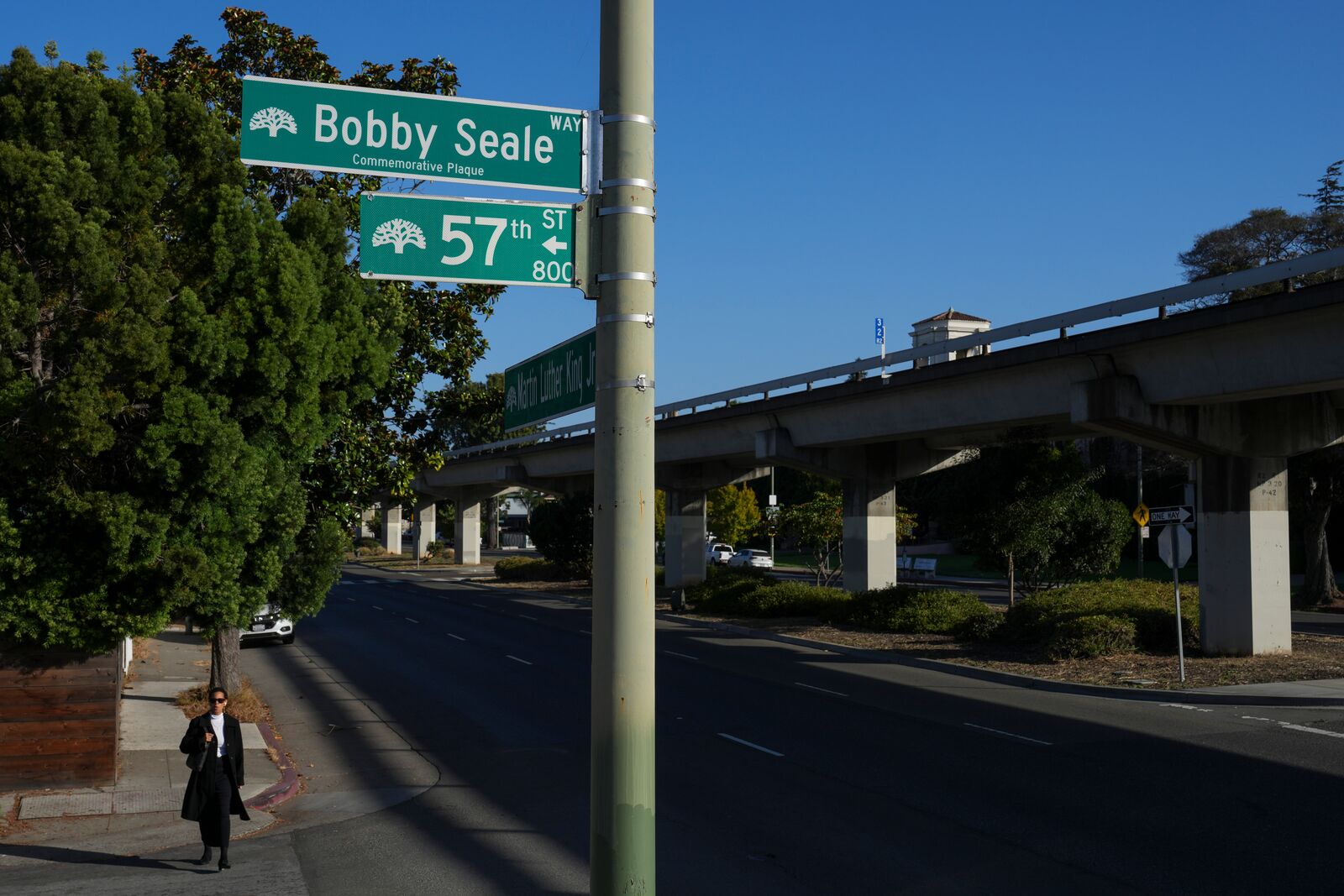 The Bobby Seale Way commemorative plaque is seen on the intersection of 57th Street and Martin Luther King Kr. Way. Credit: Godofredo Vasquez for The Oaklandside
Just a block and a half up MLK Way is Oakland’s second Black Panther Party street sign. In April 2025, District 1 councilmember Zac Unger introduced a resolution honoring Bobby Seale for his contributions to the Black Panther Party and his commitment to social justice. On October 22 of that year, Oakland city officials recognized Seale by designating the date as Bobby Seale Day and renaming the intersection of Martin Luther King Jr. Way and 57th Street as Bobby Seale Way.
Former site of Merritt College
5714 Martin Luther King Jr. Way
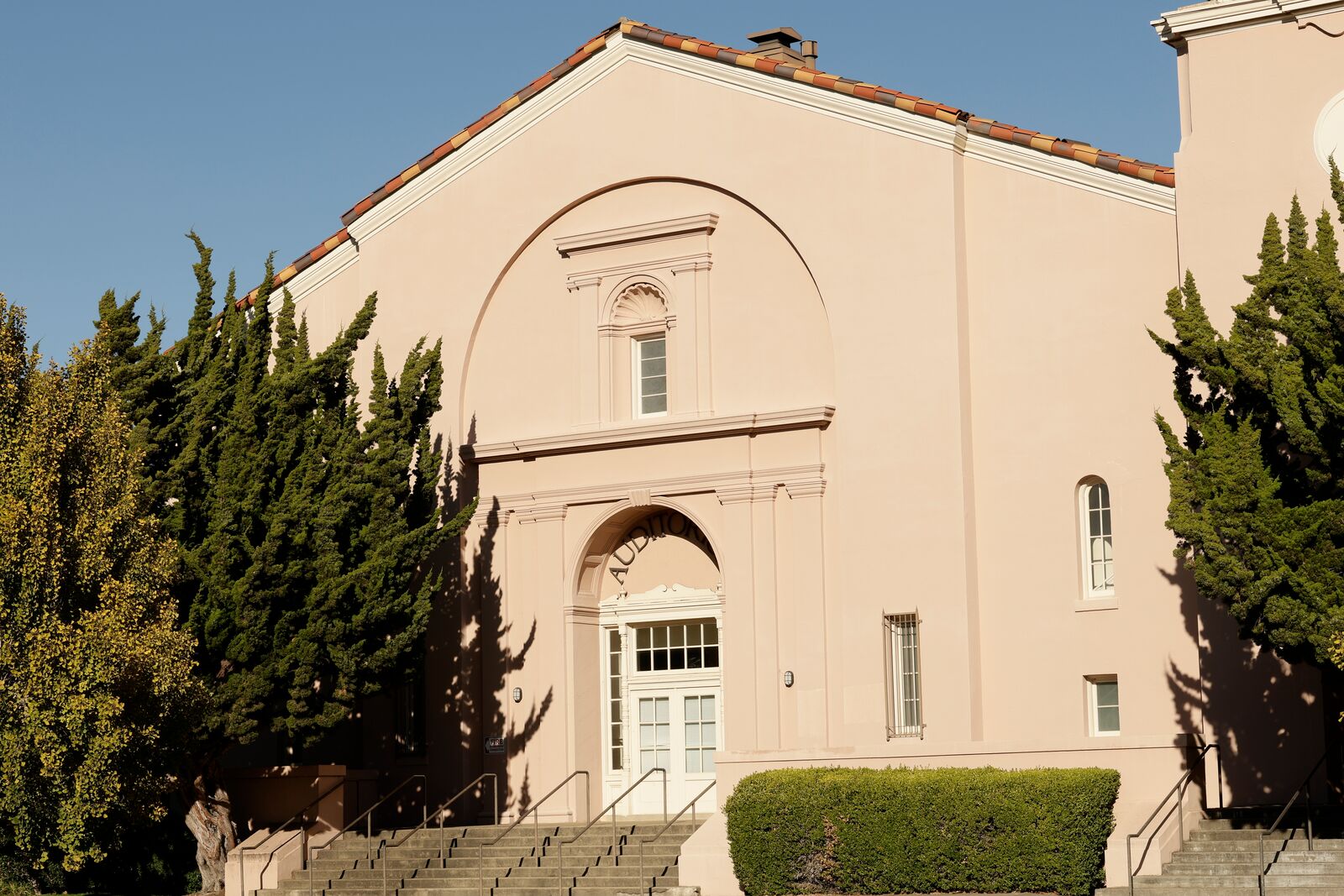 The site on Martin Luther King Jr. Way, then Grove Street, where Merritt College was located when Bobby Seale and Huey P. Newton were students there in the 1960s. Credit: David M. Barreda for The Oaklandside
From that corner, you can see the former site of Merritt College. The school is now based in the Oakland hills, but it was previously located here, near to one of Oakland’s largest Black communities. Seale and Newton met as college students at the then tuition-free community college in the early 1960s, when the campus was the home to a burgeoning Black radical student movement that produced the first Black Studies department in the nation. Newton was 19 when they met, and Seale, who lived a few blocks away, was 25. The site now houses the North Oakland Senior Center and a campus of UCSF Benioff Children’s Hospital.
East Oakland
The site of the Oakland Community School
6118 International Blvd.
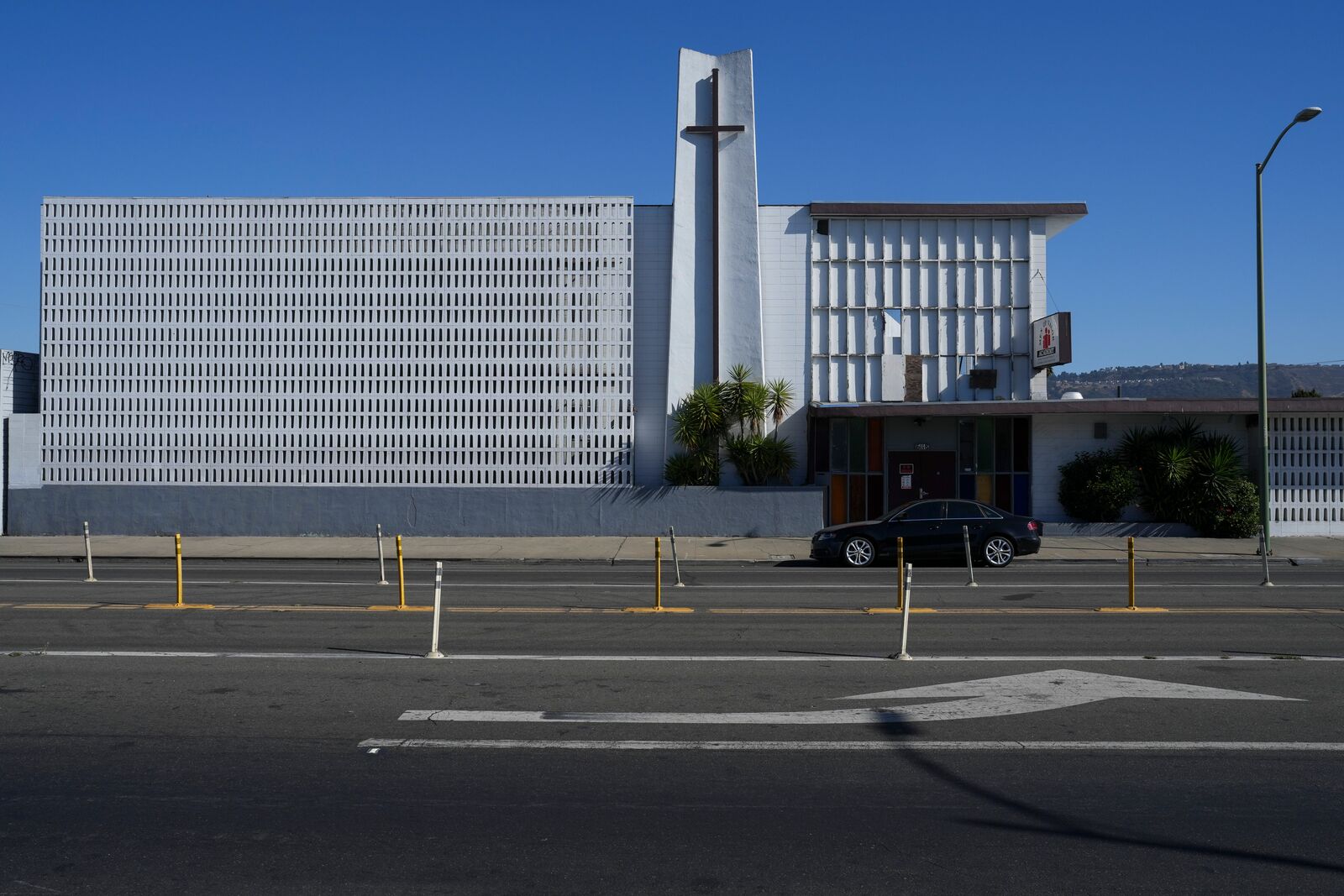 Full Acts Gospel Church, where Men of Valor Academy is located, the site of the party’s Oakland Community School. Credit: Godofredo Vasquez for The Oaklandside
The school opened in 1973 and operated for nearly a decade, until 1982. At the innovative liberation school, students learned the standard subjects like math and history, but were also taught health and mindfulness, community building and Black history, and were offered a radical political education. In addition, the school offered students three meals and transportation to and from home. Former Black Panther Party member and activist Ericka Huggins served as the school’s director. The site is now home to the Men of Valor Academy, a re-entry program for formerly incarcerated men.
Greenman Field
1324 66th Ave.
In 1972, the Panthers hosted one of its largest community service events, the Black Community Survival Conference. The three-day event was kicked off at what was then called Oakland Auditorium, now the Henry J. Kaiser Center for the Arts, and the second day took place at Greenman Field in Carter-Gilmore Park on 66th Avenue; the final day was held in Berkeley. The conference included a party giveaway of 10,000 bags of groceries, free sickle cell anemia tests and a voter registration drive.
Final site of the national headquarters
8501 International Blvd.
The party moved from its original headquarters in West Oakland to this building in the heart of the Town’s Black Cultural Zone in 1972. The new headquarters remained open through 1980. This location is now home to the Allen Baptist Church, where Newton’s funeral took place in 1989.
…We rely on your support
Hey, we know that most readers only scan a headline and a couple of paragraphs. Thank you for reading to the end of our story. Since you clearly appreciate the in-depth approach we take in reporting the stories that matter to Oaklanders, please consider chipping in to supercharge our newsroom.
“*” indicates required fields