
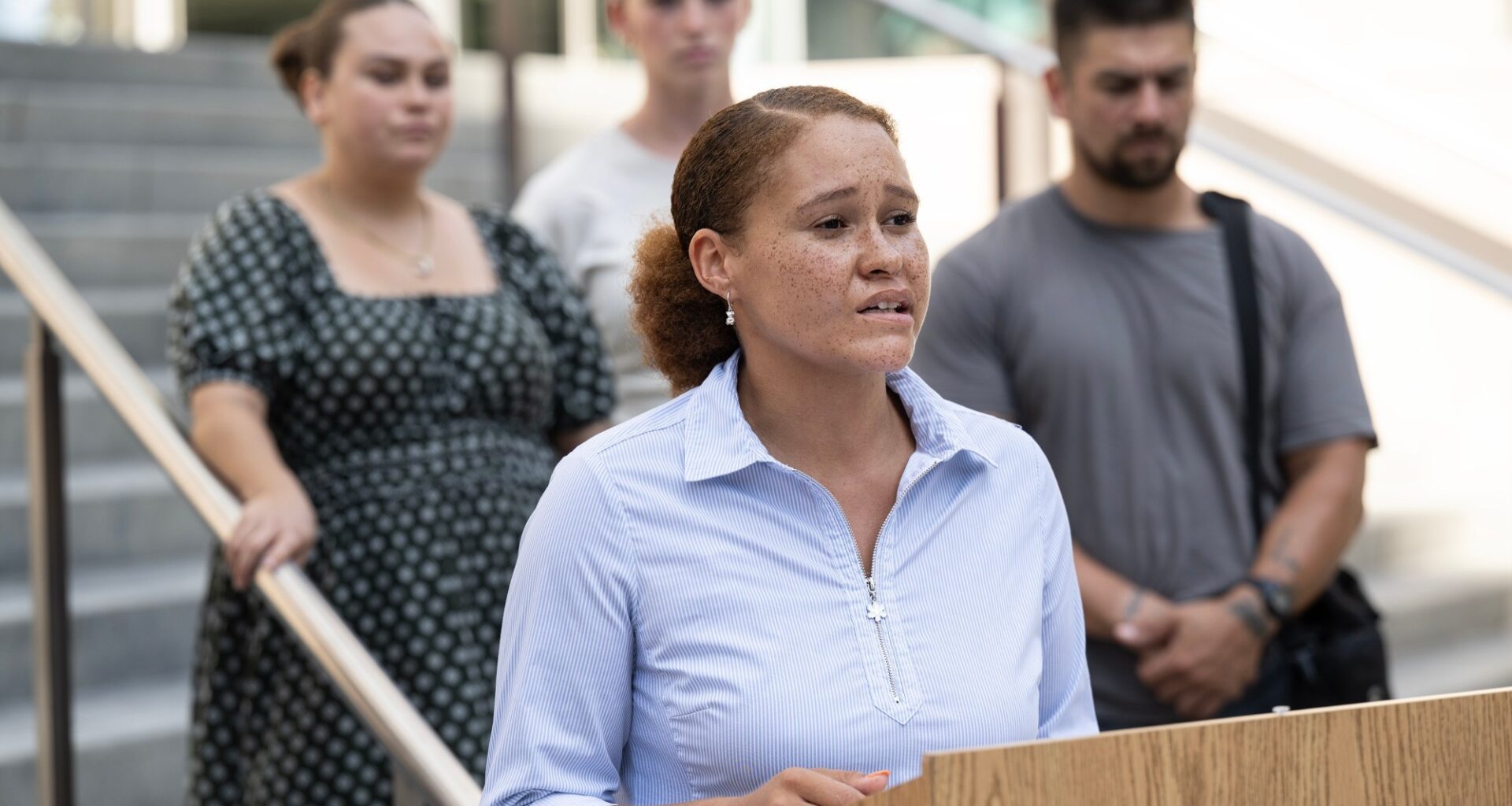
Three years ago, members of the civilian board that monitors the Santa Cruz County juvenile hall sought to eliminate potential conflicts of interest by moving the commission from underneath the court and its probation department to the county’s chief administrative office.
“We were getting less and less administrative support,” said the Rev. Beverly Brook, a jailhouse minister from Santa Cruz and longtime member of the local Juvenile Justice and Delinquency Prevention Commission.
But the county didn’t address the potential conflict, Brook said. “We just got a no.”
In June in Mendocino County, the civilian board that provided oversight of the juvenile court and detention facility there was disbanded.
Too many members of that county’s Juvenile Justice and Delinquency Prevention Commission failed to attend meetings, according to a court official who said she hopes the panel can be reconstituted by early next year.
“We could never get a quorum to show up,” said Kim Turner, the Mendocino County Superior Court executive officer. “After three consecutive meetings, our decision was to dissolve the commission as it stood.”
In San Diego County late last month, the Juvenile Justice Commission announced that it was temporarily pausing its oversight operations.
It also came after the San Diego Superior Court withdrew all administrative support for the volunteer board. As a result, the citizens panel is no longer inspecting detention facilities, monitoring the juvenile court or reporting its independent findings.
The decision left the court and the county at odds over who is responsible for ensuring oversight.
Court officials say the Juvenile Justice Commission is a county responsibility and that state law does not require the court to support it. County government officials say the oversight panel is a program of the court under court jurisdiction.
The “JJC is a court commission, not a county commission, and we do not have any further information as to the commission’s status or budget,” county spokesperson Tammy Glenn said in a statement.
The Judicial Council of California — the administrative and policymaking body of the state courts that San Diego court officials asked for legal guidance — said San Diego County is incorrect.
“It is clear from the plain language of these provisions that the Legislature intended JJCs to be county entities,” concludes the confidential, non-binding legal opinion issued last November.
“If the JJCs were instead court entities, a county board of supervisors would not unilaterally control creation of regional JJCs,” the opinion added. “Instead, it would be a decision for the participating courts.”
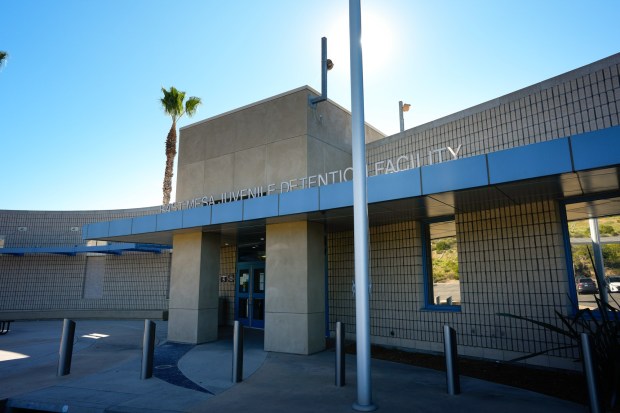 The main visitors entrance to the East Mesa Juvenile Detention Facility in San Diego on Jan. 9, 2026. (Nelvin C. Cepeda / The San Diego Union-Tribune)
While the civilian oversight boards are mandated by law, local officials are given broad discretion in how they are organized.
Some rural parts of the state have juvenile justice commissions that serve more than one county. Many operate under a county probation department; others are programs of the local court.
The impasse between San Diego County and its Superior Court leaves the second-largest county in California without a functioning civilian board dedicated to independent oversight of its juvenile justice system.
While circumstances in California counties differ, the consequences may be similar: Civilian boards charged with overseeing juvenile courts, detention centers and foster homes have been compromised, disempowered or all but eliminated.
The lapses in oversight have alarmed juvenile justice advocates across the state.
Experts say inspections of youth detention facilities, scrutiny of juvenile courts and other work performed by the commissions are critical to protecting at-risk children and upholding high standards.
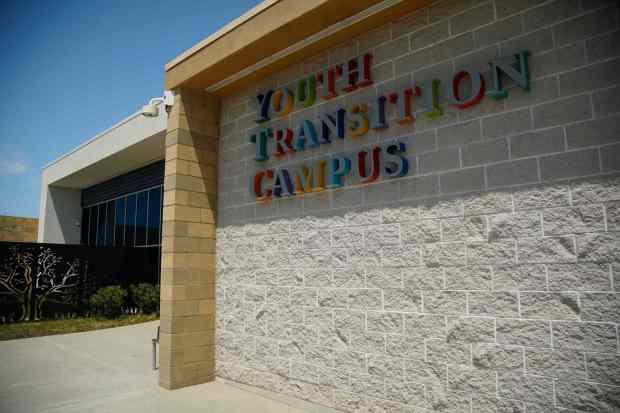 The main entrance of the San Diego County Probation Department’s Youth Transition Campus in Birdland on Thursday, July 18, 2024, in San Diego. (Alejandro Tamayo / The San Diego Union-Tribune)
“It is deeply disturbing and concerning to see public institutions withdraw their support without working to find a solution that preserves this critical oversight,” said Jessica Heldman, a University of San Diego law professor who also serves as executive director of the Children’s Advocacy Institute.
“At a time when serious concerns have been raised about the treatment of youth in government care, we should be strengthening independent oversight — not allowing it to disappear,” Heldman said.
State stays silent
The California law that governs county juvenile justice programs is the Welfare and Institutions Code.
Among other responsibilities, the law establishes multiple levels of oversight of youth jails, with annual inspections by the court, state regulators and a local commission of civilian volunteers.
But it also calls on civilian boards to monitor the court and how it manages the young people brought before judges.
“It shall be the duty of a juvenile justice commission to inquire into the administration of the juvenile court law in the county or region in which the commission serves,” the code states.
San Diego Superior Court spokesperson Emily Cox said the court will keep meeting its legal obligations, even with the commission’s work now suspended.
“Juvenile court judges have separate statutory inspection responsibilities, which are not at issue here and the court will continue to fulfill those responsibilities as required by law,” she said by email.
Glenn, the San Diego County spokesperson, said the region’s youth detention facilities will still be monitored by any number of outside organizations.
“The Probation Department remains under the oversight of the Board of State and Community Corrections, Office of Youth and Community Restoration, juvenile court and Citizens’ Law Enforcement Review Board,” she wrote. “The facilities are also inspected annually by county building, fire, health and school inspectors.”
Caitlin Radigan, the former foster youth who has chaired the San Diego County Juvenile Justice Commission for years, hopes court and county officials resolve the dispute soon.
“We remain committed to working toward a prompt resolution that allows the commission to safely resume its responsibilities,” she said. “Our priority remains ensuring that independent oversight exists for the young people whose care, safety and rights are affected by these systems.”
San Diego court officials formally withdrew their support July 1, after commissioners refused to amend their bylaws and grant the court more say in how the panel’s reports and policy recommendations are presented.
The oversight board paused its work on Sept. 29, when an existing liability insurance policy shielding the volunteers from civil lawsuits lapsed.
Presiding Judge Michael S. Groch has since declined interview requests.
Cox said the decision was made because the court could no longer jeopardize its neutrality on juvenile justice issues by supporting commission findings it may not agree with.
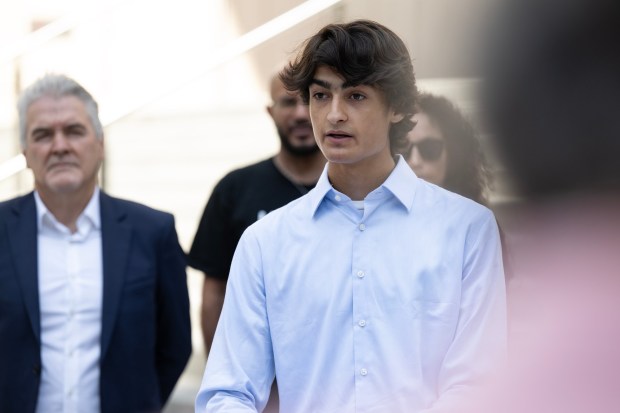 Nikhil Plettner Booker, 17, youth commissioner on the San Diego County Juvenile Justice Commission, speaks during a press conference in front of the San Diego County Superior Courthouse on Friday, Aug. 28, 2026, in San Diego. (Luke Johnson / The San Diego Union-Tribune)
Commission members said the court’s demand that the commission change its bylaws could keep commissioners from issuing statements or findings that might rub court officials the wrong way.
State officials have not weighed in on the stalemate between the county and the court.
The California Office of Youth and Community Restoration, which was created specifically to achieve better outcomes for young people caught in the juvenile justice system, did not respond to requests for comment from The San Diego Union-Tribune.
The California Board of State and Community Corrections, which oversees adult and juvenile criminal justice across California, said the youth oversight panels are responsible for conducting inspections and sending their findings to the state.
But the state board “does not have investigative authority over local matters, nor does it direct or intervene in county or court decisions regarding the operation or funding of their commissions,” spokesperson Jana Sanford-Miller said by email.
‘Inherent ineffectiveness’
The suspension of civilian oversight of the San Diego juvenile courts and detention facilities comes at a particularly precarious time for youth justice.
San Diego County is facing hundreds of lawsuits filed by former wards and foster youth who say they were sexually abused in custody years ago, and the Probation Department is the subject of an ongoing investigation by the state Attorney General’s Office into allegations of civil rights abuses in juvenile halls.
Conditions inside youth facilities in other parts of California are no better, according to a report issued last month by the San Francisco nonprofit Center on Juvenile and Criminal Justice.
The study examined juvenile justice practices following the state’s 2023 decision to close its youth prisons. The sweeping policy shift moved hundreds of teenagers out of state custody and into local lockups and treatment facilities.
Researchers say the change has not gone well.
“While this shift has allowed many youth to stay in smaller facilities closer to home, it has complicated the work of monitoring youths’ safety and well-being across a sprawling system,” the study said.
“Because of the inherent ineffectiveness of housing youth in congregate, prison-like facilities, numerous county facilities are experiencing the same kinds of violence and abuse that once plagued state institutions,” it added.
Among many recommendations in the Center on Juvenile Criminal Justice report: Expand detention facility access to promote family visits, independent oversight and community service providers.
“There is an urgent lack of services and safety in many of California’s 88 juvenile halls, camps and ranches,” the study found.
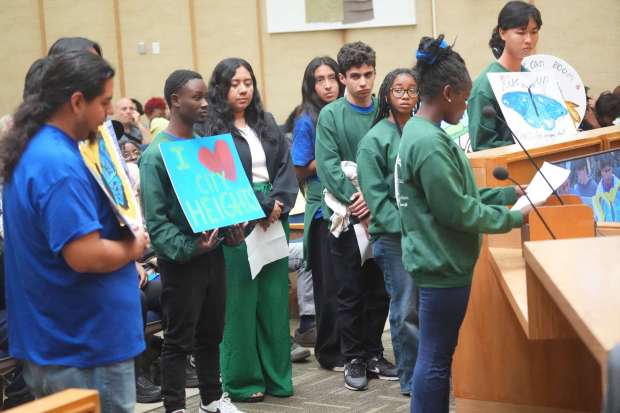 Members of Mid-City CAN hold placards when they speak during a city budget hearing at City Hall on Wednesday, May 27, 2026, in San Diego. (Michael Ho / For The San Diego Union-Tribune)
Diana Rodriguez Ross is the executive director of the Mid-City Community Advocacy Network, or Mid-City CAN, which runs youth programs that work to better engage and empower young people.
She said officials are often too quick to incarcerate troubled teenagers. She wants San Diego County to create a Department of Youth Development and direct more resources to support young people before they enter the criminal justice system.
“If you do have to detain children, it should be done with dignity, transparency and accountability,” she said. “There really has to be an entity like the Juvenile Justice Commission to hold the system to account.”
Rodriguez Ross said allowing the civilian oversight board to lapse or pause sends the message that neither court or county officials are prioritizing the needs of young people in the community, Rodriguez Ross said.
“What is going on that this has happened?” she asked. “What is preventing them from meeting their legal mandate?”
‘Problems stay hidden’
Meredith Desautels is another advocate for youths involved with the justice system, and she has been watching developments between San Diego County and its Superior Court.
The directing attorney at the nonprofit Youth Law Center in San Francisco said she is deeply concerned that the conflict between county and court officials has led to the loss of civilian oversight of the juvenile justice system.
“Whatever the disagreement, the priority really has to be the safety of children within their care,” Desautels said. “We would urge the county and superior court to resolve their differences and come up with a collaborative agreement.”
Desautels said juvenile justice commissions are legally required bodies that play critical roles in protecting youth safety.
“San Diego County’s position is disappointing — and not shared by most counties that I’m aware of,” she said. “County leaders should be stepping up to ensure that the commission can fulfill its independent oversight mandate.”
After the state closed the Division of Juvenile Justice, formerly known as the California Youth Authority, and handed responsibility for juvenile detention to counties, Johanna Rasmussen created a group to represent the interests of civilian volunteer commissioners.
The California Juvenile Justice Commissioners Collaborative shares information with commissioners across the state in order to improve oversight of juvenile courts and the probation departments that serve young people.
Rasmussen said both courts and counties can benefit from independent monitors to hold them to account.
“California legislators recognized the inherent conflict in asking systems to police themselves and deliberately created court-appointed citizen commissions to inspect juvenile facilities, ask difficult questions and provide an independent voice,” she said.
The founder of the commissioners collaborative also serves on the San Mateo County Juvenile Justice Commission and Delinquency Prevention.
Five years ago, Rasmussen said, youths in San Mateo County custody slept without pillows, had no cups to drink from and had to wait more than a year for prescription eyeglasses.
“We’ve come a long way, but serious problems remain,” she said.
Among other challenges, Rasmussen cited dozens of sex-abuse lawsuits pending against her county, youth detention centers that she says do not comply with prison rape laws and months-long waits to see a dentist even when teenagers are in pain.
“The legislature created juvenile justice commissions to put independent eyes inside these facilities,” she said. “When that oversight is compromised, problems stay hidden, youth are harmed, public safety suffers and taxpayers are left with the bill.”
In San Diego County, the juvenile justice commissioners recently completed their last formal responsibility — an inspection of the San Pasqual Academy, a residential school campus for foster youth that could be closed as soon as next year.
With no support from the Superior Court, however, they have no means of publishing their findings.