
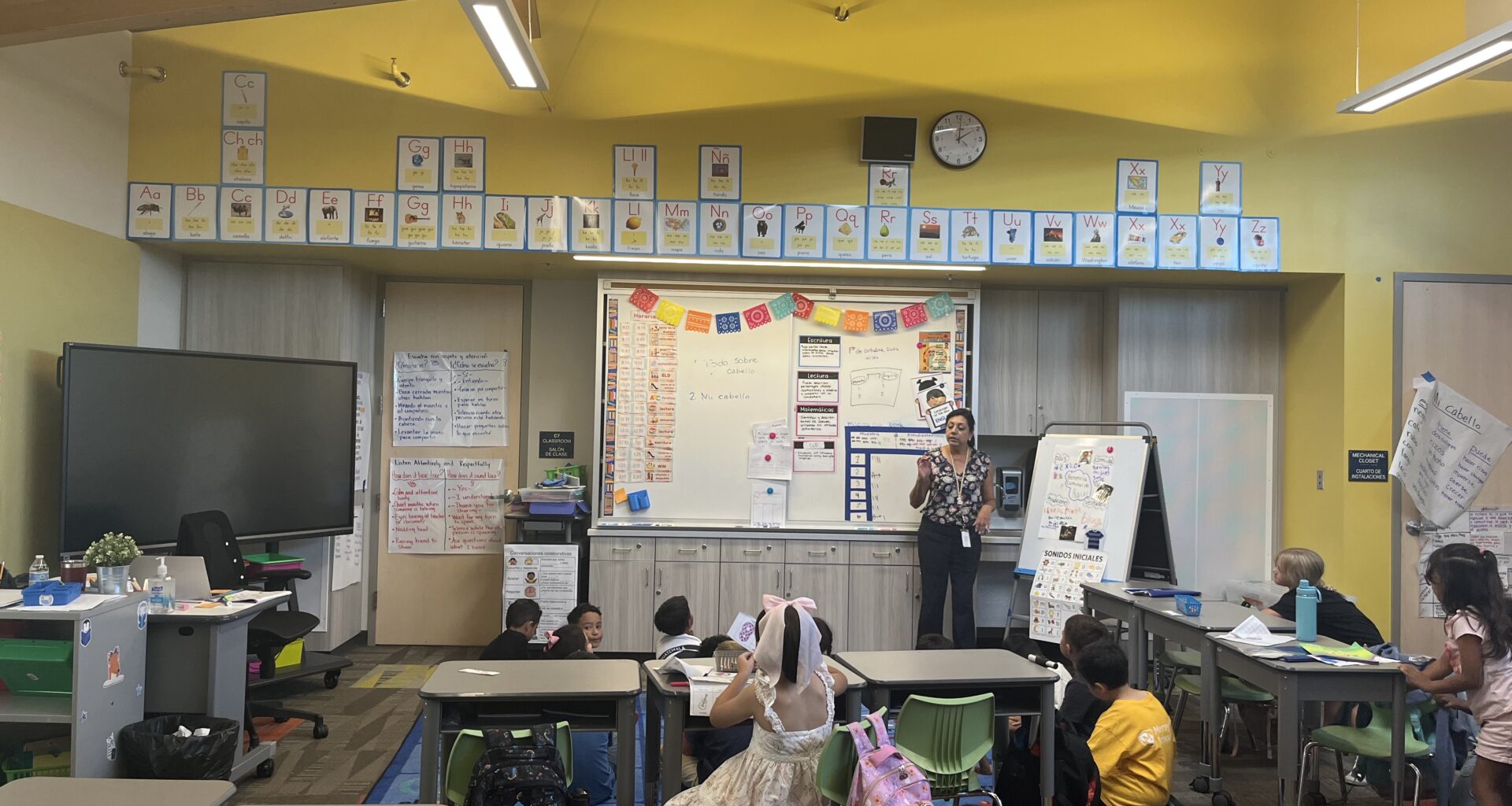
At Heredia-Aariaga Dual Immersion School, the front office has floor-to-ceiling windows looking onto a freshly cemented parking lot. Each classroom wing at Natomas Unified’s newest school has a gathering area — punto de encuentro — for group work.
“These are all classrooms on the sides,” Natomas Unified Superintendent Robyn Castillo explained. “They can do enrichment activities, collaborate. It’s a really nice space where they can do things together.”
The school opened four years ago and is the district’s sole language immersion school that voters paid for through the $172 million school bond Measure L in 2018. But this year, the school district is asking for $300 million dollars more through school bond Measure D.
Castillo said Heredia-Aariaga is still adding more grade levels, and there are other campuses like Inderkum High School in the district that need attention. The high school campus needs a new roof, and improvements to its aging HVAC system.
“ One thing that is really important to us is all kids across the district have equitable access to school facilities that meet our standard,” Castillo said. “If it’s an older school we need to make sure we bring it up to that standard.”
Natomas Unified is just one of six school districts this year in the Sacramento Valley region asking voters to help pay for school upgrades and construction costs through a school bond measure.
These include:
Center Joint Unified School District
Los Rios Community College District
Galt Joint Unified High School District
Rocklin Unified School District
Winters Joint Unified School District
Voters in each district will decide whether to approve the funding. With the Nov. 3 election closing in and the region paying more attention to school finances, CapRadio sought to answer a few questions about these measures, including: What is a school bond? Who pays for them? How can voters trust the money will be used appropriately?
We spoke with experts and critics to give voters a better understanding of what they could be signing up for.
What is a local school bond?
A school bond is a mechanism that districts use to pay for upgrades and construction projects on campuses, which are generally referred to as capital improvement projects. These range from HVAC upgrades and roofing repairs to replacing grass with turf on sports fields. They are paid for by increasing property taxes and they must be approved by voters.
Julien LaFortune is a senior fellow at the Public Policy Institute of California (PPIC) who studies school bonds. He told CapRadio to think of everything that’s not currently an instructional expense.
“Often this is school buildings or extracurricular spaces, athletic facilities, some form of other kind of infrastructure like buses, as well,” LaFortune said. “Most fundamentally it’s about district needs. A lot of districts have aging facilities.”
Legally, the funding can’t go towards things like hiring teachers or day-to-day operations.
LaFortune said the reason districts seek out bond funding is because this kind of construction requires a huge amount of capital that isn’t readily available.
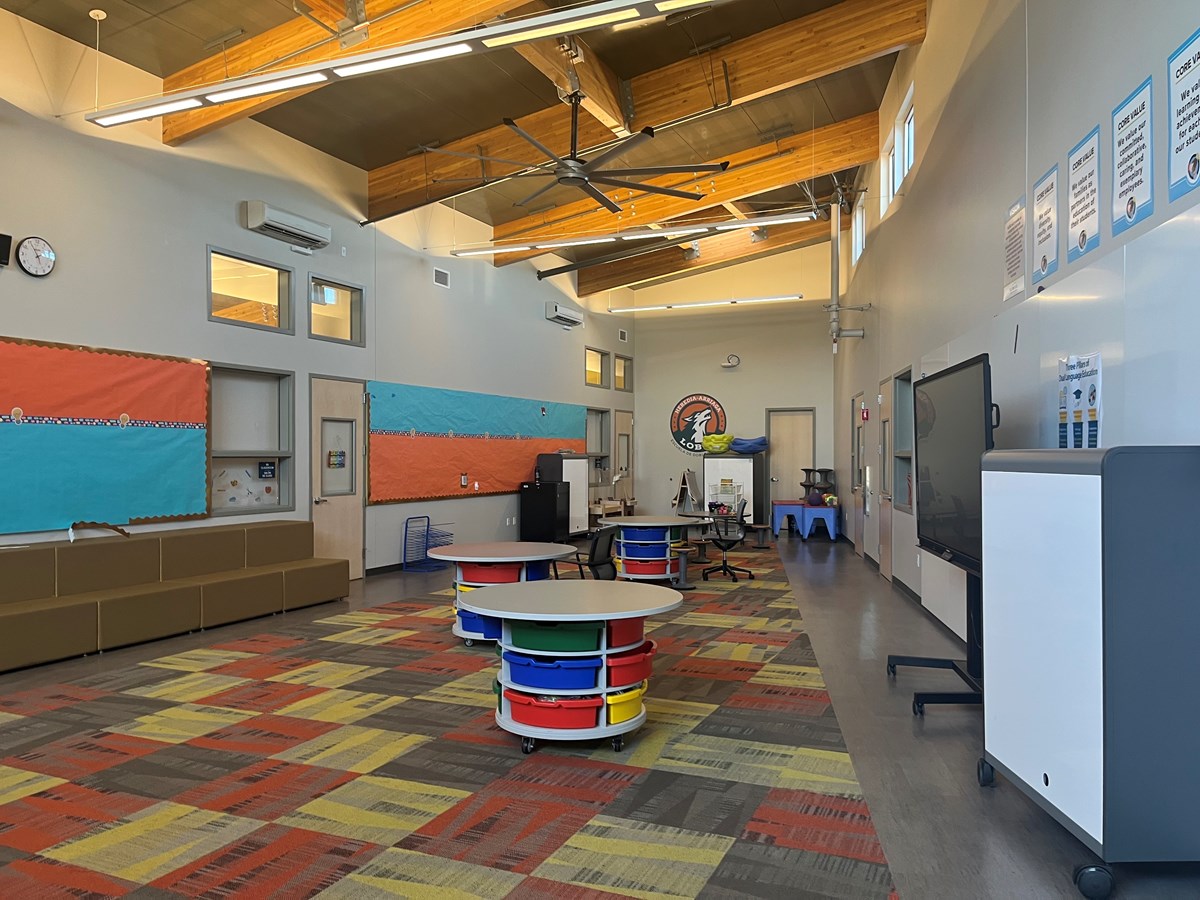 A classroom wing at Heredia-Arriaga School on October 1, 2026. Each wing has a gathering space for students to do group activities.Riley Palmer/CapRadio
“Districts need a lot of money up front to pay for them, and how they’ll do that is they will put a bond on the ballot,” he said. “It gives a way for a district to take out debt and use that debt to finance these large capital improvements.”
School bonds in California need a majority 55% approval to pass, which LaFortune noted is stricter than other states.
“It’s actually more stringent to pass a school bond in California than it is elsewhere,” LaFortune said. “It (has) raised concerns that we might, if anything, be underinvesting.”
Historically in California, local school bonds have a high passage rate. Data from the PPIC shows that in 2024, the passage rate of local school bonds was 77%.
How do they work?
School bonds most commonly fall under the category of what is called a general obligation bond. These type of bonds allow governments to use its taxation power to raise money.
LaFortune notes that there are different ways to finance bonds, but a general obligation bond is the most common type when it comes to funding school infrastructure.
If a school bond passes, property owners are responsible for paying for them through annual property taxes.
How much depends on the bond, the district and the property. In the case of Natomas Unified, they are asking for $60 per $100,000 of assessed property value. This means that if a home is worth around $600,000, this would equal $360 in added taxes a year.
“District voters will vote to approve that bond, and basically it’s an agreement that voters and residents are going to pay back the bond with proceeds from raising their property taxes over a specified period of time,” LaFortune explained.
In most cases, bonds take between 20 to 30 years to pay off and there are already previous school bonds on people’s annual tax bill.
LaFortune said many districts try to be strategic when placing bonds on the ballot.
“If it’s seen as a potentially high turnout election, the electorate might be a bit more positive in terms of the propensity to support these types of education expenditures through high property taxes,” he said. “That is also something a district will consider.”
Natomas Unified’s Superintendent Castillo said that her district is aware of the concern of overburdening taxpayers and that they take their financial stewardship seriously.
“We have two bonds that were just completely paid on in August, and they’re falling off the tax roll,” she said. “With this one coming on, it keeps the tax rate essentially the same for our taxpayers and that was intentional.”
While school bonds pertaining to infrastructure are more common, school districts do ask voters to approve tax measures for other reasons that are funded differently.
Sacramento City Unified has put tax Measure M on the ballot, which asks voters to help fund special education through a flat $95 parcel tax for each property in the district. It includes some possible exemptions for property owners on social security or those on disability.
How can voters trust the money is being used appropriately?
Most school districts have what is called a facilities master plan that details how they plan to maintain school buildings and amenities long term.
“Often when they’re floating bonds to be passed, it’s funding specific projects that are from this master plan,” LaFortune said.
Natomas Unified lays out its masterplan to account for new growth because the district’s population is expanding. This is not the case for other districts in Sacramento, such as Sacramento City Unified, which is grappling with declining enrollment for a host of factors.
Districts that pass school bonds are required to form an oversight committee to track bond revenue spending.
Castillo said Natomas Unified’s bond committee regularly checks in to ensure that the money is being spent in the way it was intended. She also said the district does a good amount of outreach to ensure community members get their voices heard.
“ It’s a whole community process, but making sure that if we identify projects in the bond to be completed, that we do complete those and really try to get the most bang for our buck with the dollars that we have available,” Castillo said.
What do critics say?
Jon Coupal is the head of California’s Howard Jarvis Tax Association. Their main goal is to protect Californians from excessive taxation.
Coupal said his organization has rigorous standards on whether they will support or oppose a bond measure. One criteria is whether the oversight committee actually has teeth or not.
“If that oversight committee is merely a rubber stamp for what the school district wants to do, that is a bad sign,” he said. “But if it is an oversight committee that the school board listens to, takes their advice and makes them part of the process, that’s very helpful.”
Coupal said he is skeptical of additional funding for school facilities given the trend of declining enrollment statewide.
When asked about Natomas Unified, Coupal noted that some newer communities in California have other property taxes that go towards public infrastructure.
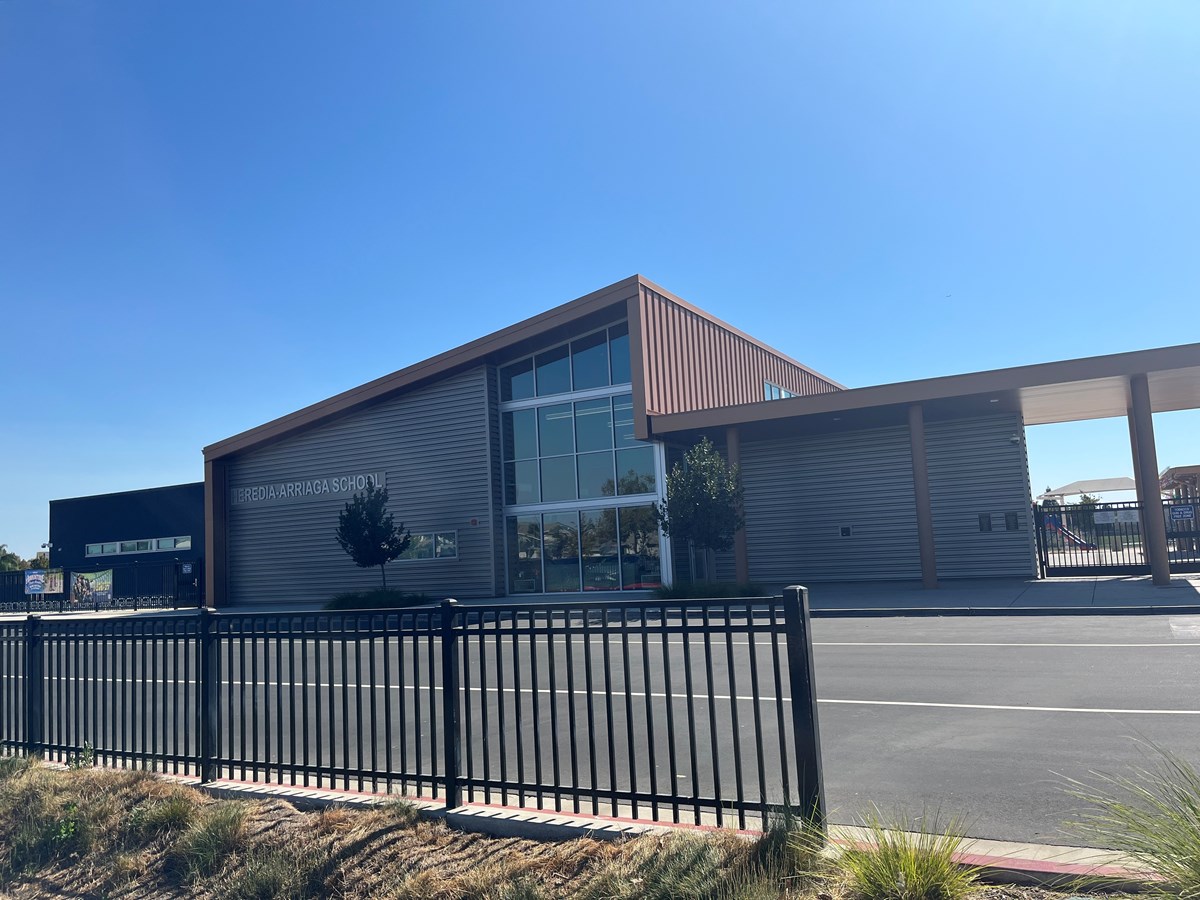 Heredia-Arriaga School in Natomas Unified School District on October 1, 2026. The school is the district’s newest, and their only dual immersion school.Riley Palmer/CapRadio
“If you’re in an area with a whole bunch of new development, then you’ve got a lot of school impact fees that the developers pay for,” he said. “Just because it’s replacing an existing bond doesn’t mean it’s necessary.”
Coupal said his organization only supports school bonds that go towards brick and mortar projects.
“Bond financing is appropriate for expenditures that are going to last 25 to 30 years,” he said. “Bond proceeds should never be used for ongoing programs or for items that aren’t going to last more than a couple years.”
Ultimately, Coupal said districts need to make their case, especially as more and more Californians struggle to get by.
“This is why people are leaving the state of California, the tax burden has a lot to do with it,” he said. “I think there are some headwinds for any institution or any government entity seeking to get approval for new taxes.”
What should residents know before voting on school bonds?
Regardless of where critics and stakeholders fall on more taxes for school bonds, PPIC’s LaFortune encourages voters to look at their individual district and its history of delivering on projects.
“Voters are holding them accountable for that, if not over the short run, definitely over the long run,” he said.
LaFortune also said voters should pay attention to what districts say the money is going towards, and what are the specific needs.
“Is that something that seems like it’s needed in this specific context of the district and are they making a good case for that?” he asks.
Then, LaFortune urges people to look at the bigger picture.
“How are students doing in these schools, what are the environments like, and can the community afford to pay for these improvements in the built environment,” he said.
At the end of the day, LaFortune said the research shows that school districts that were able to pass bonds had better student outcomes compared with those that failed to pass them.
“They were able to deliver large improvements in their facilities and students do better over the subsequent years in terms of their test scores and other academic metrics,” he said. “It definitely matters for student outcomes.”
The last day to vote in this year’s midterm election is November 3.
Follow us for more stories like this
CapRadio provides a trusted source of news because of you. As a nonprofit organization, donations from people like you sustain the journalism that allows us to discover stories that are important to our audience. If you believe in what we do and support our mission, please donate today.