
California’s fifth Climate Change Assessment was released on Monday, detailing what rising temperatures could mean for the ocean, the Golden State coastline and residents’ safety.
The state began publishing climate assessments in 2006, reviewing new and existing research to map risks California faces region by region. The latest edition projects that average temperatures could climb between 3.5 and 4.3 degrees Fahrenheit by 2050, and the state’s snowpack could shrink by nearly 40% by mid-century.
Abby Edwards, the Senior Deputy Director of the Governor’s Office of Land Use and Climate Innovation, said the goal of the assessments is to give Californians the best available science.
“It’s really, for me, about being clear-eyed about the future, so we can make decisions today for the future that we want to create,” Edwards said.
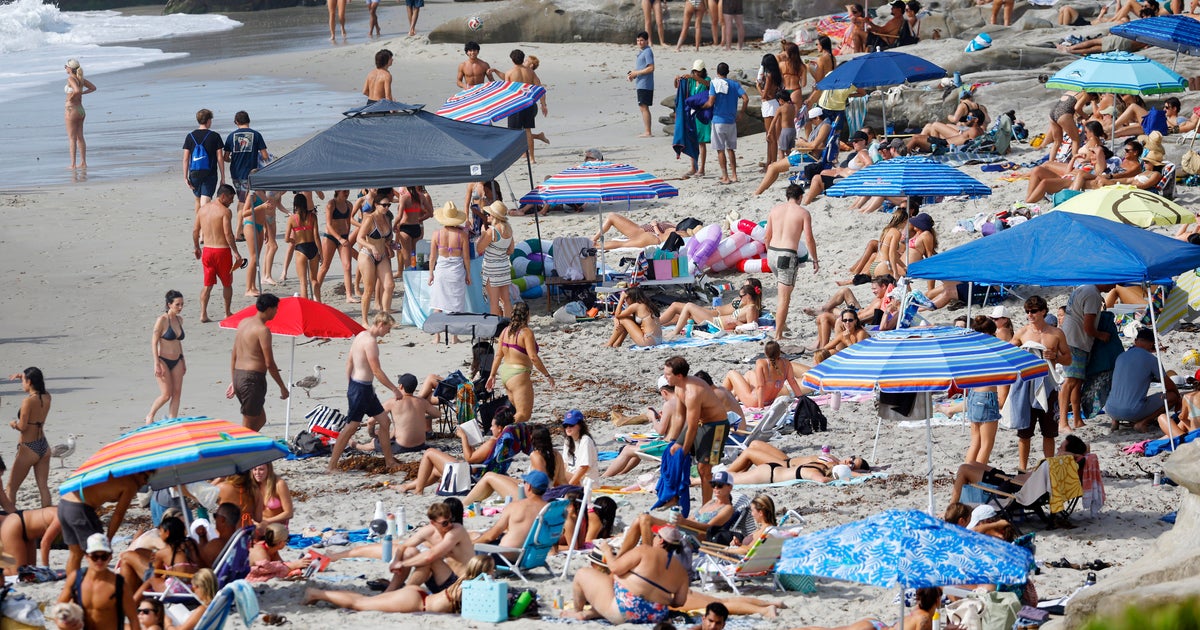
The report warns that without action, 24-to-75% of California’s beaches could disappear seasonally or permanently, depending on how high the sea rises. Highly developed parts of Southern California could face some of the worst losses.
“What we know, by and large, is the state is going to get hotter,” said Pramod Khargonekar, the lead editor of the report. “There are going to be more wildfires and droughts and variations in precipitation. All of this is coming to us.”
Southern California has already seen how climate risks build on each other. In the last few years, the region has seen a sweltering summer, a late start to the rainy season and powerful Santa Ana winds that set the stage for the devastating Palisades and Eaton fires, which killed dozens of people and destroyed more than 16,000 structures.
“We are used to thinking of hazards as standalone, so we worry about wildfires, but we don’t worry about what can happen if there is wildlife and then there is flooding,” Khargonekar said. “So, this compounding, in a way, kind of magnifies the impact of individual events.”
Over the last 30 years, people have started about two-thirds of California’s wildfires, but the report says that climate change is further increasing the risk with drier fuel, longer fire seasons and more days of dangerous fire weather. The report also projects that wildfire smoke could cause more than 5,000 extra deaths a year by 2050, the largest increase of any state.
The report models several emissions scenarios and calls its worst case unlikely.
“This intermediate scenario is still within reach,” Edwards said. “Every inch that we are mitigating in terms of climate emissions is hugely important.”
On Tuesday, more than a thousand people, including tribal leaders and officials from local governments, the state and nonprofit organizations, are expected to be in Sacramento for the first-ever Resilient California Summit, a three-day event that begins with the assessment’s findings and turns to imagining the future California wants. By the end of the summit, officials are expected to begin making decisions on how to reach that end goal.
More from CBS News