
LONG BEACH, Calif. — More than 1,600 animal and plant species in the United States are listed as endangered or threatened under the Endangered Species Act, including the Southern Resident orca.
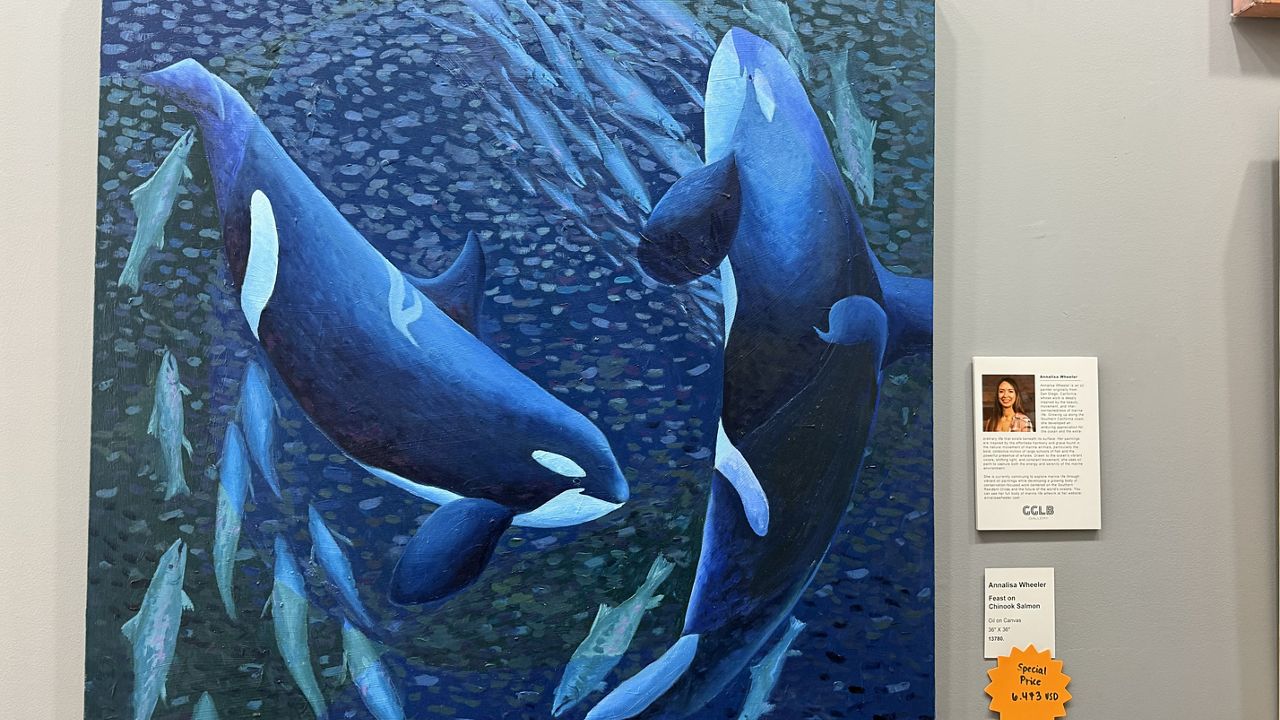
In Laguna Beach, a San Diego-born artist is hoping to shine a light on the endangered killer whale and the threats they face through her oil painting.
While the species is found along the Pacific Coast from southeast Alaska to central California, they spend most of their time around Southern Vancouver Island and Washington state.
Annalissa Wheeler’s Southern Resident orca series is currently on display at the GGLB Gallery in Laguna Beach.
Through her oil paintings, she hopes to create an emotional connection with these whales.
“I hope they see something worth fighting for,” said Wheeler, a San Diego-born artist. “When they see that these creatures have a possibility of not existing and going extinct, especially with the Endangered Species Act and some of those protections being compromised recently, I think they will see something worth saving or worth supporting.”
Recent changes to the Endangered Species Act under the Trump administration could negatively impact threatened and endangered species, including the Southern Resident killer whale, according to UCLA Environmental Law Professor Alejandro Camacho.
One change is the removal of the regulatory definition of the word “harm.”
“That would sort of take out the whole any kind of habitat-based harm, which has been the primary way the Endangered Species Act has prohibited harm to species. Habitat loss is the primary driver of harm to species. Most listed species depend on habitat on nonfederal land,” Camacho said.
A coalition of 21 attorneys general, including California AG Rob Bonta, is pushing back. They filed two lawsuits challenging recent changes, including the harm rule.
“Unlawful rollbacks that would result in irreversible habitat damage and species declines and potentially extinctions,” said California Attorney General Rob Bonta during a September news conference.
Washington Attorney General Nick Brown is also co-leading this effort.
“The federal government’s attempt to gut the endangered species act threatens the habitats of orcas, sockeye salmon, and other endangered species that are part of our economy, culture, and way of life,” said Washington Attorney General Nick Brown in a September news release.
After finalizing the harm rule change in July, Interior Secretary Doug Burgum defended the move.
“That [previous] approach turned routine activity into a regulatory trap, drove up costs that impacted people’s lives, and expanded federal authority beyond what Congress intended. This action restores common sense, respects private property, provides much-needed certainty for landowners and follows the statute Congress actually passed,” said Department of the Interior Secretary Doug Burgum in a July news release.
In an email to Spectrum News, the U.S. Fish and Wildlife wrote in part, “The Service remains committed to faithfully carrying out the ESA, providing regulatory clarity and certainty while conserving and recovering threatened and endangered species in accordance with the law.”
For Wheeler, who is passionate about Southern Resident orcas, the change is concerning.
She said she plans to donate a portion of the proceeds she makes from her paintings to the non-profit Whale Scout, which works to protect endangered orcas and their habitat.
“I want it to be truly impactful on the world, and I want to create real change,” Wheeler said.
Depending on her sales, she said she hopes to donate enough funds so that Whale Scout can purchase up to 200 native trees that they plant along Pacific Northwest Rivers to help restore salmon habitat that endangered orcas feed on.
Her exhibition is on display in Laguna Beach through December.