
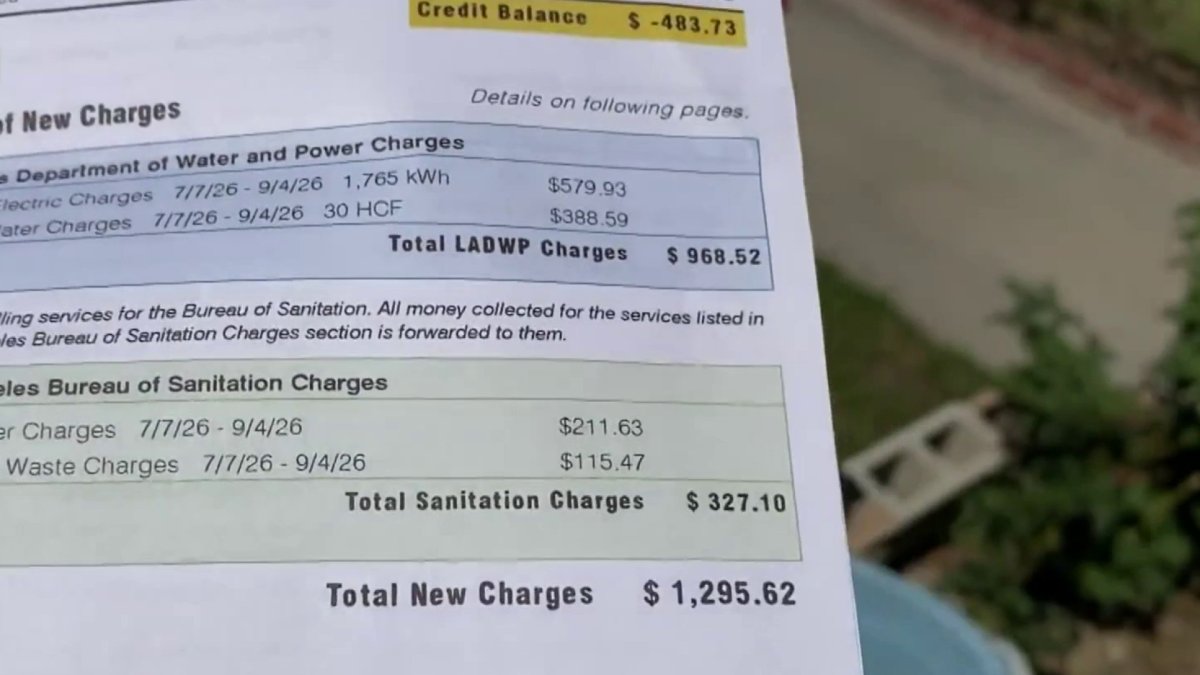
Mayor Karen Bass Tuesday announced plans to address unusually high Department of Water and Power bills amid complaints from residents about outrageous charges from the utility, one day after Councilwoman and mayoral candidate Nithya Raman unveiled her own plan.
Attributing the high bills to punishing heat waves that hit the city in recent weeks, Bass called on the DWP Board — whose commissioners are appointed by the mayor and confirmed by the City Council — to pause shutoffs
through the end of the year for customers facing higher bills after the record heat.
She also called on the DWP to help residents better understand and pay their bills, and encouraged customers to pay what they can afford now.
“For seniors and people with health conditions, air conditioning isn’t a luxury. It’s essential to staying safe. With outrageous gasoline prices and inflation driving up grocery bills and the cost of living, we don’t want anyone overwhelmed by a utility bill,” Bass said in a statement. “Angelenos need swift relief, and I am taking concrete action to provide it.”
Beginning next month, the utility will provide every residential customer with information about their electricity and water usage with the aim of improving awareness of how residents use utilities and how they can
conserve.
The incumbent stressed that the DWP’s conservation programs can help permanently reduce usage and lower bills.
“Finally, I encourage all LADWP customers to enroll in the Level Pay program, which averages bills over 12 months so costs are predictable and manageable. Low-income seniors and households should consider the Lifeline or EZ-Save programs,” Bass said in a statement.
Meanwhile, Raman led a news conference Monday to address complaints about the high bills. The councilwoman said she would pursue a three-point plan with the following actions:
Audit the DWP with City Controller Kenneth Mejia, which would include a review of executive pay.
Require DWP officials to appear before the City Council to publicly explain rates.
Repair and modernize the utility system.
“The public deserves transparency about the cost that they are experiencing. They deserve a public justification of these enormous costs,” Raman said. “They deserve a justification for every dollar that is being spent.”
Raman criticized Bass for the rate increase under her administration. The City Council, including Raman, voted to increase sewer and trash fees last year. Electric and water rates are set by DWP.
Renewed scrutiny over DWP’s billing comes after a San Fernando Valley resident, Micah Reed, began documenting his journey to reduce his bills online.
He launched a petition, called “Cap the Heat Tax,” to demand an independent audit and rate relief during the summer months. The petition has received 32,200 signatures.
He was charged $2,114 for electricity on his September bill from the DWP, which totaled $3,322 with water, sewer and solid waste charges.
“In Los Angeles, especially across the Valley, summer heat routinely tops 100 to 105 degrees. Keeping a home at 74 degrees isn’t a luxury; it is basic survival for families, seniors and pets. Yet, because of LADWP’s aggressive tiered pricing system and opaque pass-through charges, residents are effectively penalized with a massive `Heat Tax’ just for trying to avoid heat stroke,” Reed wrote on his petition page on Change.org.
The DWP has said that the recent high bills are due to a spike in power demand during the summer and early fall heat, especially for air conditioning.
Residential customers are in a three-tier price structure that changes seasonally. The more power customers use, the more they pay for it. The highest rates are in Tier 3, which is in effect from June through September.
DWP uses this structure with the goal of having customers use less electricity and cover the costs of providing power, the Los Angeles Times reported.
Timothy O’Conner, the city’s independent ratepayer advocate, told the newspaper that the department has controlled rate increases well from 2015 to 2023. But this year and last rates have increased well above the rate of inflation.
From January 2025 to October 2026, Tier 1 rates increased by 23%, up from 22 cents per kilowatt hour to 27 cents, The Times reported.
Joe Ramallo, DWP chief customer officer, said that Reed has used six time the power of the median customer, and that the department also offered him an energy efficiency audit. Reed, in turn, told The Times that he asked the DWP if it would make the same energy audit available to every customer and he did not receive a response.
Mejia began an investigation into the high DWP bills prompted by Reed’s complaints, and those of many other customers who shared their concerns online.