
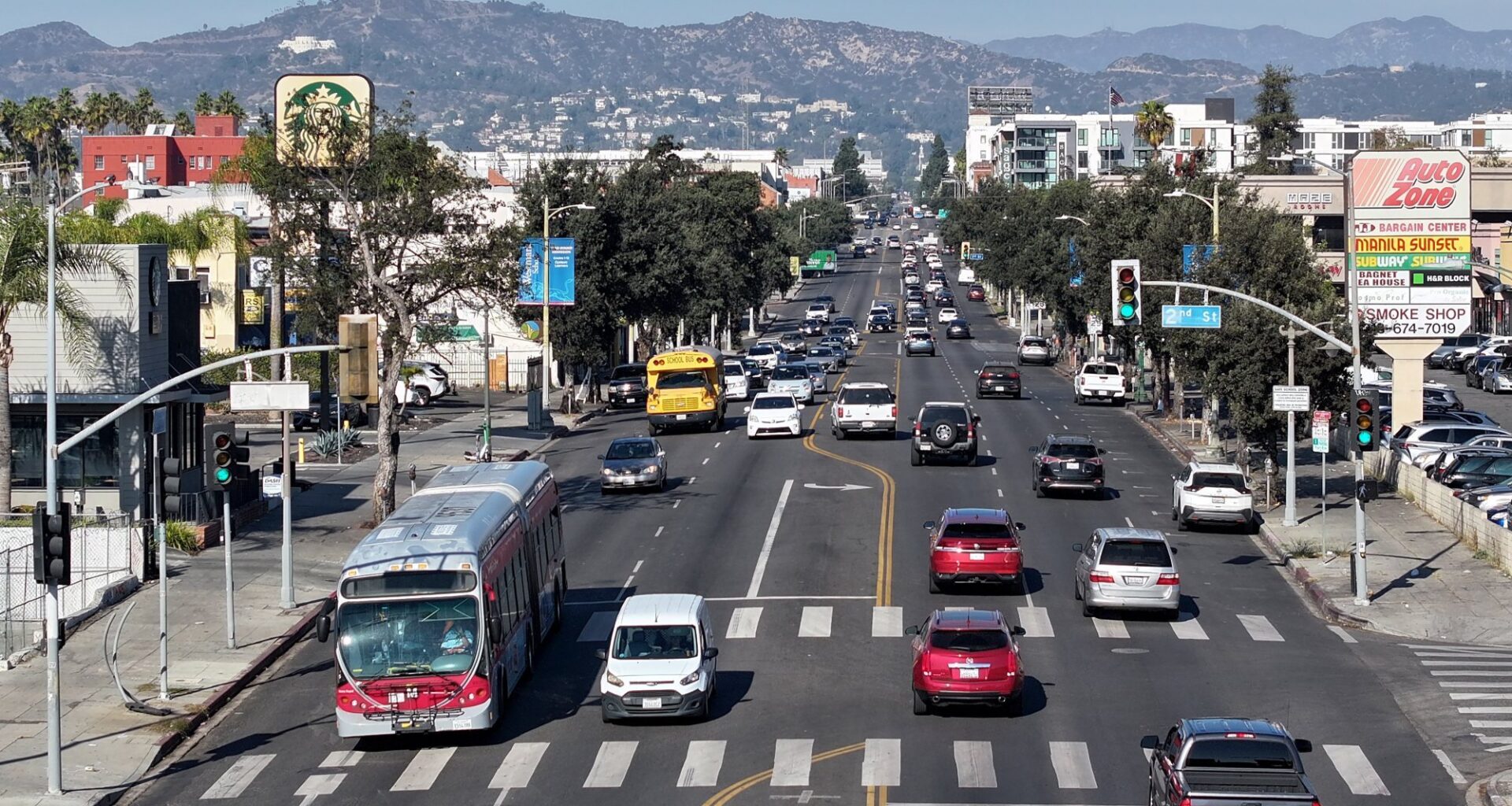
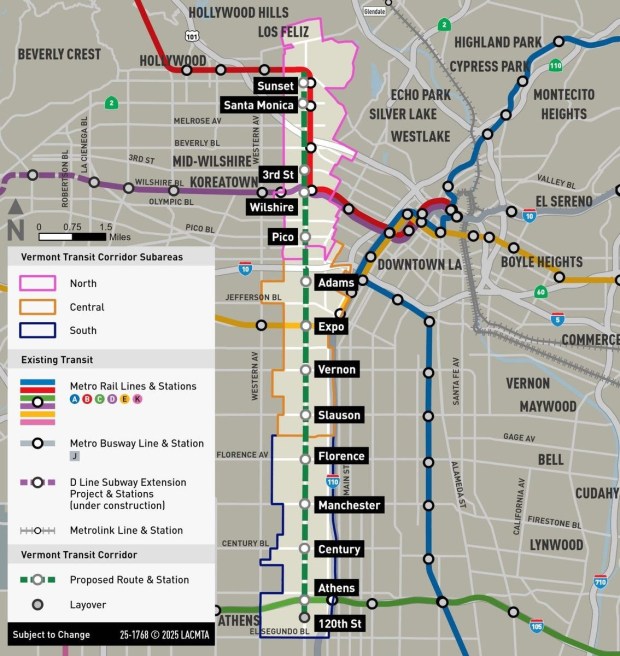
LA Metro broke ground on a new, 12.4-mile bus rapid transit line along Vermont Avenue in Los Angeles, promising faster service and 26 upgraded stations at 13 major intersections, while connecting with four major rail lines, the transit agency announced on Wednesday.
The Vermont Transit Corridor Bus Rapid Transit Project will stretch between Sunset Boulevard in Hollywood and 120th Street in the Athens area of Los Angeles. The system will have dedicated bus lanes, traffic signal priority, bus bulb-outs to shorten street-crossing distances and boarding through all doors to move people faster with fewer queues.
Vermont Avenue is one of the busiest and longest streets in the city of Los Angeles. It is also one of the busiest bus corridors in Los Angeles County – served by two buses, the 204 and the 754 that currently carries about 38,000 people every day or about 11 million riders annually.
That number is expected to rise to 66,200 daily riders by 2045, the agency estimated. Also, the rapid transit improvements will save riders 17 minutes in travel time between Sunset and the 105 Freeway, resulting in a 24% reduction.
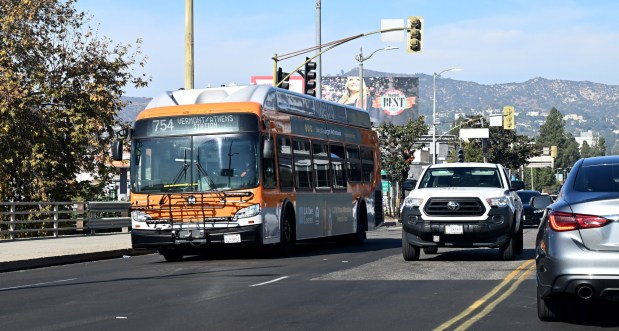 A Metro bus traveling south on Vermont Avenue crosses over the 101 Freeway on Monday. Dec. 2, 2024. Metro will spend about $425 million to improve a central corridor for buses along Vermont Avenue in L.A. The Vermont Transit Corridor is a proposed 12.4-mile special bus lanes project from Sunset Boulevard to 120th Street in L.A. (Photo by Dean Musgrove, Los Angeles Daily News/SCNG)
An example of a BRT is the Metro G Line (Orange) in the San Fernando Valley.
“Every day, tens of thousands of Angelenos ride the bus on Vermont to get where they need to go, from work and school to cultural institutions to medical appointments,” said Metro Board Member and Second District Los Angeles County Supervisor Holly J. Mitchell. “Today, we are delivering those riders the transit experience they deserve – fast, reliable service with welcoming, comfortable stops.”
The goal is to open the service by the 2028 Summer Olympic/Paralympic games. But unlike subway construction, riders don’t have to wait for the entire line to be completed. They can ride when portions of the BRT are finished.
Passengers can connect with the B, C, D and E rail lines and more than 13 east-west bus routes. The BRT will reach such destinations as USC, Exposition Park, the Lucas Museum of Narrative Art, Los Angeles City College, Kaiser Permanente Sunset plus 88 local schools and 375 faith-based institutions.
“For decades, our riders on Vermont Avenue have navigated crowded buses and congested streets to get to work, school, and healthcare. Today, we are delivering real solutions that honor their time and dignity,” said LA Metro Board Director Jacquelyn Dupont-Walker.
The project received a grant of $149.9 million from the Federal Transit Administration. When combined with state funds, plus local funds from voter-approved Measure M sales tax revenue, the project is fully funded, the agency reported.
Building the BRT will support more than 4,800 construction jobs and will generate $95 million in tax revenue. It will create 260 permanent jobs in operations and maintenance.
City News Service contributed to this report.