
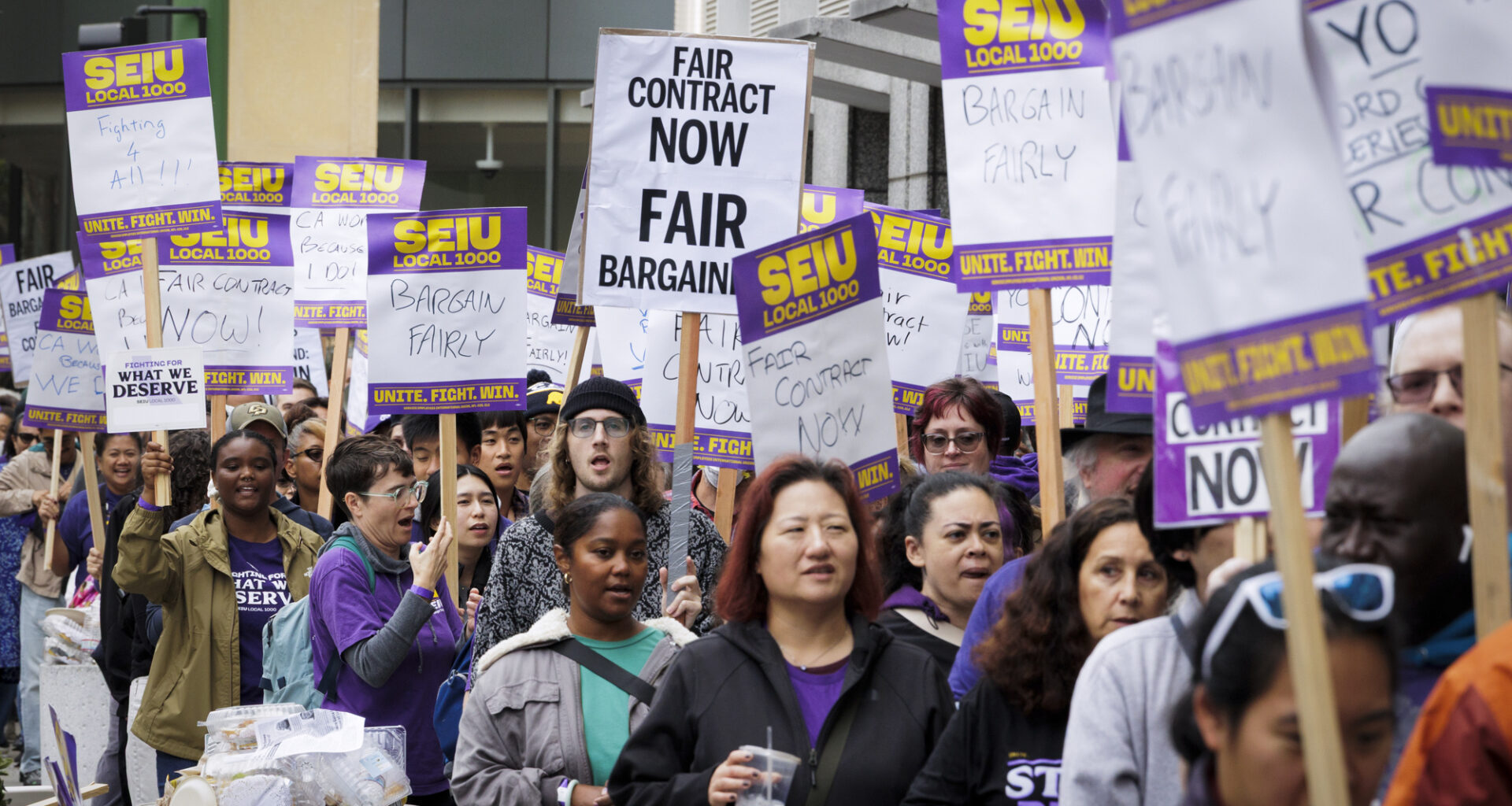
The California Department of Human Resources said it’s coordinating with state agencies and the union to ensure preparations are in place.
Oct 21, 2026
Updated 5:00 pm PT
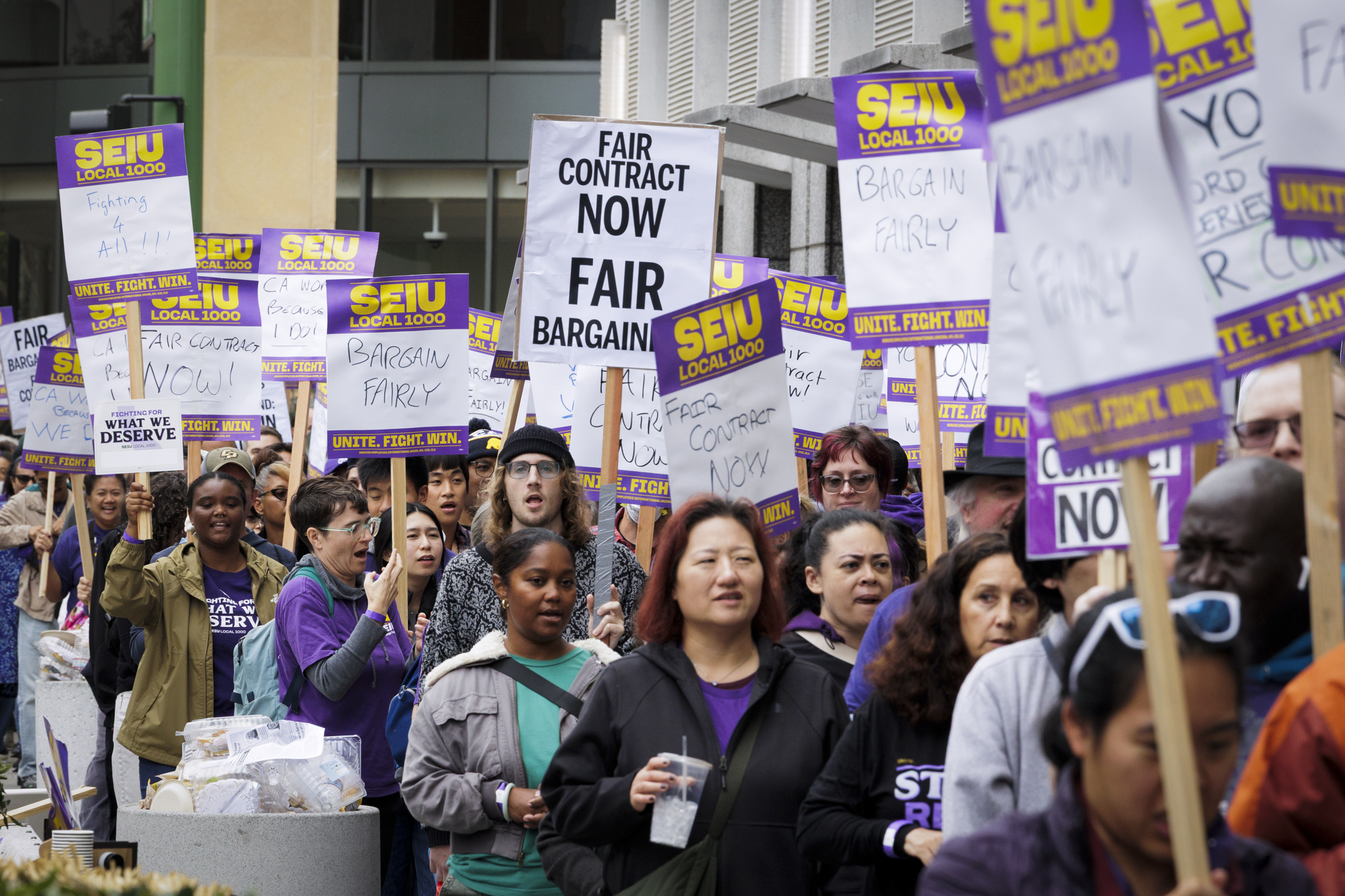
Supporters and union members display signs during a rally in support of a one-day California state workers strike in Oakland on Oct. 21, 2026. Tens of thousands of California civil service state employees plan to strike Wednesday over alleged unfair labor practices. (Miles Cull/KQED)
Tens of thousands of California civil service state employees walked off their jobs Wednesday for a one-day strike that was expected to disrupt operations at many government departments and agencies, including the Department of Motor Vehicles, the Employment Development Department and State Parks.
The walkout is the first ever by the state’s largest government workers’ union, the Service Employees International Union Local 1000, which represents about 96,000 employees. Picket lines were held in Sacramento, San Francisco, Fresno, Los Angeles and other cities.
“We are making history!” Susan Rodriguez, a claims adjuster with the State Compensation Insurance Fund, and a bargaining team member, told a cheering crowd outside the Elihu M. Harris State Office Building in Oakland. “I’m so proud of everyone for having the courage to do this because I’ve had a lot of conversations with people over the last few weeks and there were a lot of nervous souls.”
Analysts, paralegals, health educators, custodians and other employees protested what the union called delayed meaningful negotiations with Gov. Gavin Newsom’s administration. Months-long contract talks have yet to reach a deal on worker priorities such as pay, healthcare costs and telework requirements.
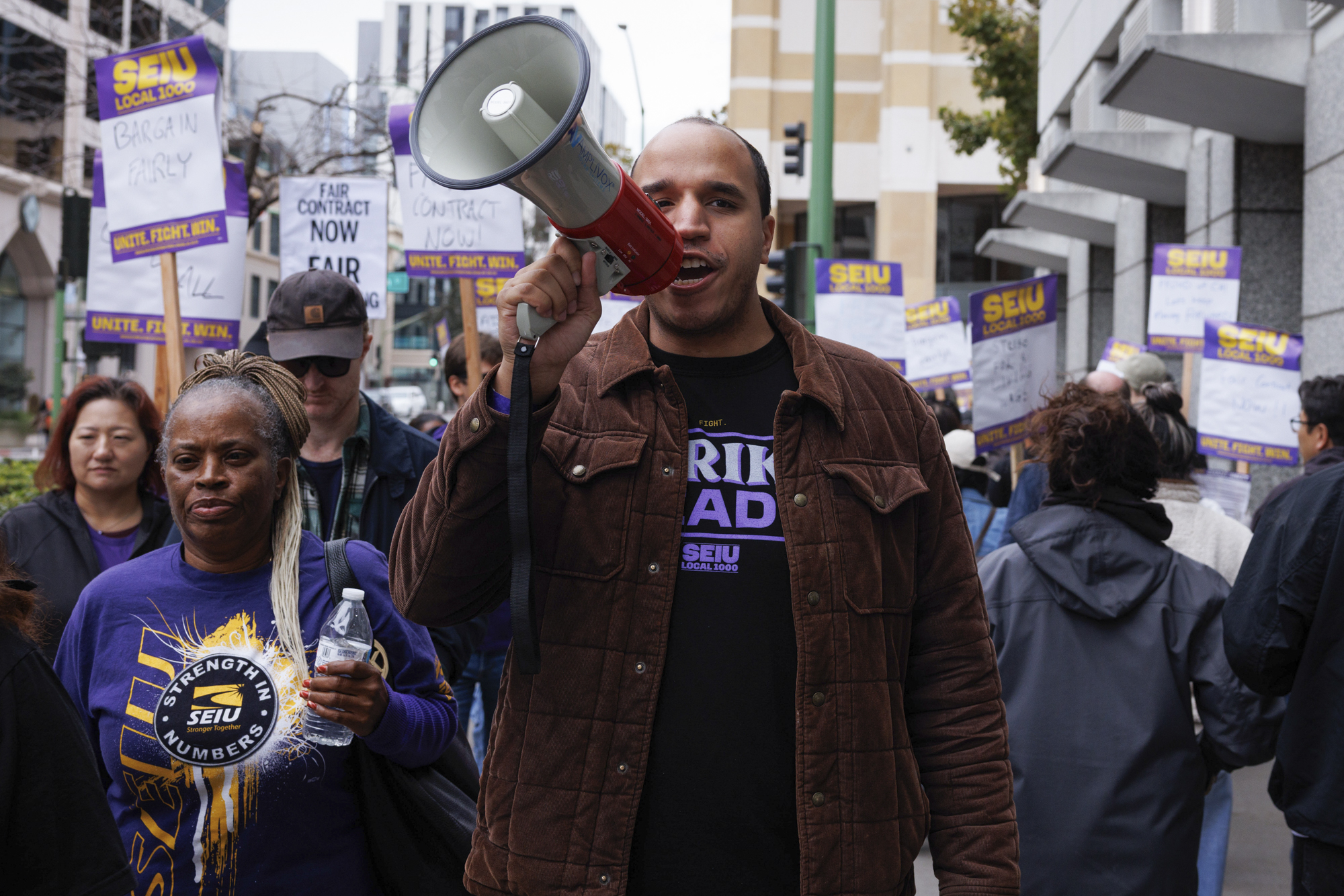 Shop steward Ezra Roberts leads a marching chant during a rally in support of a one-day California state workers strike in Oakland on Oct. 21, 2026. (Miles Cull/KQED)
“The intention for today is to withhold our labor, let the state know that we need them to come back to the table and bargain with us in good faith,” Rodriguez, who has worked for the state for 24 years, told KQED.
Fewer than 5,000 state employees deemed essential at the Department of Corrections and Rehabilitation, Department of Transportation, State Hospitals and other agencies were exempted from the walkout and required to work.
Angela Musallam, a spokesperson with the California Department of Human Resources, which has been bargaining with the union, said her agency coordinated with state departments to ensure all necessary preparations were in place.
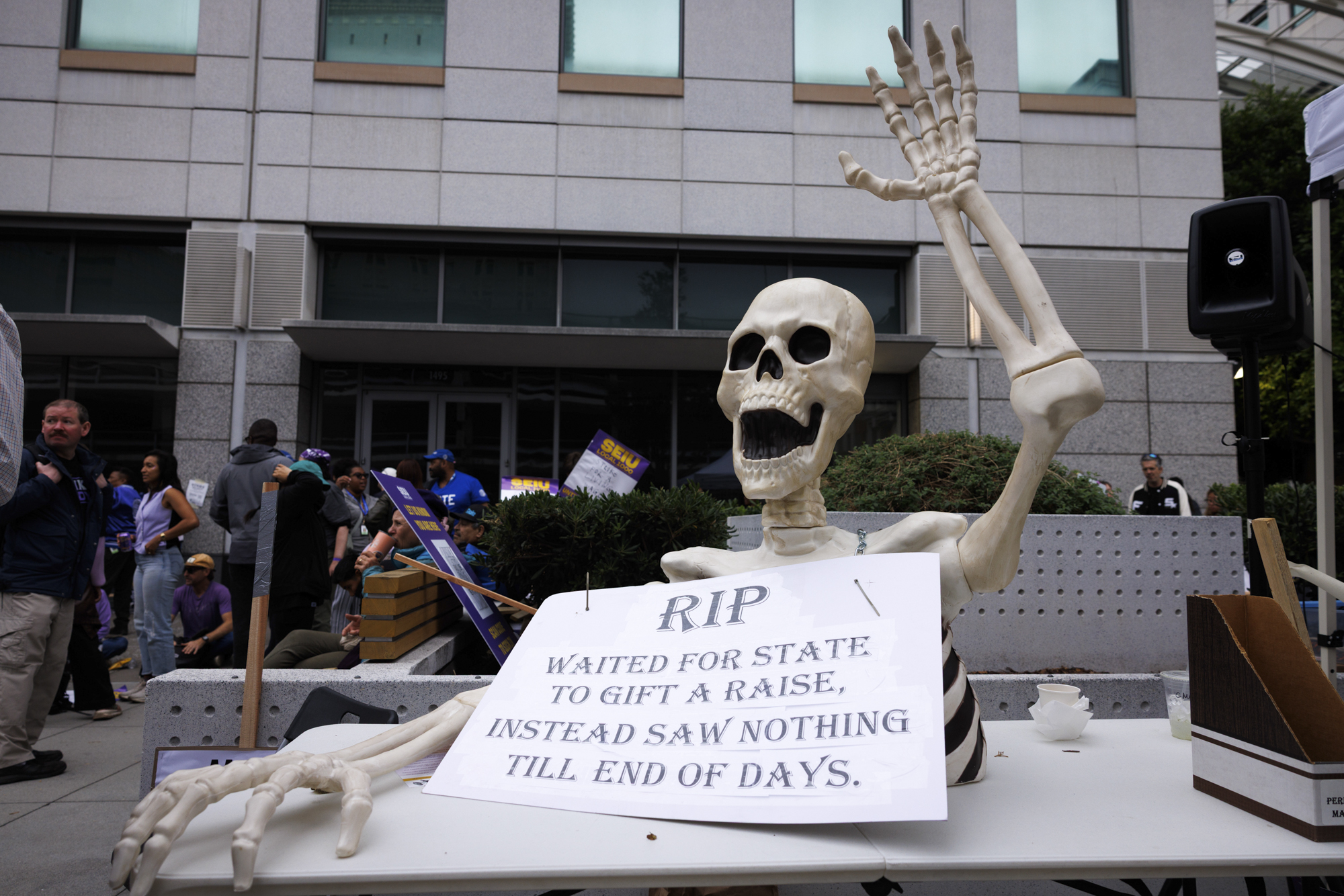 Supporters and union members display signs during a rally in support of a one-day California state workers strike in Oakland on Oct. 21, 2026. (Miles Cull/KQED)
“The three days that we have been doing for the past years were taken away just like that,” said Yunsa, who has worked for the state for 33 years. “It just doesn’t make any sense.”
The standoff comes after the administration asked a public-sector labor regulator earlier this month to stop the strike from happening, arguing that it adds “undue pressure” to concede to the union’s demands, as both parties entered mediation. CalHR officials also said public safety and health would be at risk if essential workers joined the strike.
The Public Employees Relations Board decided on Oct. 16 that the walkout could move forward if the union exempted additional employees, the bulk of them at state prison facilities. PERB also directed the state to seek as many replacement workers as possible.
At the Oakland rally, workers said the administration delayed previously promised raises, stagnating their wages even as the price of food and gas has continued to increase.
“State workers are underpaid compared to private industry and we definitely use benefits to try and make up for some of that. But more recently, our premiums have gone up significantly,” said Ezra Roberts, an analyst with CalTrans. “It can be hard to make ends meet.”
In 2016, the union also threatened a strike, but reached a last-minute agreement with the state.