
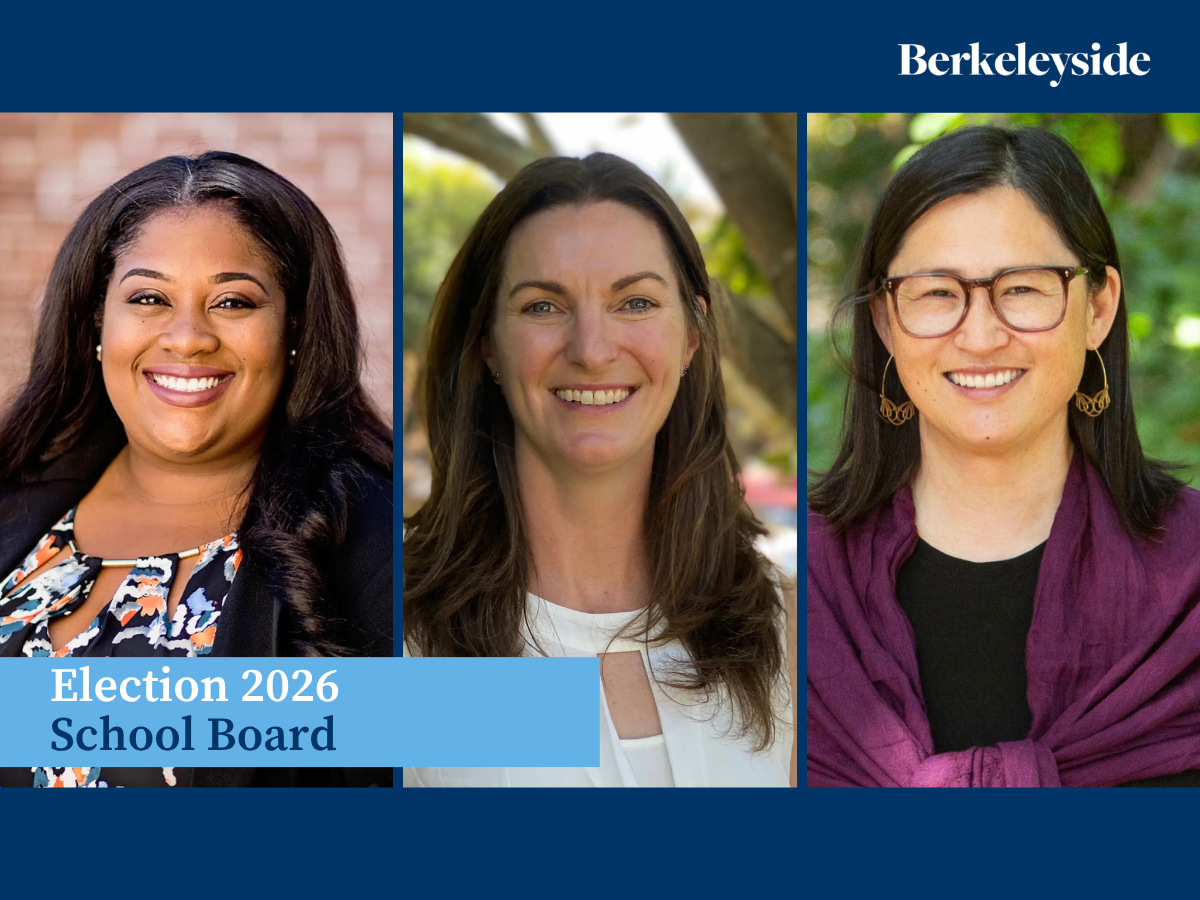
 Incumbents Ka’Dijah Brown (left) and Jennifer Shanoski (middle) are joined by newcomer Sandy Park (right) on the ballot for the three school board seats up for grabs this November. Reichi Lee (not pictured) announced Tuesday she is launching a write-in campaign. Credit: Rikki Ward Photography and candidates
In August, when the Berkeley school board looked to fill an empty seat vacated by Ana Vasudeo, who stepped down to serve on the Alameda County Board of Education, 23 Berkeley residents clamored to be appointed to the position.
But this November, none of these nearly two dozen candidates will be on the ballot in the school board election, though one is waging a write-in campaign. Only three candidates will be listed for the three seats up for grabs, two of them incumbents. That makes it the least competitive school board election in approximately two decades, according to district watchers.
All of our coverage: Meet the candidates running for city council, rent board, school board and more. And learn about local ballot measures and how to vote.
Yet the lack of competition doesn’t mean there aren’t big issues on the table.
The district faces a projected $7 million deficit over the next two years despite passing over $11 million in cuts this June. A stubborn achievement gap between white and Black students remains, spending on special education continues to rise and hundreds of students are still waiting for aftercare. Attendance and enrollment, which determine how much money the district gets from the state, have ticked up in recent years but remain well below pre-pandemic levels.
The district is also facing growing pressure from parents to ban artificial intelligence tech on school devices, piloting a new math curriculum at elementary schools, with plans to roll out in other grades soon, and dealing with continued reprimands from the California Department of Education over what the state says is a discriminatory environment for Jewish students.
“Even though the race is not contentious, the work the board is doing is really important,” said Matt Meyer, president of Berkeley Federation of Teachers and a former Berkeley High School teacher.
None of the problems facing the district have easy answers.
Some parents say the lack of competition in the race is troubling because it keeps critical issues low on the public’s radar and deprives voters of an opportunity to hold the school board and district responsible for its decisions. “When you have contested elections, you start having accountability,” said Ivi Kolasi, a Berkeley parent of three children, two of whom currently attend BUSD schools. “Right now, we don’t have anyone doing that.”
A study last year looking at data from 50,000 elections in 5,000 school districts nationwide showed that nearly half of school board races go uncontested and that incumbents are reelected more than 80% of the time when they run. The study found lower learning rates do not predict more electoral competition.
“In the aggregate, there is not much evidence that school board elections are particularly effective as a mechanism for creating accountability, at least for student outcomes,” said Vladimir Kogan, a political science professor at Ohio State University and one of the authors of the study. “They’re probably very effective for adults to fight about their own adult agendas and interests and certainly those things play an important role in school board elections.”
To former school board president Ty Alper this year’s race is simply an anomaly and not a troubling trend.
“I think a lot of people are interested in serving on the board, but running citywide is a lot, even with public financing, ” Alper said. “The candidates this time around are all strong. There’s no cause for concern.”
Scroll down to learn more about Brown, Shanoski and Park
The contenders listed on the ballot are incumbents Ka’Dijah Brown, a teacher and the current school board president, and Jennifer Shanoski, a chemistry professor at Merritt College and a former president of Peralta Federation of Teachers, along with newcomer Sandy Park, an education consultant and parent of three children in Berkeley schools.
Reichi Lee, who ran unsuccessfully for school board in 2022 and was a finalist for Vasudeo’s seat this summer, announced on Tuesday she is waging a write-in campaign on a platform of stronger restrictions on screen usage, pausing student-facing AI and improving math curriculum and instruction.
In interviews and a questionnaire sent to all candidates on the ballot, Brown, Shanoski and Park said they are committed to addressing the achievement gap, where progress in both English Language Arts and math has stagnated for Black, disabled and English Learner students over the past decade. All said they will work to reduce spending on outside contractors and focus on trimming special education costs, which have ballooned in recent years.
Is endorsement from teachers’ union a must in order to win?
Brown, Shanoski and Park are running as a slate and have all been endorsed by the Berkeley Federation of Teachers, the powerful, 900-plus member union that can make or break a campaign. There is a pretty straight throughline between the union’s endorsement and victory. In fact, in the last nine elections, only one candidate without the union’s endorsement — Shirley Issel, a school board member who served from 1998 to 2010 — has ever won a seat on the school board.
Lee says she didn’t initially mount a campaign for the board because her experience four years ago convinced her that it would be impossible to win without the support of the teachers union. When she ran for school board in 2022, she lost despite raising more than any of the three winning candidates.
“That structure gives a significant advantage to people with already established political networks and major endorsements, and here in Berkeley, that’s the teachers union,” said Lee.
Scott Hofmeister, a BUSD parent and, like Lee, a member of Berkeley Unplugged, a group that has pushed the district to restrict the use of technology in classrooms, was also interested in a seat on the board. But after learning that BFT had already endorsed three candidates, Hofmeister decided to not run.
Others who had expressed interest in Vasudeo’s seat say they didn’t run in the general election due to personal or professional commitments.
Meyer said that it shouldn’t be a surprise that the teachers union plays a big role in the election.
“Our educators care deeply about education and our students,” Meyer said. “They know the schools and the issues inside and out. That’s why they knock on doors, volunteer on campaigns and their voice is pretty important to the conversation.”
Do district-wide elections discourage potential candidates from running?
Some parents have suggested that Berkeley’s “at large” school board elections, where all Berkeley voters weigh in on every candidate, raise the barrier to entry for potential candidates and introduce structural inequities.
The school board has in the past considered moving to district elections to avoid potential lawsuits.
But the benefits and drawbacks are mixed. In Vallejo, for example, school board elections became less competitive after adopting district-wide elections. An LAist analysis of 79 California cities showed switching to district elections brought little to no change in minority representation.
Alper defended at-large school board elections because, unlike many other nearby cities, Berkeley schools are not zoned by neighborhoods, to make them more diverse. “We don’t have neighborhood schools and that’s why our schools are diverse and have parity and we’re proud of it,” Alper said. “When you’re on the school board, you represent the whole city, so it’s appropriate that the elections be citywide.”
Here’s a closer look at the candidates on the ballot and where they stand on the issues:
Ka’Dijah Brown
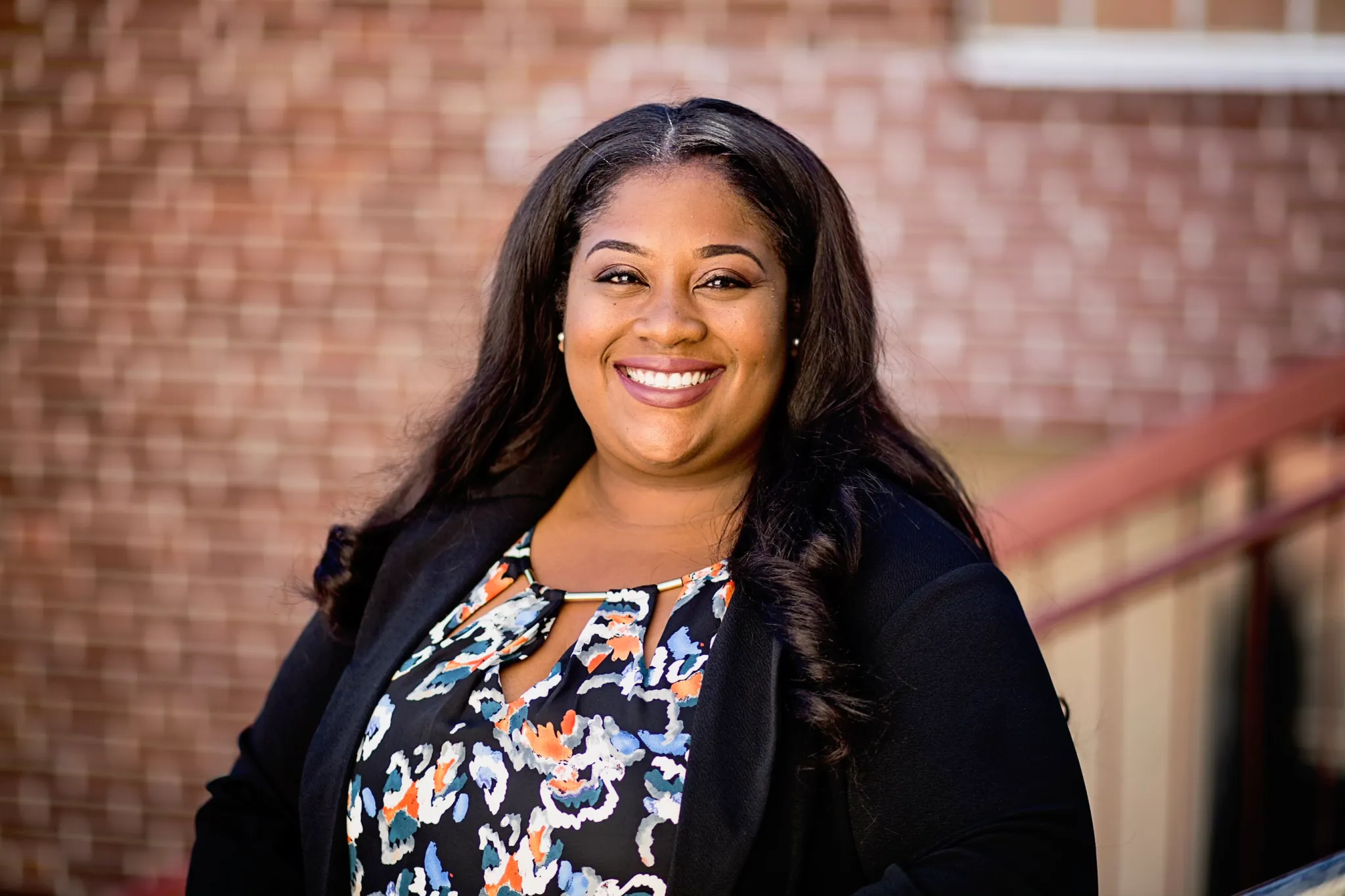 Ka’Dijah Brown. Courtesy of the candidate
Brown, 35, is the current board president and has served on the board since 2018. She works as a middle school math, coding and science teacher.
Unlike the other candidates, she did not answer Berkeleyside’s questionnaire, but in an interview, she said her top priorities are closing the district’s achievement gap, focusing on the budget in light of insufficient state funding and improving the district’s Multi-Tier Support System (MTSS), a framework that schools use to identify students who need extra help and provide the right level of academic, behavioral or social-emotional support.
Brown celebrated recent academic improvements among special education, Black and English Language Learner students, but said it was important to stay the course. “We’ve seen improvements but we need to continue to support programs and initiatives that champion closing those opportunity gaps,” she said. “Now is not the time to stop because we’ve seen a little bit of success.”
Speaking about the district’s budget crisis, Brown said that it’s important to understand that the situation was not the result of budgeting or bad decisions, but a persistent structural deficit as a result of rising costs that outpace state funding. “We’re in one of the most difficult financial situations we’ve seen for schools in a number of years and it’s plaguing all schools in California,” Brown said.
She has pledged to continue advocating at the state level for additional funding for BUSD so that schools can maintain mental health services, equity programs and smaller classroom sizes.
Brown said that while BUSD’s full-inclusion model for special education worked well for many years and has been copied by many other schools, the district was now at a crossroads.
“We’re at a place where there’s room for growth and evolution of the full inclusion model … and have an opportunity to reenvision and revamp it based on the needs of our current students,” she said.
Brown’s campaign had not raised any money as of the end of September, according to campaign finance documents.
Sandy Park
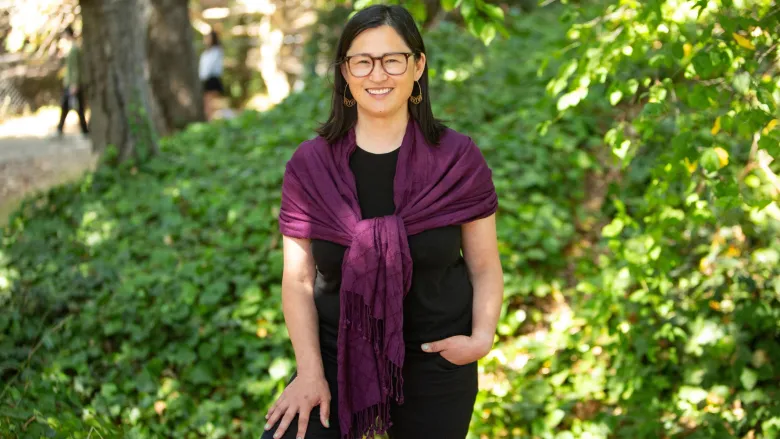 Sandy Park. Credit: Rikki Ward Photography
Park, 48, the only non-incumbent running this year, is an educational consultant and parent of three children in BUSD. She says she’s running to protect student services, close opportunity gaps, and lead on proactive AI and technology policy.
Like Brown, she wants to prioritize budget health for the district, focusing funds on classroom staffing over outside contractors, aligning spending with the district’s core mission, and building regional coalitions for state-level funding reform. Park also wants to focus on “targeted structural equity” to make sure that programs that have proven to work for Black, Latino and special education students are not eliminated and develop and update tech and AI policies to match the rapidly evolving technology.
When it comes to special education, Park said that “education isn’t one-size-fits-all.” “Full inclusion works for many, but BUSD must tailor services to children’s unique needs,” Park said in a Berkeleyside candidate questionnaire. “We balance costs and compliance by investing in frontline staff over contracts, building teacher pipelines, and turning IEP promises into reality with direct educator input.”
When it comes to getting students ready for college, Park said the district needs a comprehensive, research-backed TK-12 math curriculum, to be adopted holistically — not piecemeal — and transparently in partnership with educators, families. “Real readiness means high expectations and equal respect for college, trade school, and career pathways,” she said.
Park said that the district should work to close achievement gaps by fully funding BUSD’s Multilingual Master Plan, equipping teachers with research-backed strategies and resourcing newcomer literacy.
On the budget, Park said BUSD should prioritize “in-house expertise” and build institutional memory instead of utilizing costly outside consultants. Park suggests the district conduct a holistic review across funding streams to eliminate redundancies and under-funded programs.
To help solve the district’s after-school care crisis, Park believes the district needs to invest in classified staff and offer transportation to off-campus programs.
Park’s campaign had raised approximately $3,200 as of the end of September, according to financial disclosures.
Jennifer Shanoski
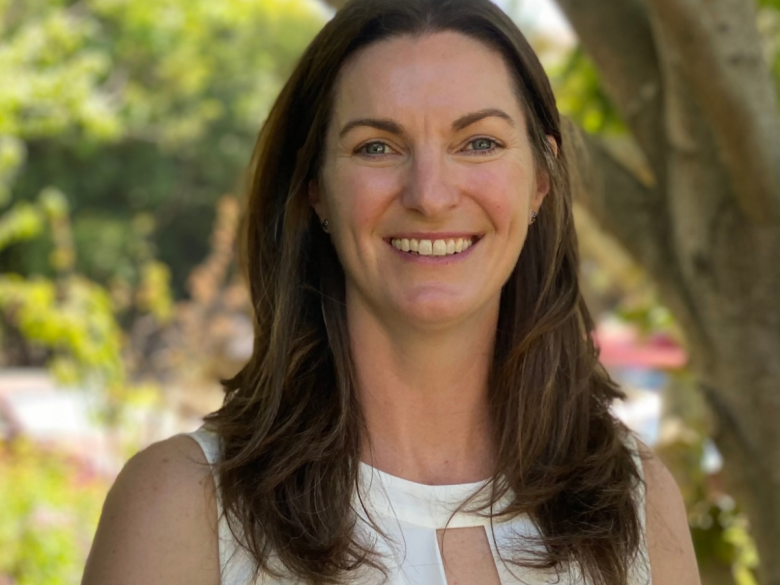 Jennifer Shanoski. Courtesy of the candidate
Shanoski, 49, is a chemistry professor at Peralta College and a parent of two students at BUSD. She was first elected in 2022 and says her top three priorities are supporting the implementation of block schedules for the high school to include physical education for all students, study special education programs for effectiveness sustainability, and ensuring that the district is fiscally stable.
When it comes to special education, Shanoski favors assessing all current programs and considering the expansion of special day classes where appropriate. She believes there is a way to cut the district’s special education costs and says that doing so can save money and improve outcomes.
Like Park, Shanoski favors reducing spending on “expensive outside consultants.” She says that she would not support cuts to student-facing staff or core (English and mathematics) educational programs for students and plans to continue to advocate for full funding of California public schools at the state level.
Asked about her thoughts on closing the district’s achievement gap, Shanoski said that the Multilingual Learner Master Plan, a districtwide blueprint for educating students who are still developing English proficiency and passed last year, needs to be followed, reported on and revised where necessary so that the district “can remain focused and current with the work.”
When it comes to fixing the shortage of aftercare in the district, Shanoski says a lot of progress has been made, but continued partnerships with the city, more communication about enrollment, and investment in staff will improve the situation. “Aftercare staff are some of the lowest paid and that needs to be addressed,” she said.
Shanoski’s campaign had raised approximately $5,500, according to the financial disclosure.
“*” indicates required fields