
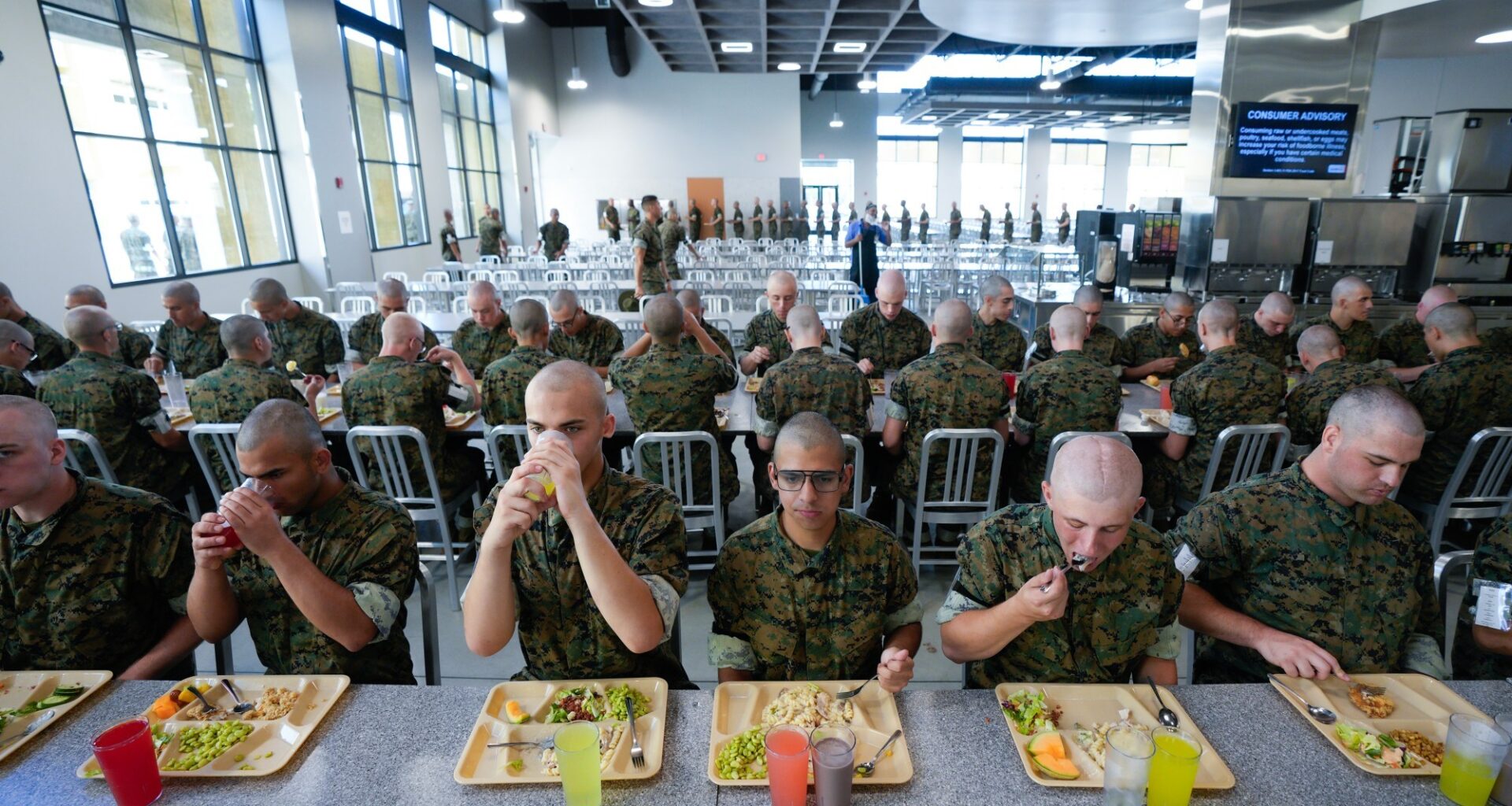
They’re given only 20 minutes to eat a meal, during which time chit-chat is usually forbidden.
But grabbing chow got a bit better Wednesday at Marine Corps Recruit Depot in San Diego, which opened a bright, sprawling mess hall that is now the largest in the U.S. Department of Defense.
It covers more than 100,000 square feet, making it roughly one-third larger than Building 569, the bland, cramped quarters that MCRD used for decades.
The new building can serve up to 20,000 meals per day, largely with the use of walk-in ovens, 80-gallon kettles and big food processing conveyors like one that cooked 2,200 pieces of catfish for the lunch crowd on Wednesday.
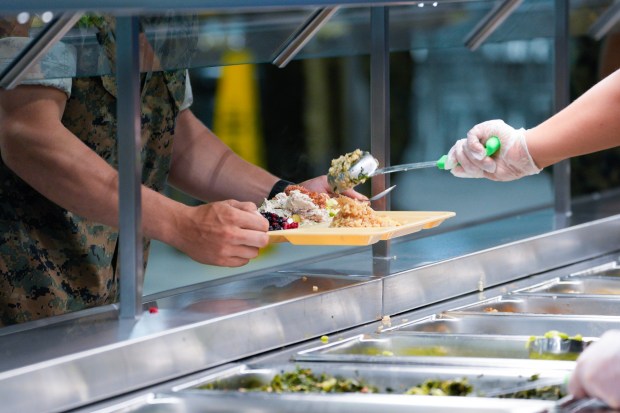 The facility can serve up to 20,000 daily meals. (Nelvin C. Cepeda / The San Diego Union-Tribune)
The demand is heaviest during the summer months when MCRD must prepare upward of 6,200 meals for individual feeding periods. Training surges during that time of year because large numbers of young people join the Marines upon graduating from high school.
The facility is primarily meant to benefit MCRD, which mostly trains recruits from west of the Mississippi River. But it’s also designed to handle overflow from MCRD Parris Island in South Carolina, if problems arise at that base.
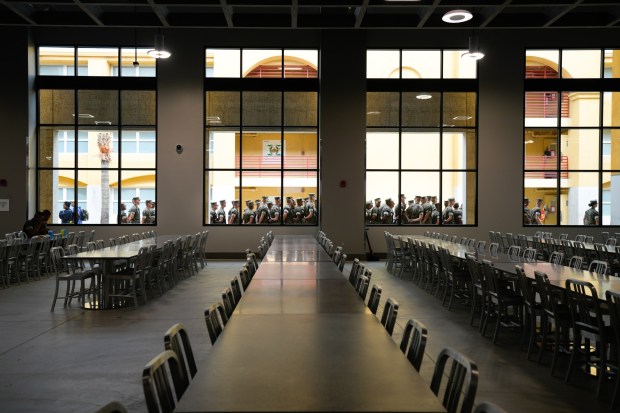 The new chow hall is vastly bigger than the previous one. (Nelvin C. Cepeda / The San Diego Union-Tribune)
The new building is also meant to help care for people displaced by disasters such as wildfires — something that is already done at Camp Pendleton.
The demand and need for food is high.
The Marines say recruits burn 4,000 to 5,000 calories per day, largely because they are frequently on the run and carrying heavy equipment. It’s common for recruits to cover more than 12 miles a day.
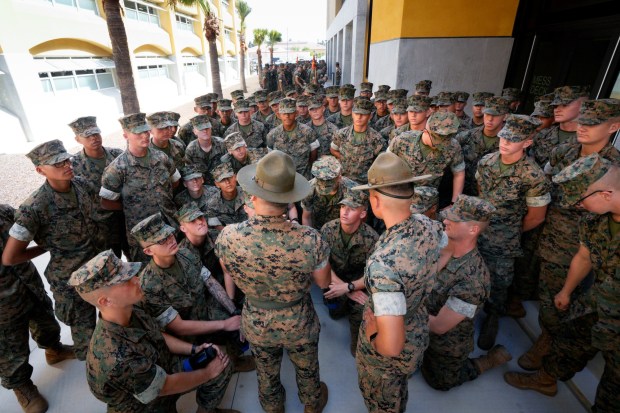 Recruits receive instructions for the day from their drill instructors before having lunch. (Nelvin C. Cepeda / The San Diego Union-Tribune)
It’s not unusual for a recruit to lose 10 to 30 pounds during the grueling 13-week basic training period.
The three meals that recruits get each day contain about 3,700 total calories, which is intentionally lower than the amount that they burn.
“That’s OK because you want them to come out lean-looking,” said Todd Young, the food services director.
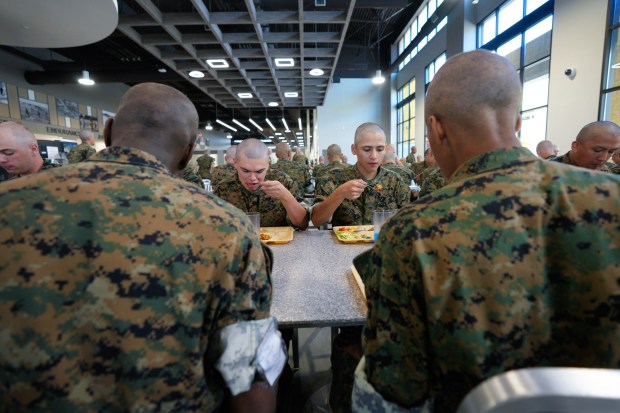 Recruits have little time to eat, and no chit-chatting. (Nelvin C. Cepeda / The San Diego Union-Tribune)
He added that, in the past, the basic menu involved “one entree, one starch, one vegetable,” which has since been replaced by more varied and much healthier food options, including oatmeal cups, beef and broccoli bowls, and assorted nuts and seeds.
“They’re still getting everything they need to fuel their body,” Young said. “They eat every morsel of chow that is offered to them.”