
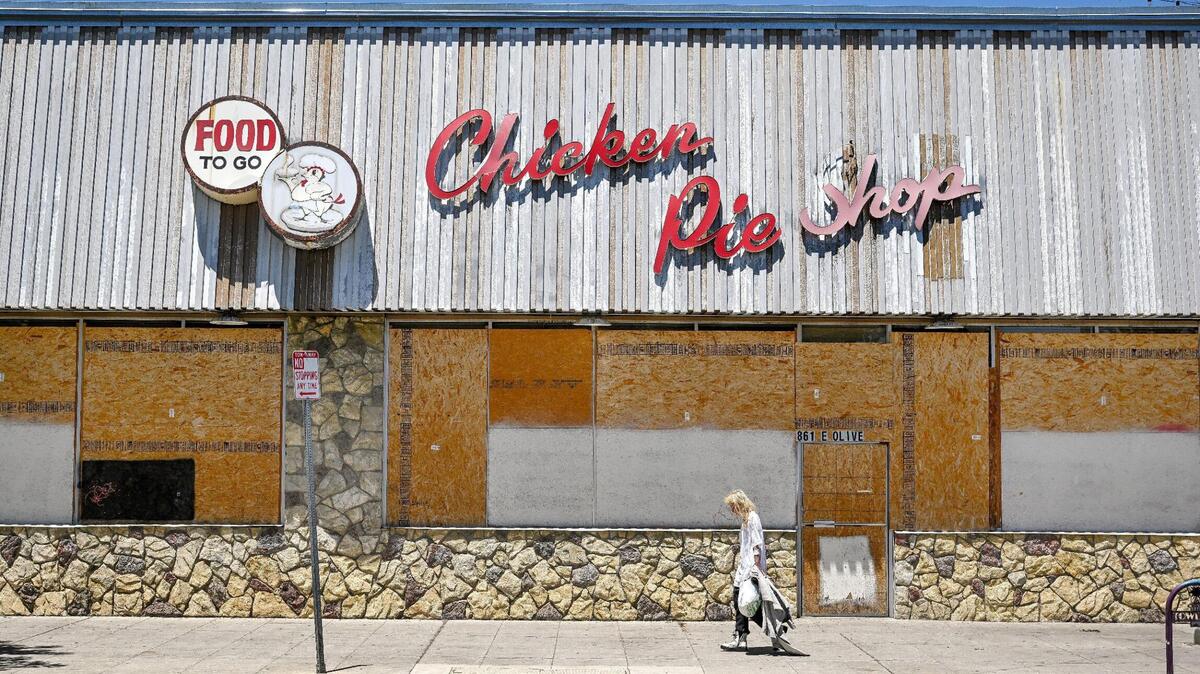
The Tower Neighborhood Association is in for a big week.
On Saturday, the group is shutting down a corner of Fern Avenue to host a pop-up festival as part of its ongoing ‘Vibrant not Vacant’ campaign.
The music and arts event (Fern Fest, they’re calling it) is a bit of future casting to what this long-neglected corner of the Tower District could look like with better policies in place from the city, says Steve Wilburn, a board member with the Tower Neighborhood Association, the nonprofit best known as the fiscal agent behind Tower Porch Fest.
Click to resize
And what those better policies might look like is also on the horizon for the group this week, as a revamped pilot program goes before Fresno city council.
“The idea that maybe we could get some movement here is pretty exciting,” Wilburn says.
In August, the association launched its community campaign, which questioned the efficacy of the so-called Vacant Commercial Building Pilot Program, and whether its regulations went far enough to spur actual revitalization and force building owners to fill long-empty spaces.
They did not go far enough, according to the association, which began advocating for a new policy through neighborhood meetings, a letter writing campaign and submitting working drafts for a resolution, which is slated to come before council on Thursday.
The original one-year program was passed in July 2025 and set forth requirements to force building owners to bring long-abandoned buildings into code or face fines of up to $10,000. Among the requirements, owners had to show they were actively working to sell the building, seeking a permit to do work on the building, or otherwise prove the building was not abandoned.
It’s not clear that ever happened.
Some 50 buildings were evaluated for the program, according to a public records act request filed by Wilburn. Nine were ultimately included. Just two or three buildings were ever cited under the ordinance.
All remained vacant, including one in which Wilburn was looking to become a tenant. He had signed a letter of intent with the building owner,, but after seven-plus months of waiting the plans ultimately fell by the wayside.
That’s because the original pilot program was rooted in and prioritized nuisance law, meaning things like anti-graffiti efforts or making sure vacant buildings had proper signage warning off trespassers.
Vacant commercial building pilot program v. 2
In contrast, version 2 of the pilot program relies on the Tower District Specific Plan, which was updated and adopted last year to offer “strategic and comprehensive guidance for making decisions regarding the Tower District’s built environment, landscape character, land use, activities, public open space, community facilities, transportation, and other forms of infrastructure” with “a shared set of goals, objectives, policies, and implementing actions.”
This allows the new program to spell out more specific obligations for owners in “maintaining existing buildings in a condition that supports lawful occupancy.”
Within 120 days, for example, building interiors must meet minimum maintenance standards. That includes “being free of rubbish, debris, or other trash or flammable materials,” having structurally sound floors, stairs, walls and ceilings and roofs, windows and doors that “prevent significant intrusion of water and weather;” requirements that would make them ready to be actually occupied by tenants.
There is a public use case for these vacant and abandoned buildings, Wilburn says, and the current policies allow for a kind of demolition by neglect.
“There are businesses that would love to go into these vacant places,” he says. “What they would have to do to get there would be too great.”
At best, this leads missed opportunity for entrepreneurs like Wilburn, with buildings that are technically available, but too burdensome to occupy.
At worst, it’s gentrification, he says.
“The people who can afford to do it are not local.”
The new program would require vacant properties undergo code enforcement inspections every other month, with property owners (or a local agent, or representative) doing additional inspections once every two weeks, with a written log made available to the city on request.
If the building isn’t brought up to standards, code enforcement can seek penalties, including citations, a civil lawsuit (for public nuisance) or “the appointment of a Health and Safety Receiver to bring the property into compliance,” according to the resolution.
“It really moves the situation forward,” Wilburn says.
“It’s not just trimming the weeds and boarding the doors. That’s no longer going to be acceptable.”
This story was originally published October 21, 2026 8:16 AM.

The Fresno Bee
Joshua Tehee covers breaking news for The Fresno Bee, writing on a wide range of topics from police, politics and weather, to arts and entertainment in the Central Valley.