
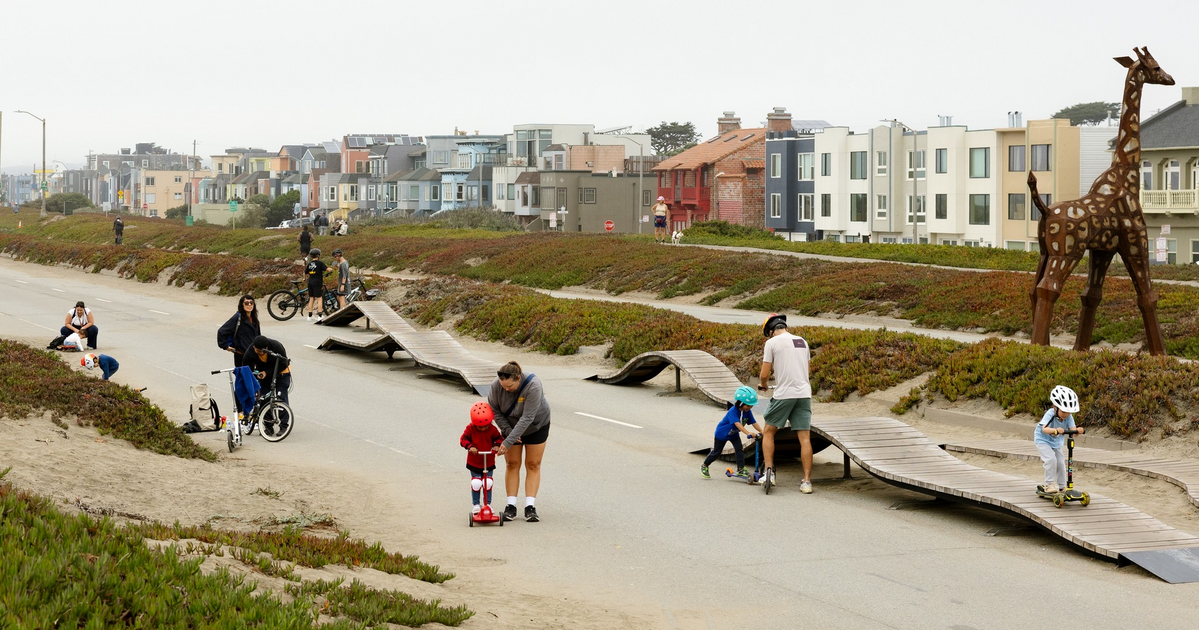
It’s become San Francisco’s forever war: a battle over a two-mile stretch of roadway that has led to vicious fights on Nextdoor, millions in political spending, lawsuits, and the recall of a supervisor.
And still, the city cannot settle it.
On Election Day, for the third time in four years, San Franciscans will again decide the fate of the Great Highway at the ballot box.
Proposition G aims to restore the pandemic-era arrangement of opening the road to cars on weekdays and closing it on weekends, which supporters say would ease traffic congestion. Opponents say this would dismantle Sunset Dunes, the beachfront park created after voters approved a permanent closure in 2024.
The saga has attracted national attention. Last week, The Wall Street Journal trained its sights on the stretch of asphalt, declaring: “San Francisco created a car-free oasis by the sea — and it’s driving locals mad.”
Well, some locals.
For many San Franciscans, the question is no longer whether the road should be open to cars. It’s why we’re still fighting about it.
“How are people still talking about this?” asked Joe Deason, who lives on Lower Great Highway. “Aren’t there more important things in people’s lives?”
The saga started in April 2020, when the Great Highway closed to cars as stir-crazy residents sought the outdoors amid pandemic restrictions.
Suddenly, the road was transformed into a beachfront promenade. At the time, it made sense — no one was driving anywhere, really — but in 2022, disgruntled residents put Proposition I, which would have allowed cars on the road at all times, on the ballot. It failed.
 Sunset Dunes is the city’s third-most popular park. | Source: Amanda Andrade-Rhoades/The Standard
Soon after, the Board of Supervisors established a pilot program keeping the road car-free on weekends and holidays while data on traffic was collected.
But the compromise didn’t last. The car-closure proponents pressed forward with Prop. K in November 2024 to permanently close the Great Highway to vehicular traffic. It passed with 55% of the vote. In March 2025, Sunset Dunes opened at the site, complete with hammocks, murals, and sweeping views of the Pacific.
And that should have been the end of it. But it wasn’t. Supporters made pragmatic arguments: The road is often closed anyway, sand removal is costly, cars pose a hazard for beachgoers, and it makes a nice park. But opponents saw something different: urbanist outsiders imposing their will and waging war on motorists.
“I’ve never felt as dismissed and disrespected as I did,” retired City College teacher Denise Selleck told The Standard in July 2024.
Anger in the Sunset, where residents voted against Prop. K at much higher rates than those in the rest of the city, led to the recall of Supervisor Joel Engardio, a proponent of the road closure and the creation of the park. Lawsuits followed, although judges have largely rejected challenges to the closure.
 Joel Engardio was recalled over his support for closing the Great Highway to cars. | Source: Carlo Velasquez for The Standard
By then, the Great Highway had become something bigger: a proxy battle over who gets to decide the future of SF’s neighborhoods and whether the wishes of residents living closest to a project should outweigh those of the city as a whole.
If this all feels parochial, that’s because it is. In the four years between 2022’s Prop. I and 2026’s Prop. G, here are just a few of the things the city has experienced: a drug crisis that peaked at 88 overdose deaths a month, a doom loop followed by a boom loop, and a new mayor, police chief, and fire chief. ChatGPT was publicly released, and OpenAI went from buzzy startup to harbinger of the apocalypse, Flock cameras were installed, Waymos launched, and police drones took off. Average apartment rents have climbed toward $4,000, teachers went on strike, and Burning Man became uncool.
Through it all, the Great Highway has remained a premier political drama, despite the transformation of the city around it.
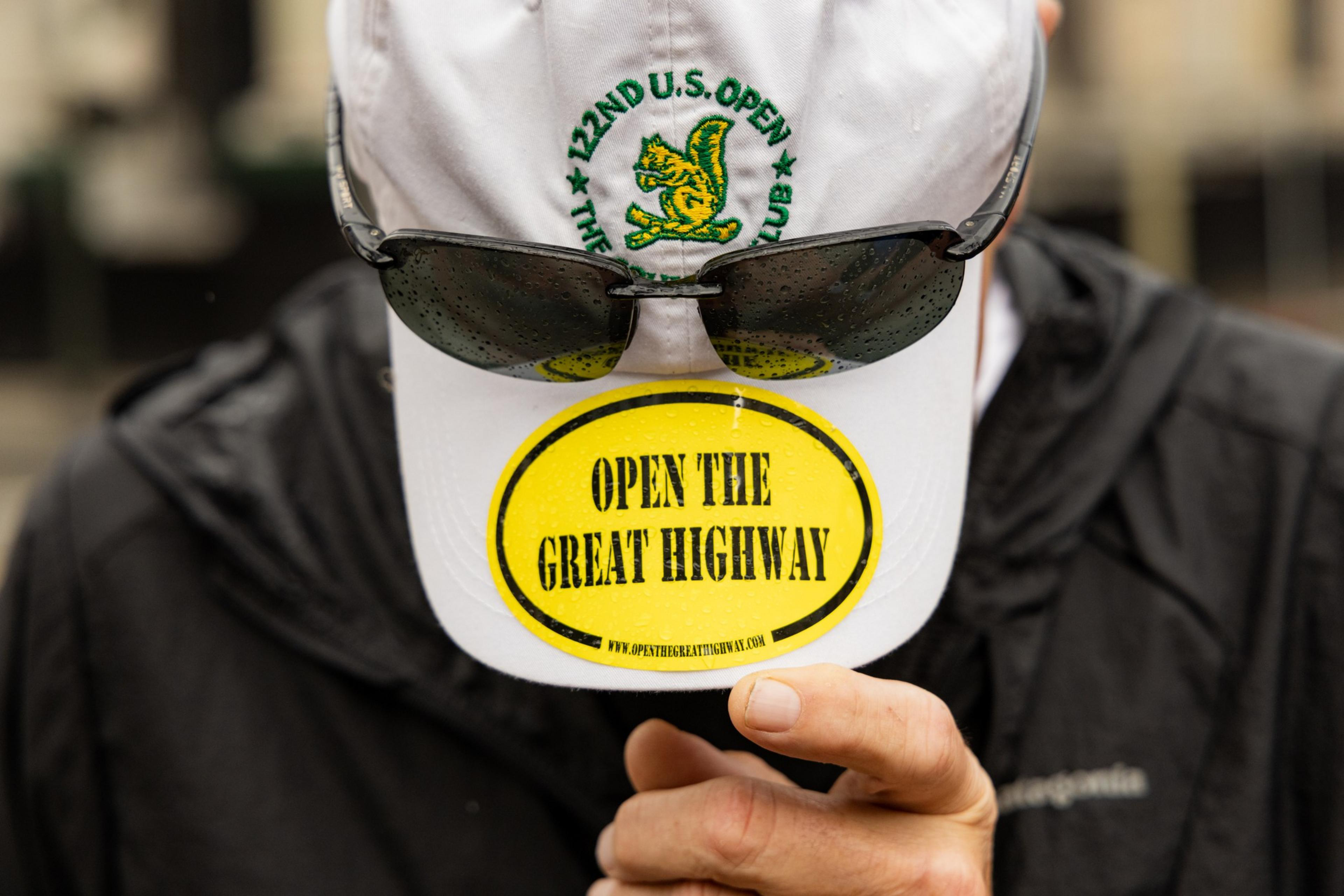 Dueling Great Highway campaign signs are a familiar sight in the Sunset, where the road has been a political flashpoint since 2022. | Source: Jason Henry for The Standard
There is another reason this forever war hasn’t been put to rest: money. Aside from the genuine passions on both sides of the debate, the disagreement has been fueled by significant campaign contributions.
Across all three ballot measures, the side favoring keeping cars off the road has consistently outraised and outspent the other, with the disparity growing dramatically in each election.
With Prop. G, the latest bid to reopen the road to weekday traffic, the “no” side has outraised those in favor by 10 to 1, the biggest gap of any of the Great Highway ballot contests.
The No on G campaign has raised $1.6 million, with hefty donations from tech executives and other well-heeled supporters. Yelp CEO Jeremy Stoppelman, the biggest donor, has given $750,000, according to Ethics Commission filings. The Yes on G side has nearly the same number of donors as its opponents — just under 300 — but has raised only $141,000, and the top donation is $25,000, from the Chinese American Democratic Club, followed by $9,900 from Engardio recall organizer and former District 4 supervisor candidate Selena Chu (opens in new tab).
Belying the vitriol directed at Sunset Dunes by Prop. G supporters, it’s the city’s third most popular park, attracting 1.7 million visitors (opens in new tab) in its first year. And it’s nicer now than when it first opened, with the addition of a skate park, benches, and a pirate ship-themed playground.
 The recently opened Shipwreck Cove playground at Sunset Dunes is already popular among kids and parents. | Source: Tâm Vũ for The Standard
Even some who voted against the park’s creation admit that they use it, and two-thirds of the 104 people I spoke to about Sunset Dunes said they were from the Sunset.
“We’ll walk it, but closing it off is selfish,” one Sunset resident, Peggy O’Donnell, told The Standard last year.
So the park that opponents have portrayed as an imposition to their neighborhood is also a destination for many who live there. That, however, hasn’t resolved the argument.
Engardio’s replacement, Supervisor Alan Wong, appointed by Mayor Daniel Lurie in December, failed to gather enough support from his colleagues on the board to place a measure to reopen the Great highway on the ballot by the Jan. 12 deadline. Undeterred, the very next day, those behind the Engardio recall mobilized a signature-gathering campaign and successfully delivered 16,000 signatures in six months, securing yet another citywide vote on the road’s future.
The Yes on G campaign has cast itself as west-siders fighting back against those trying to take away their road and is organized by the same people who led the Engardio recall. This time, however, the campaign is asking voters across the city to revisit a decision they made just two years ago.
“Nearly two-thirds of voters removed [Engardio] from office, but the recall couldn’t change Prop. K. So residents organized again,” the campaign’s website says.
When strolling at Sunset Dunes, it’s easy to spot “No on G” signs in the windows of homes facing the park. This is hardly a scientific measure of the political mood — but it is a reminder that the park-cum-road has developed its own community and allegiance, not least among local residents.
It’s not hard to find people who say they’re tired of the fight either.
Deason, who runs a scooter repair shop and lives next to the park, voted against 2024’s Prop. K i(which closed the road to cars) but plans to vote no on Prop. G (to keep it closed to cars). Seeing the playground and learning what it would cost to turn the park back into a road changed his mind, he said. Two years ago, whether to open or close the Great Highway was the hottest topic among his neighbors. Now he doesn’t even bring it up with his wife.
“I can’t believe there are people trying to push back and get this all removed,” he said.