
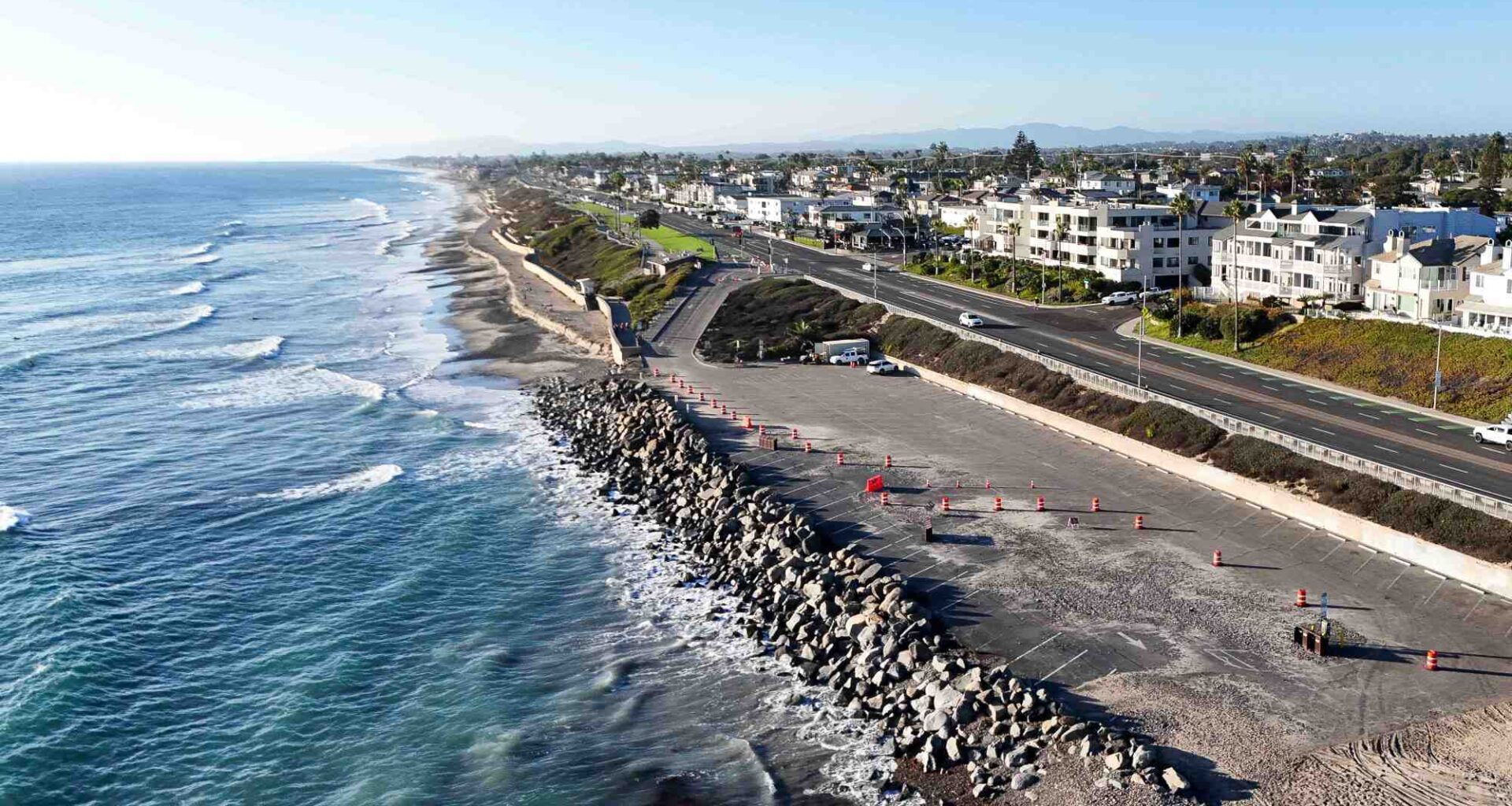
For anyone who lives along North County’s coast, the changes are becoming increasingly difficult to ignore. Oceanfront bluffs are crumbling in Del Mar, Encinitas, Solana Beach and San Clemente — narrowing our beaches, threatening homes and roads, and repeatedly severing the rail line that connects our communities. In early 2025, that line was shut down for six weeks so crews could reinforce tracks threatened by landslides and erosion.
These events are not random bad luck. Our changing climate is a driving force. As the ocean warms, it rises and stores enormous amounts of additional heat. And higher seas narrow our beaches so that more wave energy reaches the base of the bluffs. Heavier, more intense storm swells and saturated topsoil then accelerate the collapse. Scientists expect sea-level rise to continue to accelerate coastal erosion, while hotter and drier conditions are increasing the frequency and severity of wildfires.
The economic stakes for our transportation network alone are enormous. The LOSSAN rail corridor — LOSSAN stands for Los Angeles-San Diego-San Luis Obispo — which hugs our eroding coastline is the second-busiest intercity passenger rail corridor in the nation. It carries roughly 8 million passengers per year plus vital freight. Every closure — like the six-week shutdown in 2025 — severs a lifeline for commuters and delivers a blow to the regional economy.
Wildfire poses an even more serious threat to North County’s health, safety and pocketbooks. San Diego County has experienced devastating fires, including the 2003 Cedar Fire, which destroyed more than 3,200 structures and killed 17 people, and the 2007 firestorm, which destroyed 2,670 structures and caused seven civilian deaths. More recently, drought and high winds helped fuel five fires across the county in January 2025. As wildfire risk grows, so do the dangers to homes and communities — and the financial consequences for families facing rising insurance premiums, cancellations and limited coverage options.
Here’s the encouraging part: The majority of us already agree on both the problem and the need to act. According to the Yale Program on Climate Change Communications, 70% of adults in the San Diego metro area are worried about global warming and 66% believe that Congress should do more.
Our communities have already begun building the tools to meet these challenges. With bipartisan federal support, our region has secured more than $41 million to pump over 1 million cubic yards of sand onto beaches in San Clemente, Solana Beach and Encinitas — widening beaches and reducing storm damage. The Encinitas-Solana Beach Coastal Storm Damage Reduction Project is advancing toward construction, and local and regional agencies are working to secure the most vulnerable stretches of the rail corridor. San Diego is also expanding rooftop and community solar, battery storage, and grid modernization — investments that can reduce emissions and strengthen reliability.
But real gaps remain. Beach nourishment needs sustained funding, the LOSSAN corridor needs long-term protection and wildfire-prone communities need stronger defenses. Continued investment in clean energy and grid modernization can also strengthen reliability as extreme weather puts greater pressure on the power system.
San Diegans will benefit from strong leadership to navigate the challenges of a changing climate. This is where voters play an important role in assuring that our elected officials are up to the task. As voters consider candidates for Congress, the Legislature and local offices, they should ask them practical questions:
— What will you do to protect our coastline and LOSSAN, including sustained funding for beach replenishment?
— What will you do to reduce wildfire risk and protect communities and property?
— What will you do to expand clean energy and strengthen the grid to assure greater reliability and contain growing energy costs?
This election season, voters should look beyond campaign slogans and push candidates for definitive plans.
Elvins, Ph.D., is a Citizens’ Climate Lobby volunteer and spent a decade working with scientists at UC San Diego’s Supercomputer Center. He lives in North County. Kahn has more than 20 years of experience in communications research and volunteers as co-lead of the Meteorologist Outreach Team at Citizens’ Climate Education. He lives in San Carlos.