
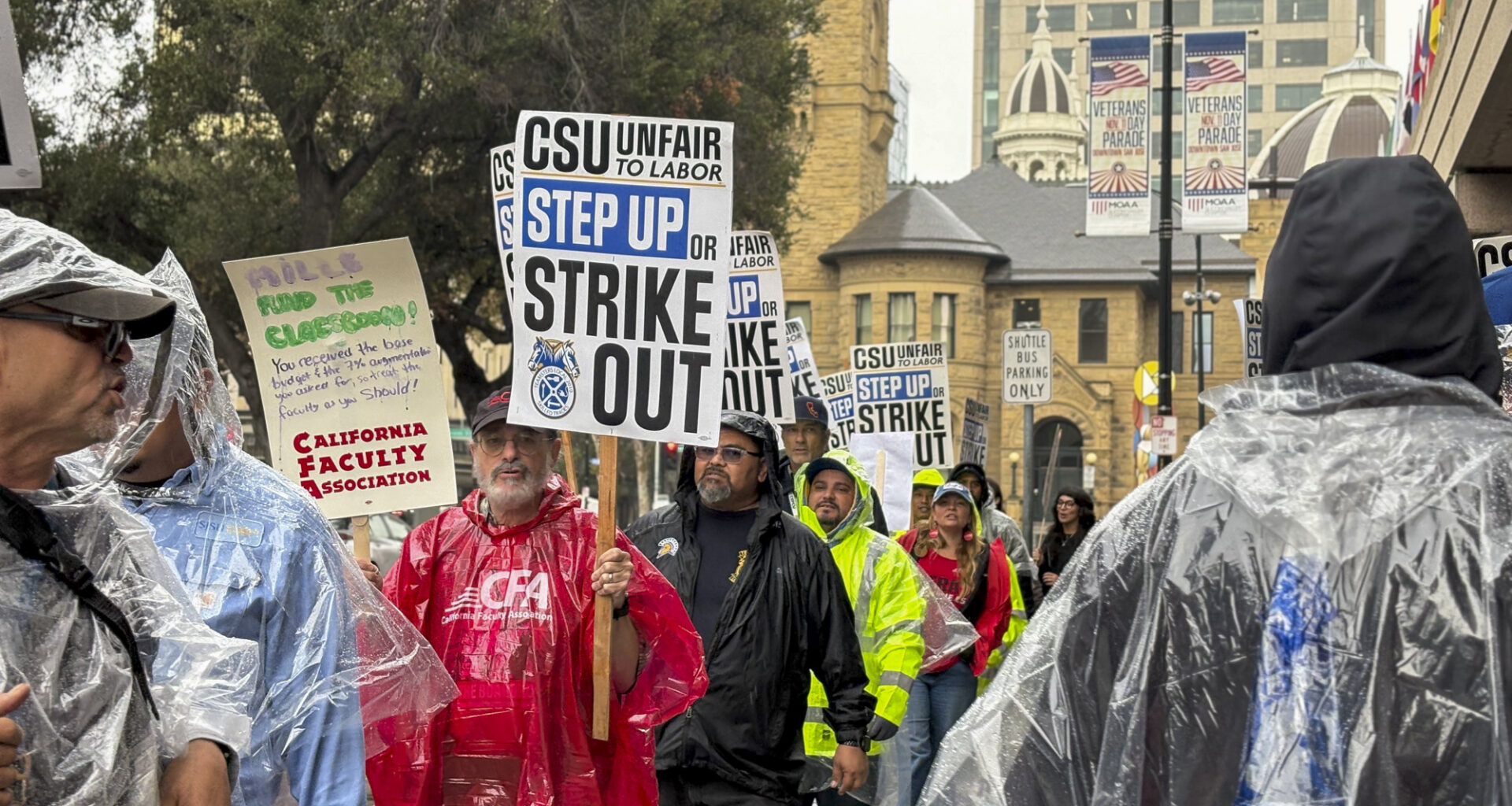
The rally follows a recent impasse in contract negotiations between the faculty union and California State University.
Oct 22, 2026
Updated 5:25 pm PT
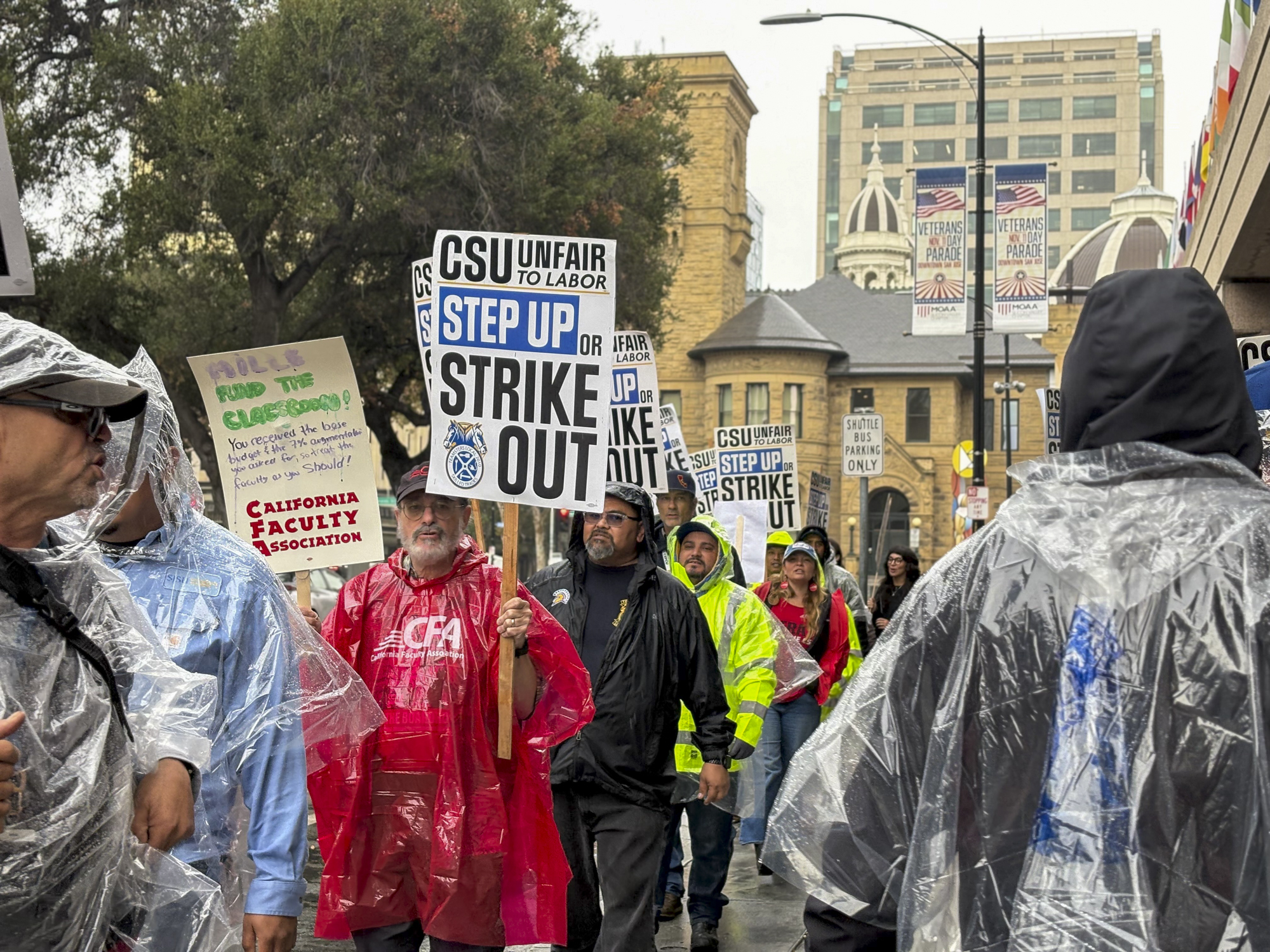
Over a dozen California Faculty Association members, faculty and students from San José State University marched in a picket line on Oct. 22, 2026, with signs chanting, “What do we want? Fair contracts! When do we want it? Now!” (Alina Ta/KQED)
A group of California Faculty Association union members and students rallied in San José on Thursday to protest a speech by the state university system’s chancellor, demanding higher pay and more job security protections against AI.
Lecturers, faculty members and students from Sacramento and San José State University marched in the rain in front of the city’s Signia Hilton Hotel, which hosted California State University’s 2026 Student Success Symposium.
Holding signs that read “CSU unfair to labor” and “Step up or strike out,” they called on CSU Chancellor Mildred García, who was giving a speech at the event. They chanted, “What do we want? Fair contracts! When do we want it? Now!”
“We want to be heard at the bargaining table and let her know that faculty is present at San José State,” said Ginevra Marta Scherini, a lecturer at the university. “We want fair bargaining and good outcomes for our contracts.”
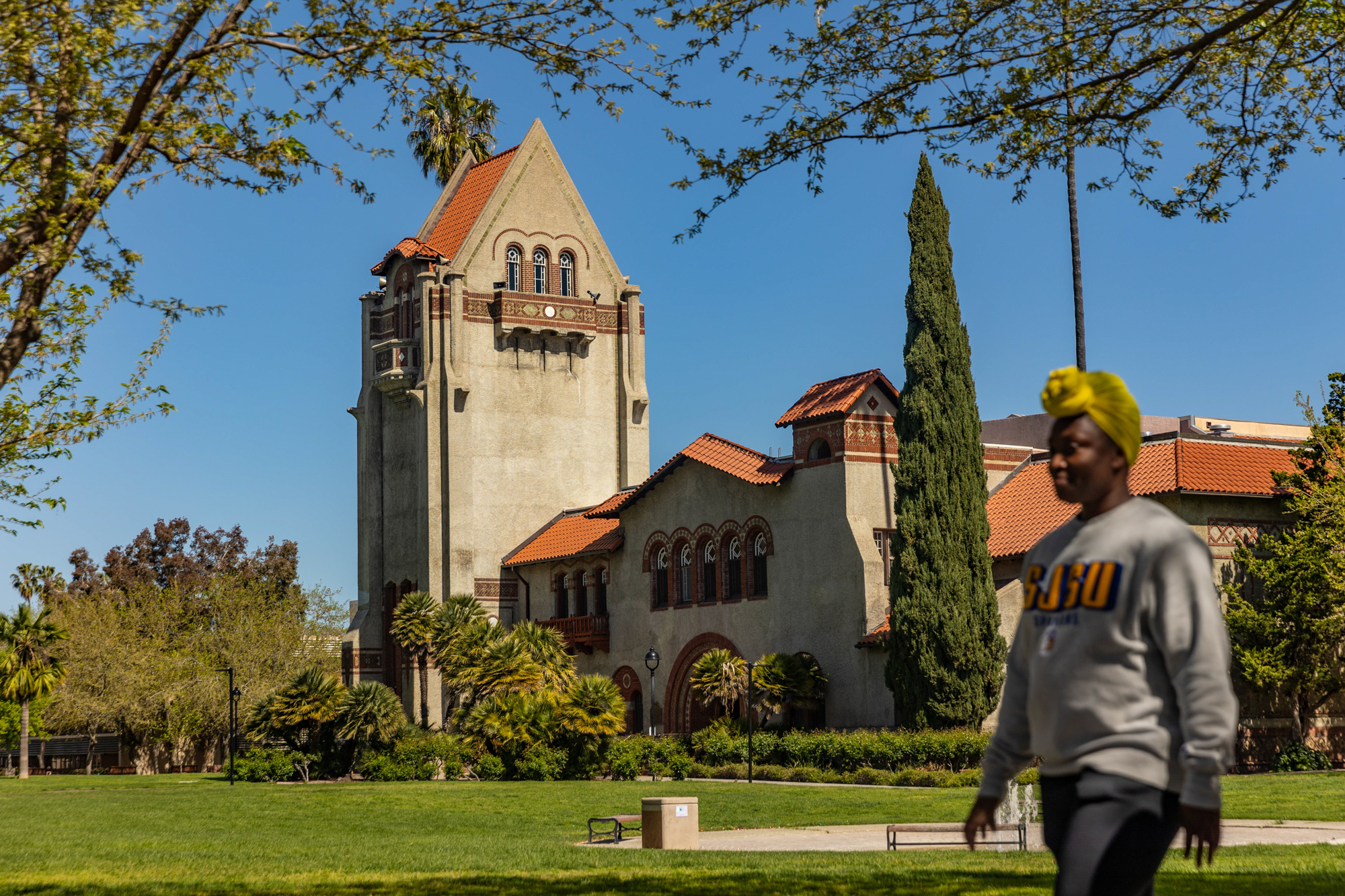 Tower Hall at San José State University on April 3, 2025. (Gina Castro/KQED)
In July, the faculty union declared an impasse in contract negotiations after CSU returned with a proposal that would cut their health benefits.
Scherini, who said she’s been working at the university for five years and teaches in three different departments, still has to work a second job to afford living in the Bay.
She also said she’s worried about how SJSU and CSU’s interest in AI will impact her job security.
“One of the major guardrails I hope to see come out is to make sure that artificial intelligence isn’t used to replace faculty and substitute for classroom learning,” Scherini added.
San José State University spokesperson Michelle Smith McDonald told KQED at the event that the university is keeping its AI policies “more open” to allow professors and lecturers to freely decide how they want it to be used in the classroom.
“The university hears those concerns, the provost hears those concerns, and it’s a matter of how prescriptive you are about AI and AI usage,” McDonald said.