
This story was produced in partnership with the Investigative Reporting Program at UC Berkeley Journalism.
For years, dozens of custodians at Oakland’s airport took home extraordinary paychecks, inflated by overtime. Some janitors made $200,000 or more in total annual pay, according to payroll records obtained by UC Berkeley’s Investigative Reporting Program and The Oaklandside. Overtime payouts peaked in 2023, when eight airport janitors took home more in wages than the city’s mayor.
But in February 2025, the union representing custodians blew the whistle. In a grievance letter to the Oakland San Francisco Bay Airport leadership, SEIU 1021 alleged that managers were rigging the process by steering lucrative overtime shifts to favored workers. And the union made an explosive allegation: the favored workers paid kickbacks to managers for more overtime.
The complaint came at a tough time for OAK, which experienced the steepest decline in passenger traffic of any major U.S. airport last year, with a nearly 15% drop from December 2024 to December 2025, according to the port’s own data. The airport is projecting that this year’s $209 million in operating revenue won’t be enough to cover expenses, resulting in a $47 million deficit.
OAK’s overtime controversy — which occurred behind the scenes and has gone unreported until now — raised serious questions about the airport’s management. Run by the Port of Oakland, which has a governing board appointed by the mayor and city council, the airport operates largely beyond City Hall’s day-to-day reach. Its finances are separate from the city’s, but it’s viewed as an important economic driver for the city and region.
The overtime controversy also raised questions about worker health and safety. A former worker and manager at OAK interviewed for this story both said the extra-long shifts and physical labor could be taxing on a person’s mental and physical health. In 2023, the highest overtime earner worked 74 hours a week, on average, timecards show.
Our investigation found that overtime had long been a topic of contention at the Oakland airport. Interviews with over a dozen port employees and records painted the picture of a disorganized, largely unchecked scheduling system that didn’t benefit everyone and left some workers feeling cheated.
Earlier this year, when we shared information about how much overtime OAK custodians were claiming with Oakland City Auditor Michael Houston, he said it might be time for his office to audit the port.
“What assurance does the city have to make sure that adequate controls are in place?” he asked about overtime spending.
As for the custodial overtime, he said he wanted to know whether it was distributed in a way that puts the organization’s needs front and center. “Or is it just an opportunity for a few more tenured, well-connected employees to just line their pockets,” he said.
For a year and a half, the union’s allegations of favoritism and kickbacks went unanswered. The port hired an outside investigator to look into the case, but their review was delayed repeatedly by difficulty scheduling interviews with port workers, including some who didn’t cooperate. When we asked for a copy of the investigation report, the port initially declined to hand it over, citing attorney-client privilege and saying that the document was still only a draft.
However, the port’s answer to what happened finally came this week when it released the long-delayed confidential investigation report. The 82-page document, prepared by the Municipal Resource Group, found that inconsistent practices by managers in the overtime distribution process created inequitable treatment of custodians. Favoritism also played a role in the allocation of some overtime shifts. Most other alleged examples of favoritism weren’t found to be true.
The investigation cleared everyone of corruption: it didn’t find evidence of kickbacks.
“The report shows the sustained findings were isolated, and the Port is taking action to discipline the individual and that allegations of corrupt behavior or kickbacks were entirely unsubstantiated,” said Port Communications Director Justin Berton.
But members of the union that sparked the investigation don’t agree that the matter is settled. Joey Friedman, SEIU 1021’s former chapter president for the Port of Oakland, said he believes the investigation was steered by the port and its results don’t tell the whole story.
Calling the investigation “limited,” he said, “the port did everything they could to prevent the truth from coming out because it would create a situation where there would have to be a large payout to SEIU members, and discipline to multiple members in their management team.”
Berton said the port has made important changes to its overtime system to ensure that, going forward, overtime is fairly distributed in accordance with the custodian union’s contract.
Complaints about an unfair system reached a boiling point last year
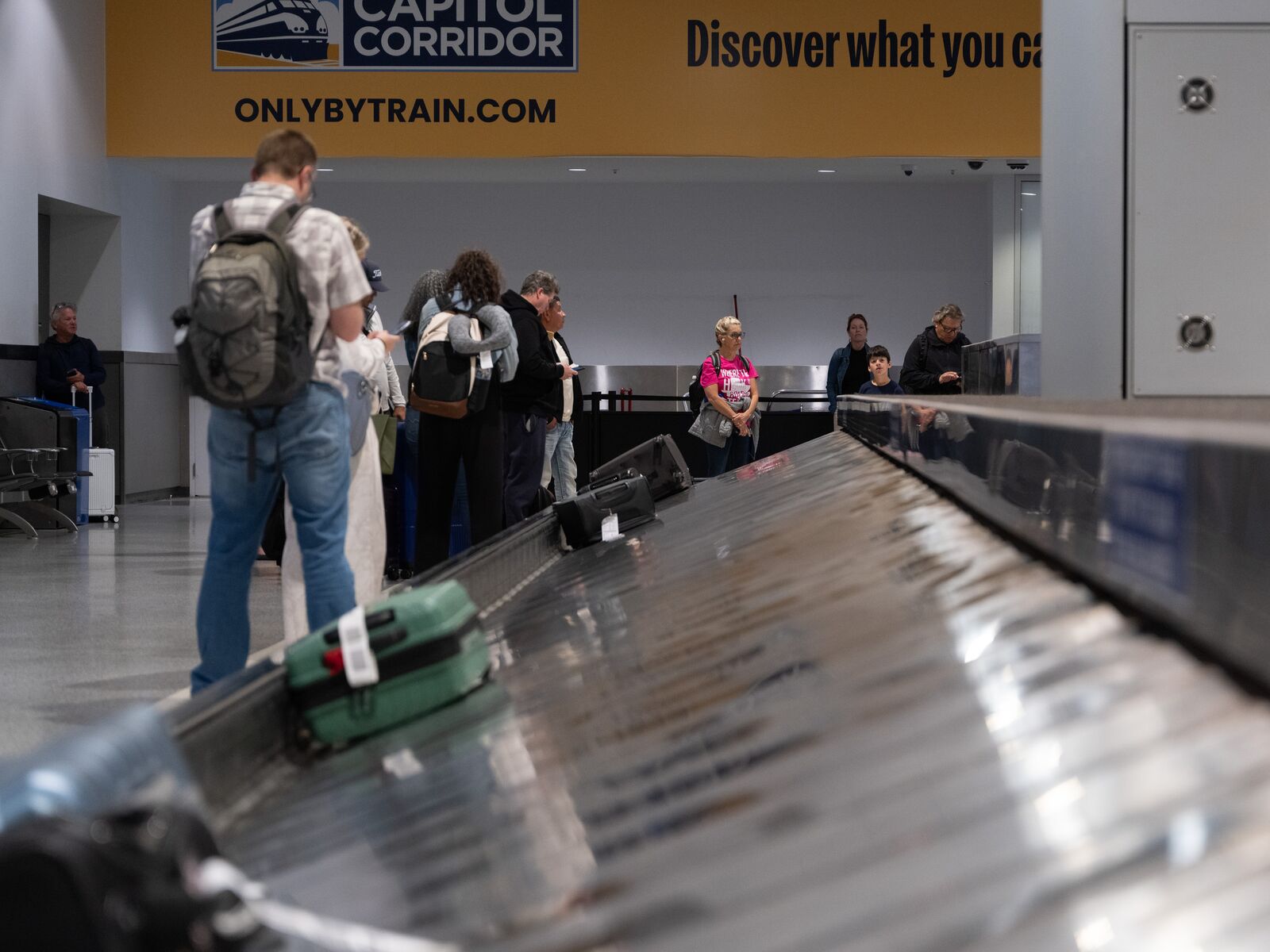 Skytrax, which rates airports, gave Oakland three stars out of five for the cleanliness of its bathrooms and waiting areas. Credit: Jungho Kim for The Oaklandside
Complaints about overtime distribution started cropping up in June 2024, when some custodians told union leaders that hours weren’t being handed out fairly. What the union came to believe, after it interviewed members and reviewed overtime records, was that the rotation of overtime opportunities had not simply broken down. Somebody had been steering it.
In December 2024, union officers sat down with two custodial supervisors to discuss overtime. Afterward, they wrote in an incident report that they found locked overtime books, missing paperwork, and a lead custodian who acknowledged granting overtime without proper documentation.
On Feb. 19, 2025, the union filed a grievance complaint on behalf of numerous custodians who felt they’d been unfairly treated. The union alleged some custodians were “systematically overlooked for overtime opportunities, while others were unjustly favored with overtime that should not have been extended to them.” And favored recipients of overtime, they alleged, were “engaged in a quid pro quo arrangement with custodial supervisors, exchanging money for overtime appointments.”
The union wanted compensation for the custodians who had been passed over. It also wanted the responsible supervisors removed.
Two days later, the port’s labor relations manager, Pamela Trawick, wrote back. She let the union know that the port had secured an outside investigator. The port asked the union to agree to hit pause on the grievance while the investigation was underway.
The union agreed to the request because they believed the port would keep them in the know, Friedman said.
The freeze did more than halt a grievance. Left to run, much of the grievance process and its resolution would have been documented in public records, due to requirements in the union contract. The hold prevented that level of transparency.
Trawick then wrote a letter to the union seeking evidence for the confidential inquiry. She asked who exchanged money for overtime assignments, with whom, and when.
The union never pinned the kickback allegation to a single transaction. In writing, SEIU offered as evidence only that supervisors and favored custodians traveled together and took time off at the same time. In interviews, union officials described cash passed to a supervisor, lunches bought in exchange for shifts and drinks, flights and a rental car covered on vacation, but many of the accounts came secondhand, and the investigator judged them to be baseless.
Kimberly Moses, a terminal services supervisor who was one of the managers the union accused of unfairly distributing overtime, said in an interview that she did nothing wrong.
Moses described the airport’s overtime record-keeping system as a binder-and-paper operation of call sheets and codes, scribbled by hand. Nobody above her placed meaningful caps on how much she could hand out, she said, but getting approval to hire additional full-time staff was a constant struggle.
Port records show she signed off on overtime for some of the airport’s biggest overtime earners. If anyone felt mistreated, she said it was the result of mistakes.
“It’s a human process, and you’re doing it on paper,” she said. “You don’t know what was done the day before.” But a mistake, she said, “doesn’t rise to favoritism and quid pro quo.”
The custodians whose overtime she approved included people she went on vacation with. Moses described two trips with subordinates to Mexico in recent years: one in Cancun, and one in Michoacán. Her traveling companions included a few custodians the union alleged were benefiting from the allegedly unfair system. The union members raised the possibility that the trips — how they were paid for — might have been part of the alleged kickbacks.
It was friendship, Moses said. Nothing more. She understood how the travel could look, “but that is not the relationship I had really with any of them,” she said. Everyone paid their own way in Cancun, she said, with no pooling. In Michoacán, the group pooled money, she said. She figured she spent at least $2,500 of her own on accommodations and wine, called her grasp of the accounting poor, and said, “I may or may not have paid more, you know, in a collective sense, but it wasn’t about that. It was going to, you know, enjoy the trip.”
Moses retired at the end of 2025. She said her decision had nothing to do with the allegations or the port’s investigation, which by then had been running for nine months and, by May of this year, had cost the port at least $98,000.
Edie Brown is one of the workers who felt harmed by the airport’s overtime system.
She was hired as a custodian in 2011 at $4,092 a month, a single mother of two who finally didn’t need a second or third job. By 2019, her pay reached $183,000, including $99,000 in overtime, payroll records show.
“You making some money. You living a good life. You being able to get your kids and your family into a different tax bracket and into a different area code,” she said. “It’s life-changing.”
Brown was not named as an alleged participant in the kickback scheme. She said the work was feast or famine, and after a carpal tunnel injury took her off the job for over three years, she came back in 2024 to few overtime opportunities. Newer employees were getting the overtime she felt she was eligible for.
She said she went to a supervisor to complain that the hours weren’t being handed out the way the union contract required. Overtime calls are meant to go out in order of seniority, and every custodian on staff is supposed to get a call before anyone gets called a second time.
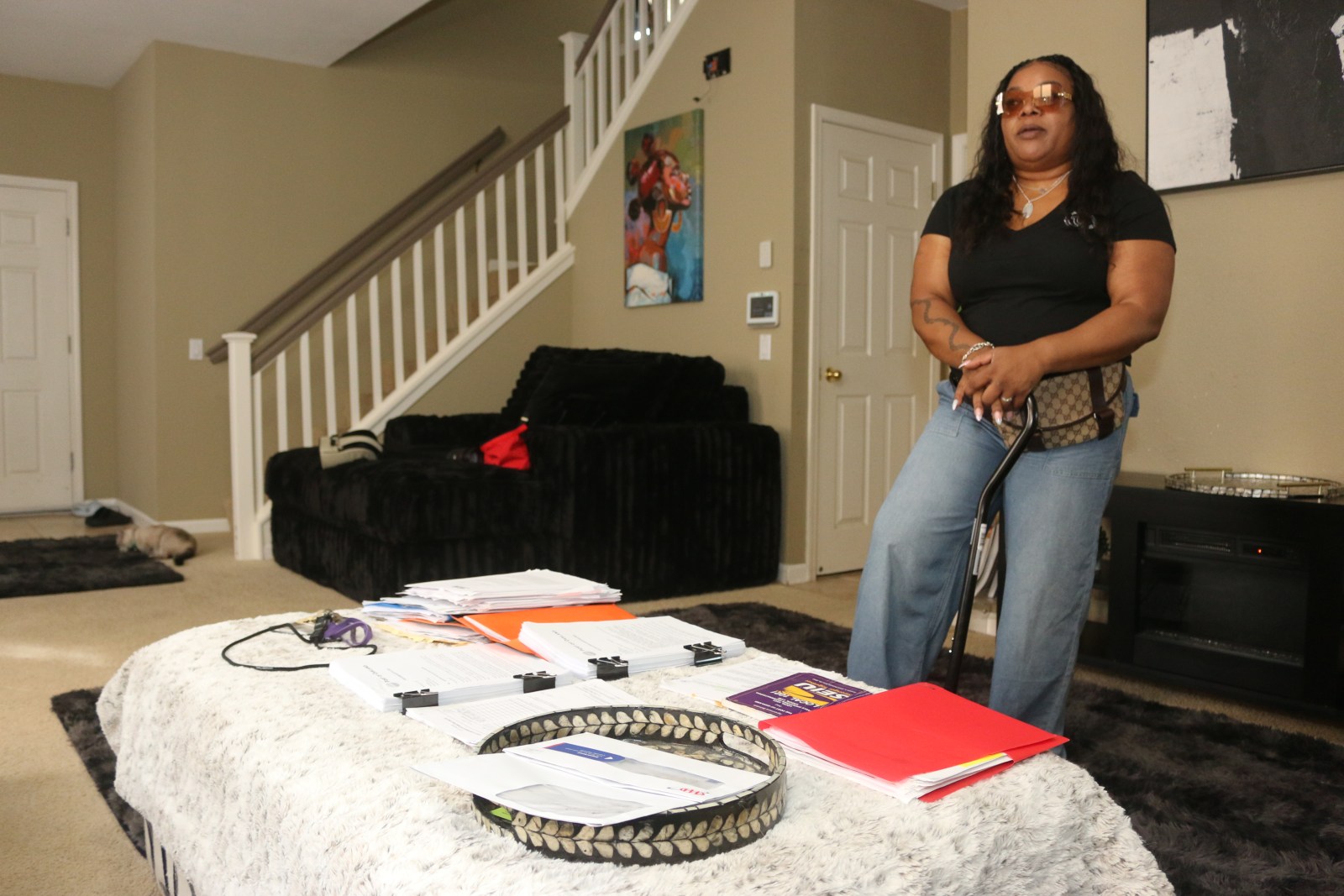 Edie Brown was one of OAK’s high-earning custodians until she came back to work from a carpal tunnel injury. Credit: Brian Krans for The Oaklandside
Two weeks after Brown’s complaint, the port notified her she was under investigation for workplace conduct, according to records. The alleged conduct occurred months before her complaint and involved the length of her lunch breaks. In December 2025, the port issued its notice of intent to terminate her, records show. This year it fired her, she said.
Her union alleged in a formal grievance that the investigation and the firing were retaliation for her whistleblowing; the port denied the allegations. Her complaint is still pending.
Brown says her health has been permanently impacted by injuries sustained on the job. She remembers working long hours but now questions whether it’s good for workers’ well-being. Over one nine-day stretch in February 2024, she worked 100 hours, timecard records show.
“I don’t even remember some of my children’s childhood because of being so addicted to working and trying to make a living for my children,” she said. “Man, I missed it. That’s the biggest regret.”
For all airport custodians, overtime has topped $2 million annually for three years running, while filling the 11 janitorial vacancies recently listed as open would cost roughly $1.4 million a year, based on the typical salary and benefits package for new airport custodians.
The Bay Area’s other major airports do not appear to have the same problem with questionable overtime spending. At San Francisco International Airport, the highest-paid janitor earned $107,000 in wages, including overtime, in 2023, according to payroll records. San José Mineta International, a larger and busier facility than Oakland’s, contracts out the work and spends less than half of Oakland’s $8 million annual janitorial bill.
What benefit the extra hours brought to the airport is hard to see. When airport supervisors inspected custodial areas in June 2024, they gave more than a third of them the grade the airport’s own manual defines as “complete neglect.” Six percent were perfect.
Skytrax, which rates airports, gives Oakland three stars out of five for the cleanliness of its bathrooms and waiting areas.
Moses has come to see the overtime issue at the airport as a health and safety one. A custodian doing the job right, she said, should be “pretty tired when you’re going home in the evening”; stacking a second shift on top, especially overnight, “adds a whole other layer to that physical demand.” Due to exhaustion after working so many hours, she said, “the basics will get done, but they’re probably not doing that much.”
“There absolutely needs to be limits, because the city has an interest in making sure that the people who are working on its behalf are able to perform their duties,” said Houston, the city auditor. “That is not in their individual interest, that is not in the interest of the City of Oakland, and it is definitely not in the interest of the Oakland community.”
Airport leaders say they’ve made changes to fix how overtime is allocated
 Port officials say the situation with OAK overtime has been thoroughly investigated and that they’ve also updated the airport’s overtime scheduling system. Credit: Amir Aziz for The Oaklandside
The port released the findings of its 20-month-long investigation this week, after the Investigative Reporting Program and the Oaklandside told port leaders we planned to publish this story.
Dorian West Blair, the investigator for Municipal Resource Group, found that the airport’s system of handing out overtime assignments was “inconsistent, leading to the inequitable treatment of custodians.”
Many of the other allegations — that supervisors were ignoring seniority rules when awarding OT shifts; that supervisors intentionally gave preferential treatment to certain custodians; that supervisors immediately hung up on disfavored custodians who called to inquire about OT or removed them from the call sheets; and that supervisors concealed violations and retaliated against custodians who complained — were “unfounded,” according to Blair.
But the investigation did find evidence of misconduct by one supervisor. The supervisor failed to place custodians on waitlists and was found to have incorrectly stated that someone had refused overtime when they actually hadn’t. They were also shown to have exhibited favoritism towards at least one custodian.
Another airport employee, a lead custodian, also gave preferential treatment to the same employee.
The investigation concluded that the kickback allegations were unfounded. Union representatives’ claims that certain custodians paid supervisors or bought them lunch in exchange for overtime opportunities were found to be missing “credible evidence.”
Regarding one of the Mexico vacations Moses took with her colleagues, Blair wrote: “It is highly unlikely that the Custodians would spend substantial amounts of money for a single Supervisor to receive some OT shifts.” She found Moses’ account of the trip credible. She concluded that the allegations against her were based on “interpretation, assumptions, and speculation.”
Still, the investigation found recurring inconsistencies in the way supervisors offer overtime. Blair wrote that the lack of written standard procedure resulted in “both possible and actual unintentional inequities in how overtime is offered.”
Friedman, the airport worker and former SEIU 1021 chapter leader said he doesn’t think the information in the report is honest and complete. Because the port hires and pays investigators, he said, it can steer the process in its favor and direct investigators towards things “that they were okay finding.”
“The company’s done everything it can to pretend that it did a fair and honest investigation and found nothing. Well, you know that’s just not even close to true,” Friedman said. “Everyone that was involved in this, from the custodians through our leadership team that touched on this, and that talked about it, and that saw it, knows for a fact that this was going on.”
While the investigation was underway, the airport replaced the old, paper-based overtime scheduling system. Berton said the port had planned to update the system since 2019, but the pandemic caused delays.
Overtime now runs through a software called Arcos that assigns shifts by seniority through an automated call verification process, said Berton, the port spokesperson. “The Arcos system ensures overtime is distributed fairly, efficiently, and in accordance with the union contract.”
Berton added that the port and SEIU 1021 will “continue to work in partnership” on issues the union raised about how overtime is allocated.
One change that could reduce the airport’s use of overtime is hiring more workers.
Custodian job vacancies are posted and being filled “as quickly as the civil service process will allow,” Berton said. Each posting draws more than 1,000 applications, all of which must be screened, tested, security-cleared and trained over a period of months.
Relief may also come from a direction that has nothing to do with reform. Air travel is forecast to fall further, and with it, the port said, “custodians at airports such as OAK will likely see fewer overtime opportunities as staffing levels would be adjusted to meet demand.”
Whatever the port does next about overtime, at least one key official in charge of approving the port’s annual budget, including overtime, did not know there was a problem to fix. Over four years, the port’s board approved the airport’s budget unanimously each time. Staff presentations included data showing rising overtime costs, but commissioners do not appear to have questioned the trend.
Andreas Cluver, the board’s vice president and the only commissioner to agree to an interview, said he was unaware of any issues related to custodial overtime. He said he found some custodians’ wages hard to believe. But he wasn’t concerned. “If there’s anything going on that is not according to the contract,” he said, “we would hear about that through the grievance procedure.”
“*” indicates required fields