

Other Bay Area cities — and the state of California — have already begun preparing for rising seas and flooding thanks to the strengthening weather pattern.
Oct 23, 2026
Updated 2:42 pm PT

Mayor Daniel Lurie in the Mission District with his team on July 14, 2025. San Francisco Mayor Daniel Lurie declared a local emergency to prepare for a warm and wet winter thanks to El Niño. (Tâm Vũ/KQED)
San Francisco Mayor Daniel Lurie declared a local emergency on Friday, as flooding and rains from what could be a historic El Niño make their way to the Bay Area.
The declaration, announced during a press conference and with the backing of local emergency personnel, allows the city to access El Niño preparation services faster and lets Lurie reallocate funds between and within departments for the emergency.
Federal and independent forecasters have long warned of stronger storms and more flooding due to the weather event. The National Weather Service’s Climate Prediction Center said there’s an 83% chance of a record-breaking El Niño through the end of the year. A report from UC Davis released this week also said low-lying areas throughout the Bay Area, including the runways at San Francisco International Airport and the Oakland airport, Highway 37 and the eastern approach of the Bay Bridge, are extremely vulnerable to floods and failure this winter.
“Getting these resources ahead of severe weather will help our city protect facilities and respond quickly when impacts do occur,” Lurie said at a press conference. “We are preparing to keep essential services running during storms.”
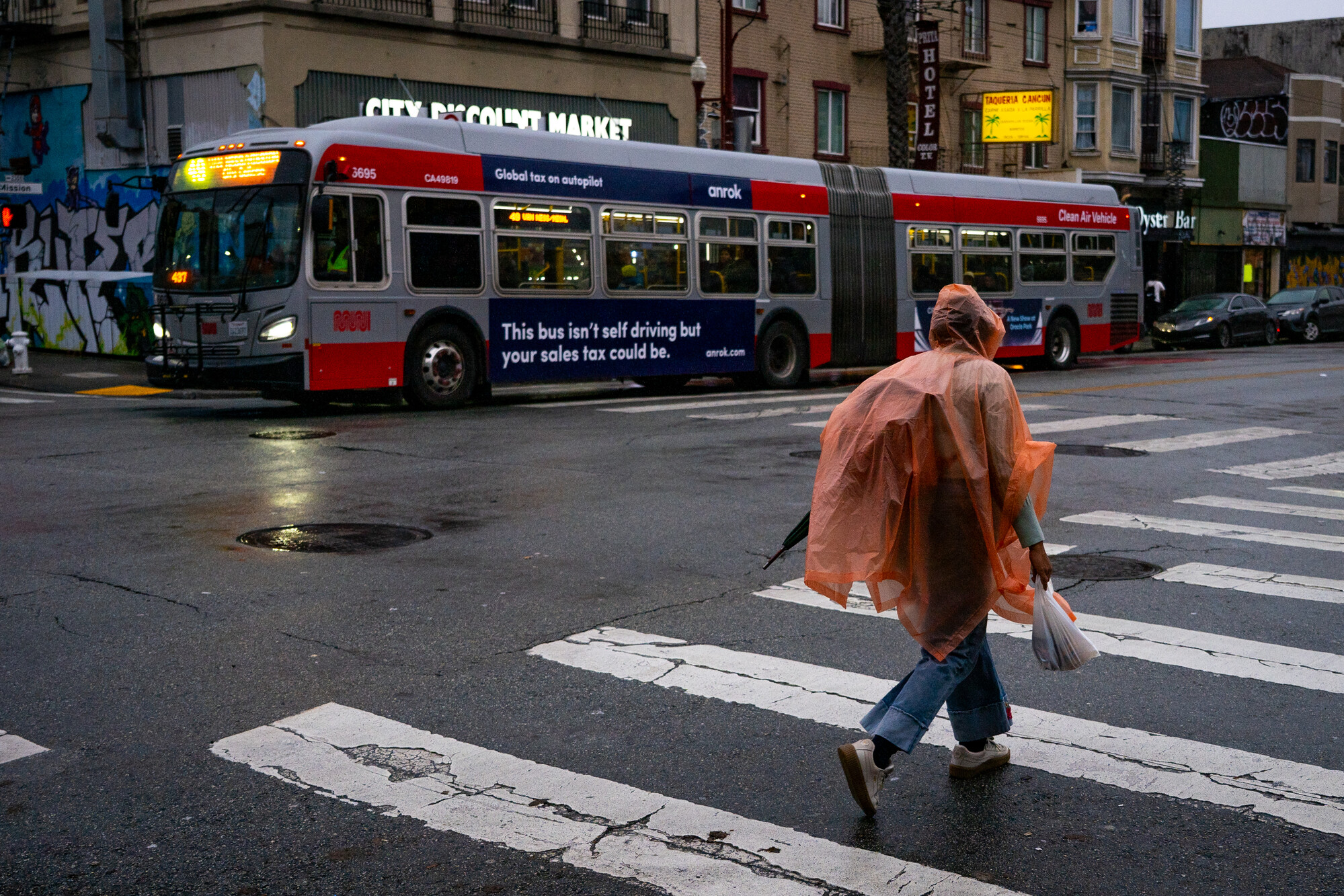 People walk along Mission Street in San Francisco on Dec. 23, 2025, as a storm system moves through the Bay Area. (Beth LaBerge/KQED)
The declaration simplifies contract awards for more than half a dozen departments, including Public Works, the Public Utilities Commission and the Port of San Francisco.
The city’s Department of Emergency Management has already been leading efforts to coordinate preparations. It’s asking other departments to prepare for possible staffing disruptions and to identify possible service gaps.
Emergency Management has also teamed up with the Department of Technology to create additional map features on the city’s website, which show where evacuation and other supply sites are located.
San Francisco said that residents can start their own preparations by staying up to date with National Weather Service forecasts, signing up for AlertSF, looking into flood insurance and protecting belongings using sandbags or elevating items in garages and basements.