
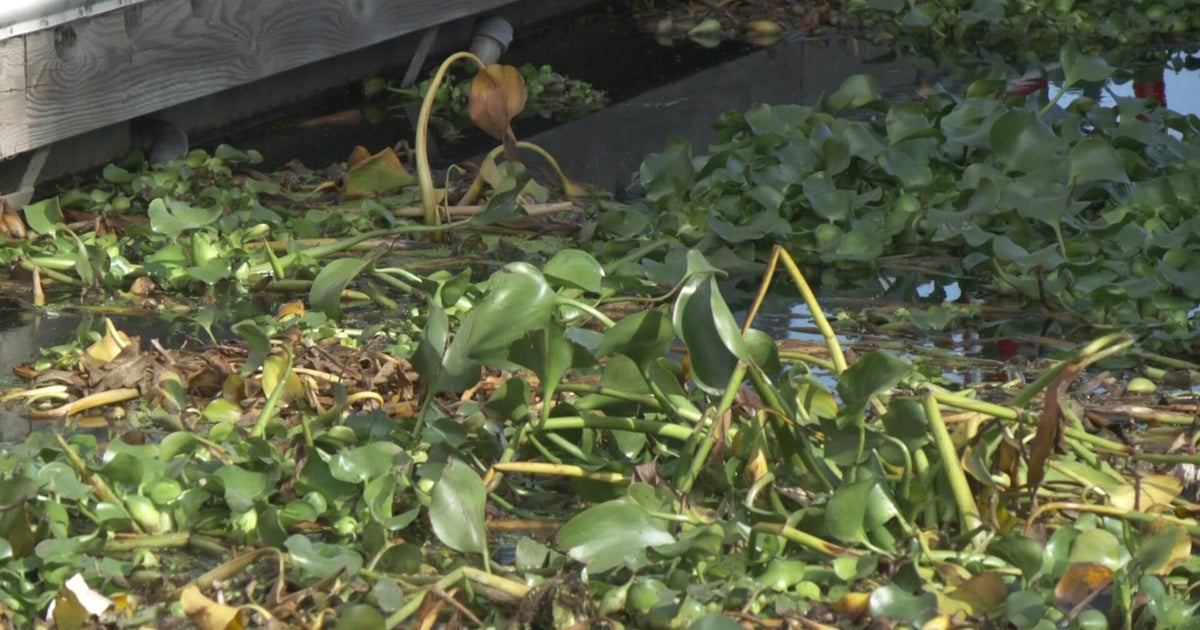
Hyacinth, an invasive and seasonal plant, is once again invading Stockton waterways. This year’s bloom came into downtown Stockton from the Tuolumne River, breaking off during the last storm.
Some residents said they haven’t seen the hyacinth at the Stockton Marina this bad in a couple of years.
“It’s like living in the jungle to me,” Stockton Marina Resident Leon Robinson said.
Other Stockton residents who live near the water say it doesn’t bother them.
“A lot of neighbors, they complain about it, but my neighbor next door, we just deal with it,” Robinson continued. “It’s a part of life, a part of nature, and we got to learn to adapt to it.”
However, the state said it can cause all sorts of problems.
“If you can’t have a bar pilot enter the ship from San Francisco Bay and come upstream because their radar is showing large mats of hyacinth, they pretty much call Stockton and West Sacramento saying we’re gonna have to drop anchor because we cannot distinguish between land and the weeds,” California State Parks Boating and Waterways Environmental Program Manager Edward Hard explained.
Hyacinth also brings mosquitoes, affecting water conveyance. As a result, fisheries in Tracy have a hard time counting fish, and farms have difficulty pulling water for their crops.
On top of all that, it’s nearly impossible to get rid of the plant.
“The seeds from that flower essentially can stay in the muds of anywhere,” Hard said. “It grows for up to 30 years, so the seeds of this plant have a way of just spreading everywhere.”
Thankfully, this year hasn’t been as bad for the Port of Stockton.
“This is kind of when we start to see it go away,” Port of Stockton Deputy Director Jeff Wingfield shared. “Typically, when we start to hit those freezing or near freezing temperatures at night, it has a really big impact on the on the hyacinth. We won’t see it too much after that, hopefully.”
There is some good news. Based on the direction of where this week’s storm is coming from, the state says it could help get rid of the plant naturally by pushing it into the bay, where it will die in the salt water.
California State Parks will be out in the water to carry out more treatments if needed after the storm moves through the area.
Through constant treatment, crews can keep the issue at bay, but even with it, the hyacinth is here to stay.