
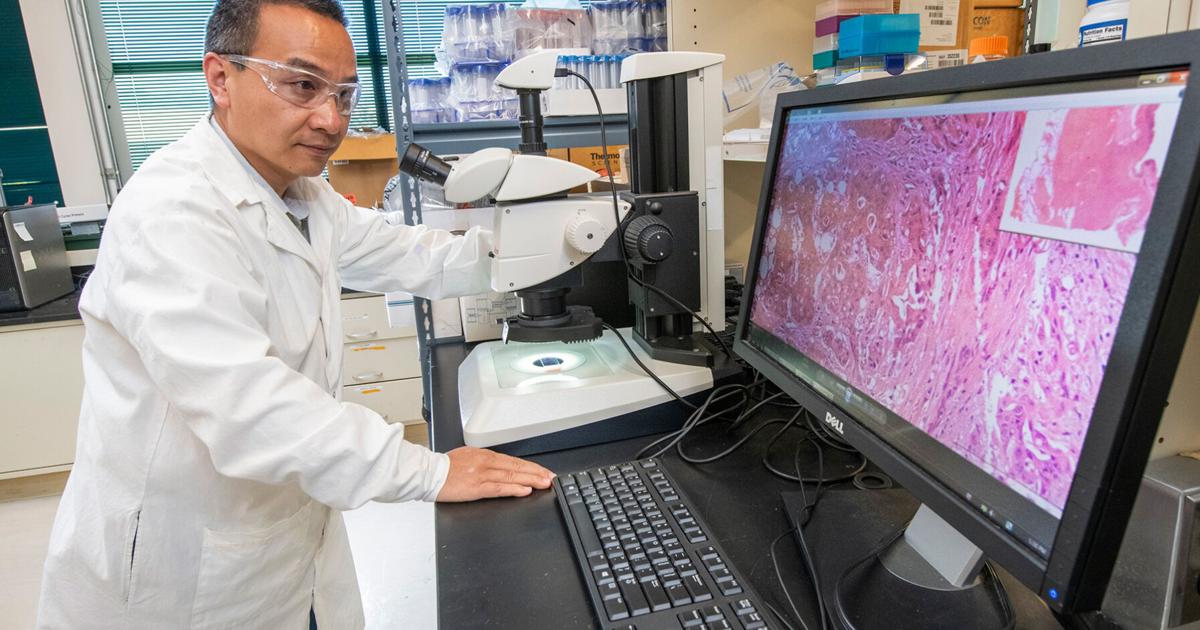
Scientists at Lawrence Berkeley National Laboratory developed a blood test that can measure a person’s radiation exposure. The test simplifies current standard methods for radiation exposure, which involve slow, expensive, specialized lab tests.
The test uses a machine learning tool that can detect and measure past radiation exposure from a standard complete blood count, or CBC, one of the most routinely performed clinical blood tests.
Researcher Jian-Hua Mao and his team have been working on the radiation blood test since 2022. However, the group has been studying the biological effects of radiation in mice for more than two decades.
The study finds that a simple CBC blood test can carry information about a person’s history with radiation. Researcher Jamie Inman explained how, because a CBC can be conducted within any clinic, the research can act as a “fast, inexpensive first screening step.”
“The clearest use is in a radiological or nuclear emergency, where a large number of people might need to be checked quickly and specialized labs would be overwhelmed,” Inman said in an email. “Because almost any hospital or clinic can run a CBC, this could help responders prioritize who needs care first.”
Another team member, researcher and computational scientist Hang Chang, worked on machine learning algorithms that were used to examine data. He was specifically interested in seeing if machine learning could spot patterns of blood measurements that weren’t visible from a single data point.
The team conducted CBC tests on more than 1,100 mice, putting the samples into a machine learning model to see what radiation levels it could detect.
“Our Sparse CBC model detected exposure at doses as low as 0.05 gray, which is about the yearly dose limit for U.S. radiation workers, and up to 150 days after exposure,” Inman and Mao wrote in a joint email. “In cross-validation and in a separate double-blind test on 431 more mice, its accuracy and sensitivity were above 80 percent.”
According to Chang, the lab’s next step is to pursue clinical collaborations to validate their findings with human data.
“The nice thing about our approach is that it doesn’t need any new instrument or new sample. It’s software that analyzes the results of a blood test that hospitals and clinics already run every day,” Chang wrote in an email. “Our code and trained models are freely available open source, so other researchers can build on them.”
A CDC spokesperson said the research is in an early stage and requires further testing and certification before the federal agency considers adopting the new test in any safety protocol capacity.
“This test looks to see what dose one might have gotten in the past,” the CDC spokesperson wrote in an email. “It, like other tests that provide a dose estimate, could be used to limit excess exposures. This likely would not change testing regulations unless regulators want additional confirmatory tests for suspected exposures.”
The team’s research joins Berkeley Lab’s distinguished history of research in radiation science.
“The Laboratory’s history also encompasses decades of environmental monitoring, remediation, and advances in radiation safety, reflecting the evolving understanding of the responsibilities associated with nuclear science,” Inman said in the email. “Our current research on radiation exposure biomarkers builds on Berkeley’s longstanding expertise in radiation science.”