
Ever since President Donald Trump began his second term, he and his allies have been seeking to cast doubt on the U.S. election system and sow doubt about the integrity of voting through executive orders, lawsuits, and misinformation, and has even used federal agents to seize ballots. Trump’s plans have been announced, then stayed by the courts, in an ever-shifting election terrain. Just on Friday, the administration sent letters to local election officials across California, seeking to prevent the counting of more than 20,000 mail ballots sent to registered voters the Department of Justice claimed were not U.S. citizens.
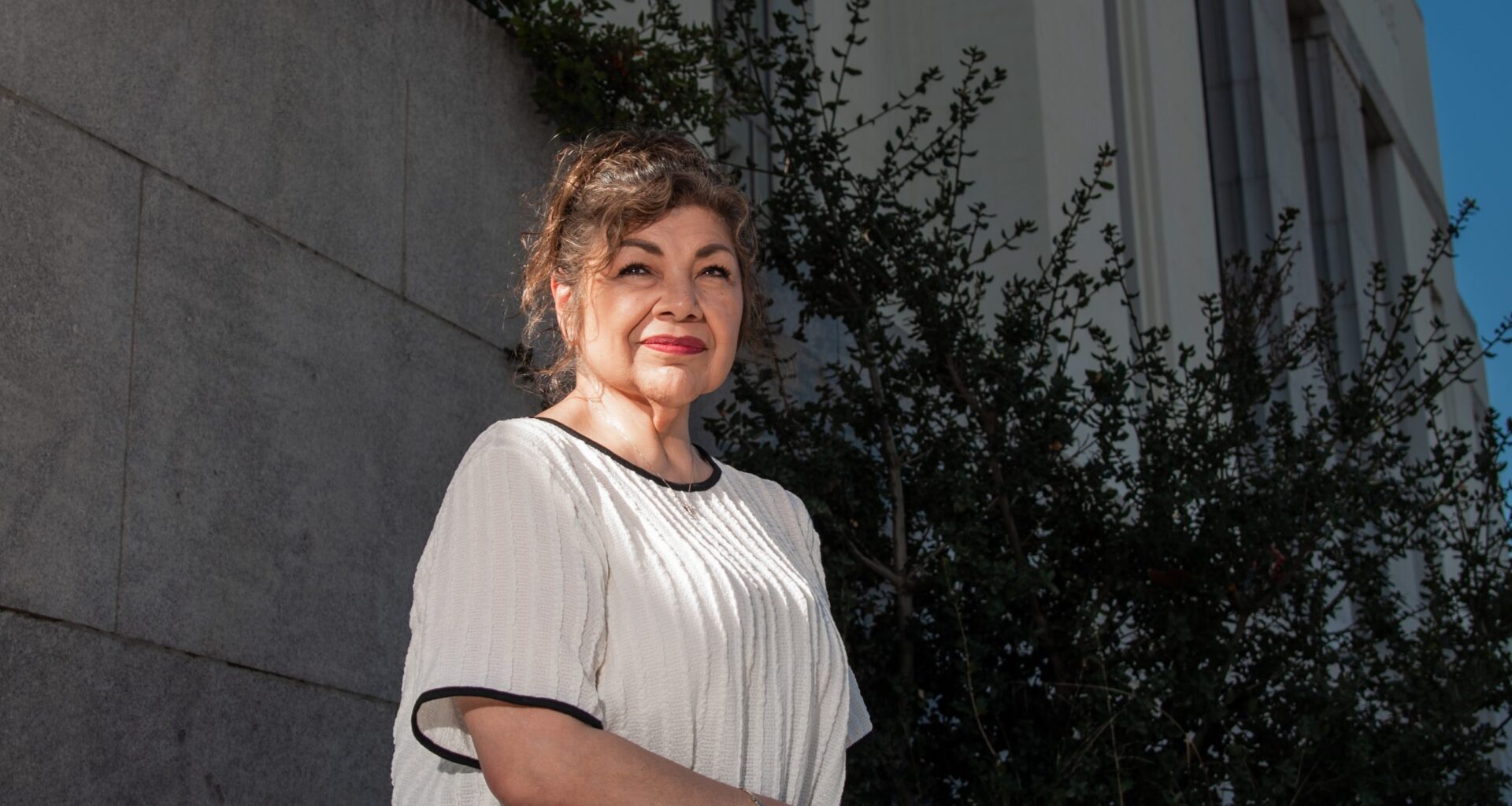
So it was a tough year, to say the least, for Cynthia Cornejo to take on the role of Alameda County registrar of voters. Any mistake could open up the county or the state to attacks on the legitimacy of our elections.
A Bay Area native, Cornejo has spent more than three decades in the county registrar’s office, working her way from the bottom up in the organization. Along the way, she gained detailed knowledge of almost everything that is required to make elections work. But being in the top job comes with new attention — and new pressures.
The office of the Alameda County Registrar of Voters has been in the hot seat for years. Missing votes, slow delivery of election results, and ballot snafus have all sowed doubts among some voters about the quality of the processes.
The nadir of the office’s reputation may have been around the 2020 general election, when poor communication with the public on the 10-year-old ranked-choice voting system led to voter confusion. Then, after election night, the registrar tabulated some votes incorrectly in ranked-choice races, affecting races in Oakland, San Leandro and Berkeley. (Our newsroom ended up suing the registrar to hand over records about what happened.)
In the years since, Tim Dupuis, who was the registrar at the time — and the county’s director of IT — worked hard to fix those errors. He sought to publicly communicate any possible processing issues faster and correctly, and his team implemented technical and management improvements.
But the county’s Elections Commission — created three years ago in response to some of the registrar’s failures — eventually came to the conclusion that Dupuis needed to either separate his IT tasks from his registrar tasks, or step down. After receiving accolades for his work from members of the commission, Dupuis decided to retire at the end of last year.
In the aftermath, Cornejo — Dupuis’ long-time deputy — stepped into the role. As a seasoned elections administrator who started out in the office just before the Bill Clinton-Bob Dole presidential race of 1996, she has been deeply engaged in the solutions implemented over the last few years.
We spoke to Cornejo in early October as she prepared for her first major election, secure in the advance work she and her team have done over the past year but aware of the many ways it could go wrong. Among other topics, we discussed how she’s experiencing pressures from the Trump Administration and how she and her team are preparing with state officials for possible election interference.
The following conversation was edited for length and clarity.
You worked for almost 20 years as deputy registrar under your predecessor, Tim Dupuis. Did you ever imagine you’d someday be in charge?
It was a little of a surprise when he retired. I think it may have been the natural evolution for me. I loved being in the deputy role. I loved running operations. I’ve been with the department for 30-plus years. I started as a temporary team member and then just worked my way through the different positions.
What’s been the biggest difference since he left in March? What has been required of you?
The main difference is now being a department head. There’s a great team here. It requires more time to work through all of the duties as registrar, but we’ve been able to make it work. I have appointed two interim deputies to assist so I can still have the role as an ROV [registrar of voters] in terms of the county programs and initiatives, but then also have the focus on the registrar’s voter functions.
I appointed deputies effective September 27. The role isn’t much different, but yes, it’s a higher level of responsibility. Alameda County has complex voting methods in terms of ranked-choice voting and youth voting, on top of everything else we do. Alameda County probably has the most complex voting methods of any other county in the state.
What’s the biggest complication?
With rank choice voting, which we’ve had since 2010, the jurisdiction has grown; Albany joined recently. But we already had the methodology in terms of the voting process being vetted and proven.
With youth voting, in 2024, we had two jurisdictions [Editors’ note: Oakland and Berkeley began allowing 16- and 17-year-olds to vote for school board that year], and in this election we were able to add Albany Unified School District. Students who have pre-registered will be able to vote on school board directors.
One of the other initiatives that I wanted to make sure we could bring to fruition is allowing youth to vote in person. So all youth voters now can go to a voting center. We had more time to be able to implement that.
Let’s talk about information technology, since Dupuis was the head of IT and also the registrar. How are those tasks now managed?
So they’re separate now, but we are supported by the IT department. There are applications that they support. During the transition, we were able to make sure that the departments are no longer conjoined. The head of IT now is Timothy P. Flanagan, who was appointed recently.
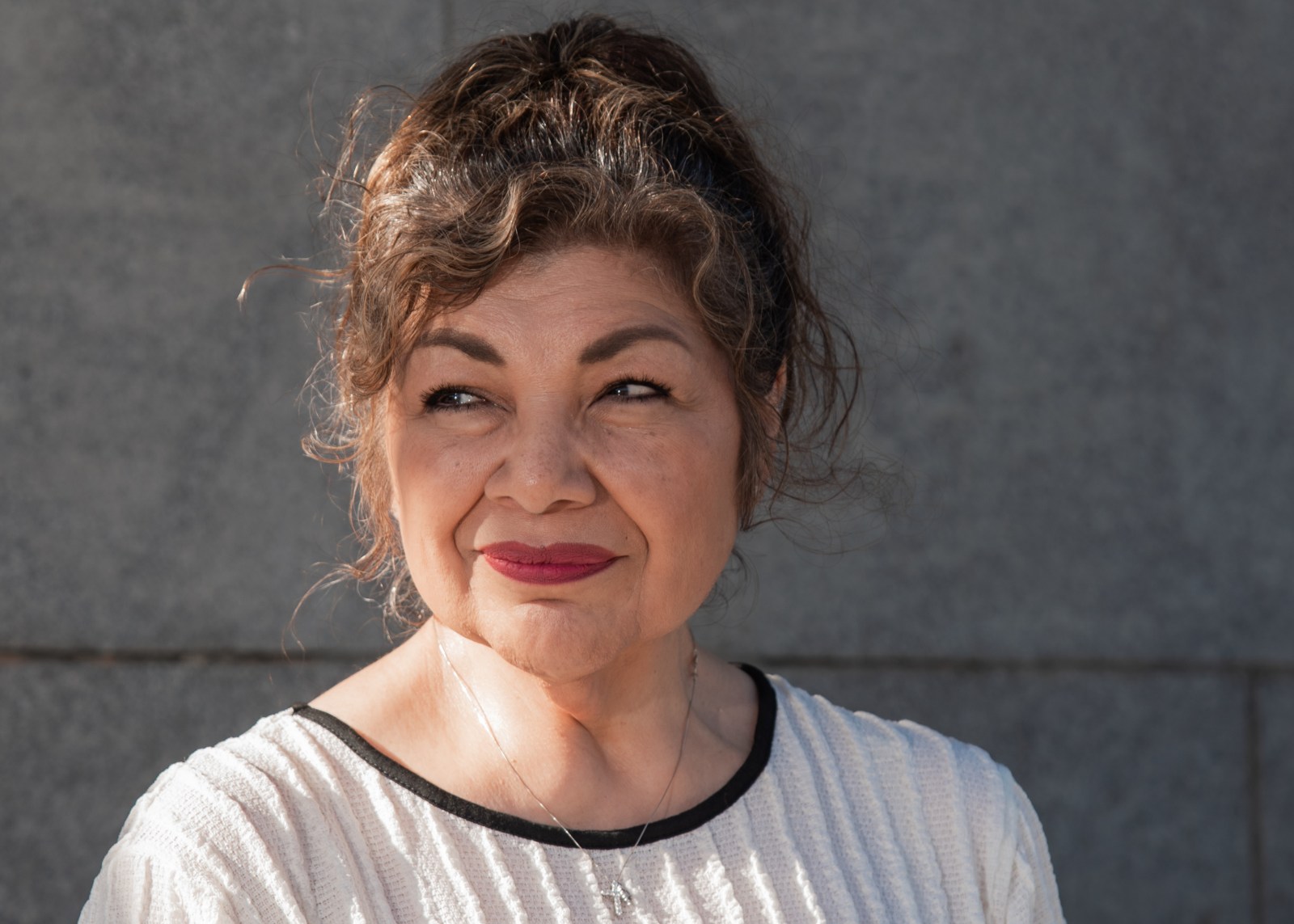 Cornejo is a longtime county employee who took over the role from Tim Dupuis, who held the position for more than two decades. Credit: Ximena Natera for The Oaklandside
California’s been criticized for its slow election results, whether that’s fair or not. After all, California is one of 14 states that counts ballots postmarked on Election Day, which necessarily slows things down. In a summer update to the voting commission, you said your team was able to implement faster signature checking, scanning, and vote extraction. What’s your goal this year for how long it’ll take to get a full count for November’s election?
It’s an interesting question because we really are looking at projections. As it is right now, voters are motivated. They’ve been calling before ballots went out and before voters’ guides went out. Ballots went out on Monday [October 5, 2026].
Our marketing campaign is, “Don’t wait, vote now.” We’ve had voters coming to the window already and voting. [Editor’s note: Early voting takes place at the registrar’s office at 1225 Fallon St., Room G-1.]
We feel as though the turnout will be comparable to November 2024, but we don’t know for sure. But you plan for it anyway. You want to make sure you’re prepared. You want to make sure all your efficiencies are in order.
In terms of the voting population itself, we can let them know that we are a trusted source, along with the secretary of state. Our campaign this time around is “From Your Hands to Ours,” so voters understand that if they put their ballot in the dropbox, it comes directly to us. We pick up throughout the day at all of our 67 dropboxes.
But people are concerned about what percentage of the vote is counted on Election Night. Part of the issue in 2024 was poor communication about when the next results drops were going to happen. How is it going to work this time?
We mitigated that during the June 2 primary. Two of the things that we did were, one, we did not stop processing ballots on Election Day, and that fared well for us. As long as we’re here and we’re receiving the ballots coming in from the vote centers, I said, “Keep going.” Process, scan the ballots through our sorting machine, have them sig-checked, open those envelopes, and extract the ballots. We were just like a machine, and we went past 10 o’clock, I believe, in June, on the primary.
The other change that we made was that the day after the election, we processed ballots.
And before, you didn’t do that?
No. It was more of a sorting-through-everything day. So we decided, let’s put the work in.
We did that on election night as everything came in because we acquired just a bit more physical space here to do that. It’s still very cramped at times, and we’re constantly moving things around so we can acclimate to what the new process is. So we planned that all out, and we’re processing at 9 a.m. on Wednesday, the day after the election.
Our first update to the state for unprocessed ballots, which is required, was that Thursday after the election. Also we provided our first vote update [election tallys] on that Friday. We then went and worked through the weekend, and our next [results] update, I believe, was on Wednesday of the second week.
Everybody seemed to be happy about that. Then that Friday we provided another [results] update.
So you released results Tuesday, Election Night, then Friday, then the following week on Wednesday and Friday, and then kept updating twice a week until it was done? Is that the plan this time?
This is the goal.
We’re going to try and add one more update during the second week. But we know processing through election night while we were here worked. We also know having that extra day on that Wednesday to process proved fruitful for us and gave us a good return for Friday in terms of a head start.
But you’re not stopping the sorting on the day after the election and successive days, right?
It’s continuous. It’s on the same days as the counting, at the same time. And we’re live streaming this process. There’s a complete schedule out because we want people to know when we’re going to start and when we’re going to update. You can go onto our website and subscribe to be notified the day we start processing.
We actually had this in 2024, but we’ve just kept fine-tuning it. People can go to our website and look at a list of the processes. It’ll say “signature verification.” It’ll say, “opening,” which is opening the ballots. Scanning the ballots. You can click on that link, and then you can actually see the process.
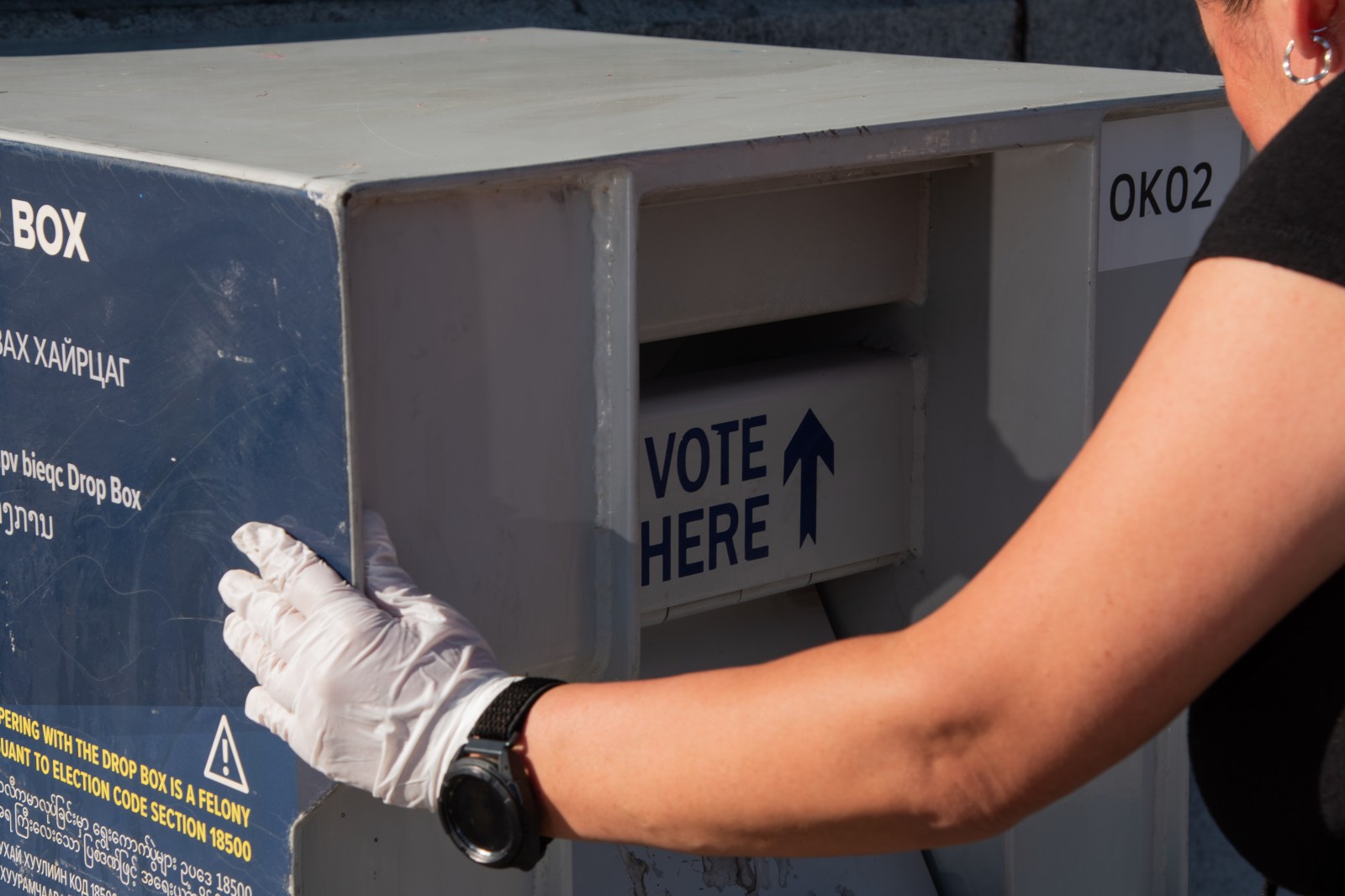 County workers clean the ballot drop box located outside the Alameda County courthouse in Oakland to prepare for election season, Oct. 7, 2026. Credit: Ximena Natera for The Oaklandside
Let’s turn to the broader political context, which cannot be easy for any election official right now. President Trump has taken steps to change how states run their elections. Some of his administration’s actions have been stayed by the courts.
For example, the Department of Justice sought sensitive voter data from states, including Social Security numbers, to create a national voter database that would be used by states to purge their voter rolls, a move the Supreme Court recently upheld. That database has already erroneously flagged thousands of US citizens as potential non-citizens. The DOJ has sued California and other states for refusing to turn over those records. Can you explain in a simple way what the risk would be of turning over this information?
I can talk about voter protection. Voter rolls are confidential in California. We’ve been working with all 58 counties and meeting with the secretary of state on a regular basis. That’s normal with every election, meeting weekly, but this is one of the topics of conversation in terms of providing guidance and making us aware of the decisions. One of the biggest concerns for voters was the USPS [U.S. Postal Service] portal that was going to be built and how voters would have to be vetted first through it, and then their ballots would be sent.
After the ruling, the USPS confirmed to us that they will not enact that final rule in 2026. But still, we want voters to use our drop boxes. They’re picked up daily, throughout the day, and they come directly to central here.
We’ve also conducted meetings with law enforcement, with our local council and county officials, to tell them where our vote center locations are and where our drop boxes are, ahead of time. There are protocols that have been outlined if there is electioneering or any issue at a vote center, to address them depending on the level of the problem. So we’re making plans and voting will continue the way it always has in Alameda County.
Also, in our voter guide, we put a message in there about voter protection: know your rights. We made the Voter Bill of Rights prominent in our voting guide. We want to make sure that voters understand that we are a trusted source and that misinformation is out there. But if you have any questions about anything that you receive, call us. Let us know, and we can let you know it was or was not us, or the state.
Despite the Supreme Court issuing a temporary halt on this USPS vetting software, are you still concerned — even with all the messaging you’re putting out — that some people will be scared away from voting?
I think every election official wants to make sure voters know there are resources for them. Our outreach team members are meeting people face-to-face, going out to churches, meetings. These are staff who conduct events in communities.
We also have a program called AC Vote on the Go. There’s always been a concern for voters who are confined to their home or are in the hospital or in a rehabilitation center about how they can cast a ballot. This program is very popular. Voters can call our office, make an appointment in advance, and we can bring them a replacement ballot, or we can pick up their ballot. If they need help reading the voter guide, we can do that for them.
We’ve had this since 2024, but it’s more widely used now by voters. We can book the days they need us in advance, and then they can let their residents know to have their ballot ready, or to bring their questions for us.
By the way, the governor signed legislation that provides additional funding to counties to hire more staff, expedite counting, and encourage voting. We weren’t involved in how they determined the allocation, but we were just so happy to get it and use it the best we could for this election.
In March 2025, President Trump issued an executive order demanding that people show a passport or birth certificate to register to vote, which has also been stayed by the courts. How would a rule like that impact voter registration if it were allowed to go into effect?
There’s been some discussions with the state about how that would be carried out within California. Election officials also look for the guidance of the secretary of state. But I’m not sure exactly. I think we’d have to really look at what the requirements are, and how would you comply with those requirements, to be honest with you. There are a lot of variables too, on what identification there is, and how a voter gives you that information. So, I think to pinpoint it now would be hard until you can really see what that looks like, and how do you carry that out, not just within our county, but within the state.
Trump has directly threatened election officials with prosecution. How has that affected you as a person, as a leader, a person responsible for a key cog in our democracy in this county?
You know, you started to see the tone change over the years, over election cycles. But no one goes to college to work in elections. There’s no degree. I think it takes a special type of person to do this work. All election officials at every level. There’s a lot of hours involved, a lot of dedication, and they’re very prideful in the work that they do. We know we’re the ones who have been provided that task to make sure that elections go off accurately and efficiently. We can’t change deadlines.
At least for me, I can say, it’s always going to be there, but it’s not a fear mechanism. We’ve got safeguards in place. It’s more about just making sure that we’re able to get the work done.
With all of the threats and doxing, is it more difficult to get people to step up and do this work than it used to be? Are people scared to work here?
No. No. I think when we go out, to start our recruitment — let’s just talk about election workers — we have an abundance of election workers that want to participate. If anything, it’s probably driven people to want to help and make sure that the election is conducted.
Do they talk about it as a form of resistance?
I think they’re talking more about being a part of history. You see that with all volunteers, as their civic duty.
You mentioned before that you have been meeting with other registrars. Can you give us more insight into these efforts?
In terms of the process for preparing for an election, working with the state and other entities has always been in effect, it’s just the topics are different. When urgent legislation comes in, now you’re adding something to the process. It’s about making sure that everybody understands what it is that we have to do and when we have to do it. But literally, the process for conducting a statewide election starts way in advance. So, filing of candidates — still the same. You start acquiring your vote centers. You’re doing consolidations. You start going through the timeline of your processes. So the overall conduct of the election in terms of what you do is the same.
It sounds like you feel it’s been a good process this year in particular.
Oh, yeah. Absolutely. There’s a lot that has been going on that we’ve been waiting for in terms of what may happen. So you have to prepare for that. As court rulings start to happen, you say, “Okay, we’re good there and now we can focus on this.” Training our election workers at the vote centers, making sure they’re aware that if these things should happen, make sure you follow your protocols. We have troubleshooters out in the field that service a certain number of vote centers, and all they do is visit those vote centers throughout the early voting period and on Election Day. And then if anything should be reported, we have a help desk that supports all 100 of our vote centers. Our captains have a direct number to our help desk where we log tickets.
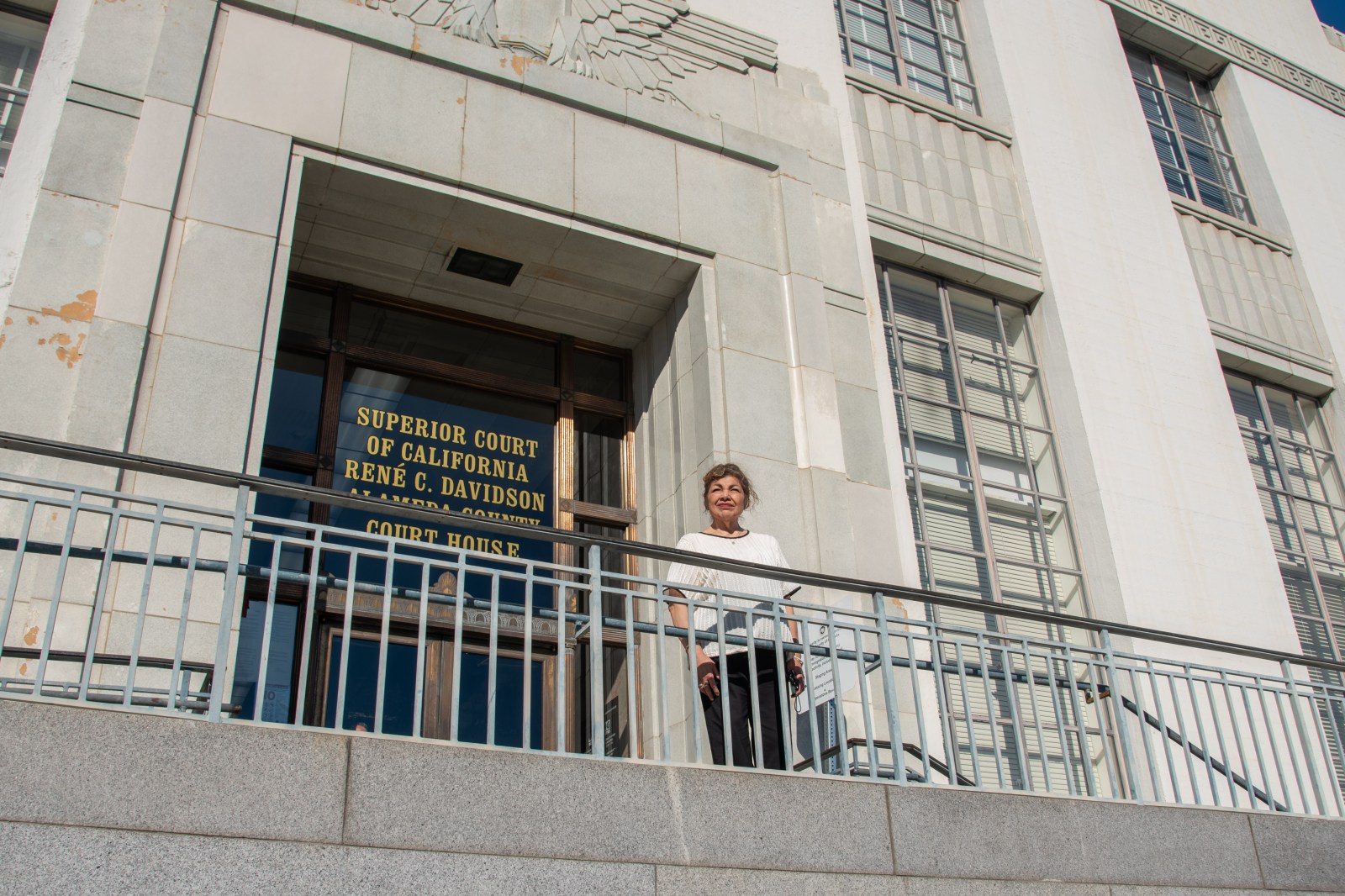 Cynthia Cornejo, Alameda County’s registrar of voters, outside the Alameda County Courthouse in Oakland, home to the registrar’s office. Credit: Ximena Natera for The Oaklandside
Measure S passed in November 2022 in Oakland, allowing noncitizen public school parents to vote in local school board elections. That law, to our understanding, has yet to be implemented. What’s your plan for implementing that, following the voters’ will on that?
That’s an initiative that went through the City of Oakland. Once the City of Oakland is ready to implement that — and I know they have processes that they have to go through in terms of their city council — then they will alert us. I know when it first passed, we met, and we had a discussion about it.
So you’re waiting on the city?
Well, we’re waiting to hear from the city to find out what is the next step, when do we first want to start the process, the talks on what that looks like.
Do you have a sense of how long that will take? Could you implement that for the next general election?
I think we’ll have to see what is involved.
I want to ask a couple of technical questions before we go. There was a note in your last report to the commission, in July, about the importance of poll pads. What are they, and how have they made voting easier?
So once we became a Voter’s Choice Act county, we had to go to an electronic roster and that’s exactly what they are. Instead of the old-fashioned paper rosters where you just flip, there’s a poll pad. Voters go check in. They’re asked to recite their name and their address. And they’re found on the electronic roster and then they sign in. It’s faster. You know, reconciling a paper roster, I remember those days, takes a while. It takes a lot of manpower to do.
You mentioned the ballots going out. Have you fixed everything you wanted to for this election, including some of the confusion in the election booklets you mentioned in that report?
Everything that we wanted to do, I would say to the team, “While I know we had two extra elections, all it did was to enable us to test more.” And so we feel really confident about that and the initiatives we have for this election.
You said in that report that there weren’t any complaints about the June primary elections. Have you received any since? Or any court challenges?
No.
We’ve heard concerns from our readers about the potential hacking of voting systems. How has the technical part been managed this year in order to make sure those processes are good to go?
So everything’s on an isolated network, which is critical. That’s a requirement by the state. All of our servers are on isolated networks here. The state houses the statewide database. And we have troubleshooters who are at vote centers that go out. They only have, I think, between four and five assigned vote centers. So all day, that’s all they do is tour. And there are protocols in place in terms of the voting equipment we have at the vote centers, and the same here with the voting equipment we have at our location.
What’s important for the voters to understand is that we are a trusted source just as the state is. If there are any questions or any doubt that they have about anything they may have received in the news, call the registrar of voters or contact the secretary of state’s office.
I think what’s also important for this election, and all elections, is to vote now. Don’t wait. If you haven’t received your ballot, or your voter guide, call us, and we can provide replacements to you. What’s also important is starting on October 24, 20 vote centers open throughout the county, for 11-day voting, and then October 31, the remaining 80 vote centers open, so we’ll have our full 100. There are 67 drop boxes throughout the county. If any voter wants to know where a vote center location is, a drop box location, go to acvote.org.
The Alameda County Registrar’s phone number is (510) 272-6973.
“*” indicates required fields