
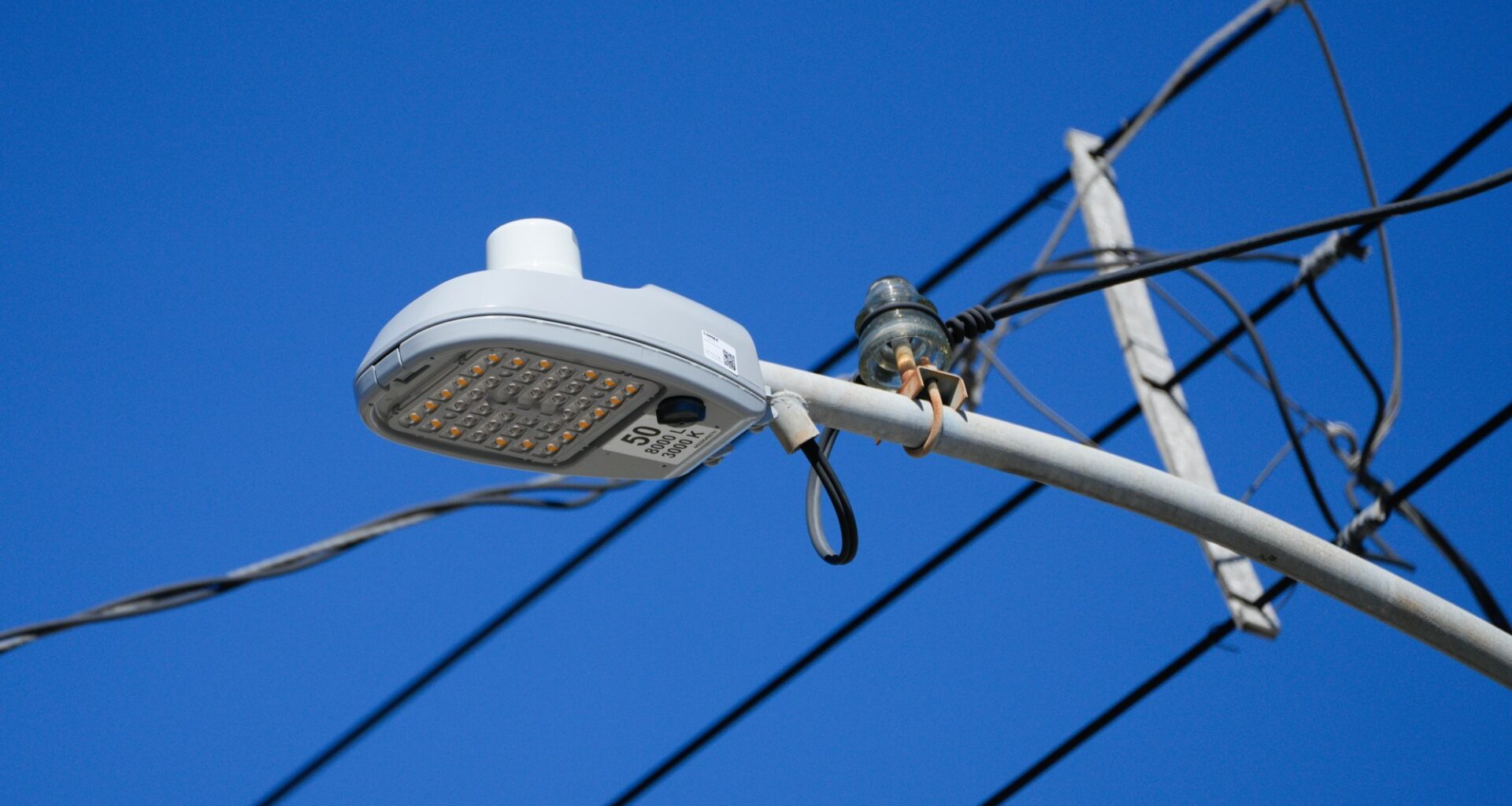
San Diego’s gaping backlog of roughly 7,000 streetlight repairs – and the 340-day average wait to get them fixed – can be blamed on weak oversight of city electricians and questionable management, a new audit says.
The highly critical 56-page audit raises concerns that some city electricians may be taking advantage of weak oversight to get paid unwarranted overtime or to spend many work hours not performing their duties.
The audit prompted San Diego to significantly strengthen last week an overtime policy for workers called back into the field after their shift ends. The revised policy requires far more documentation and details.
City officials say they also recently took “corrective action” against two electricians found by the audit to have spent 198 hours – the equivalent of 25 workdays – parked for long stretches at sites where no documented repairs took place.
City Auditor Andy Hanau said Monday that the audit raises major concerns.
“There is extensive evidence of significant operational inefficiencies and a lack of accountability within the program,” Hanau said Monday. “Taken together, these problems are leading to a waste of taxpayer dollars, contributing to the growing streetlight repair backlog, and delaying responses to resident requests for streetlight maintenance.”
While city officials agreed to implement all 12 recommended changes in the audit, they also criticized the audit in unusually aggressive language and defended many of their streetlight repair and oversight practices.
They contend the audit made “sweeping assumptions about work activity” and essentially cherry-picked data to paint the worst possible picture of the city and its Transportation Department, which oversees streetlight repair.
“There were several instances where data that was inaccurate, incomplete, or presented without sufficient context were used,” city officials said in their 13-page response.
Officials contend they explained their concerns about context to the auditors while the auditors were compiling data and coming to their conclusions, but that the auditors chose to ignore those concerns.
“Management believes the performance audit lacks sufficient context in each category despite several meetings with auditors in which this context was provided,” city officials said.
City officials also took issue with the auditor waiting seven months to inform the Transportation Department of an anonymous tip about the two employees spending many work hours not performing their duties.
“Timely notification would have allowed the department to address the potential waste of taxpayer dollars and take immediate corrective action to stop the alleged activity,” city officials said.
In response, Hanau said his handling of the hotline tip was appropriate because it allowed his office to explore if there was a broader pattern of potential employee misuse of city equipment and wage theft.
“Notably, Transportation had not investigated these issues despite numerous red flags,” Hanau said.
He also said the city’s unusually aggressive response to the audit was troubling.
“Transportation’s response to the audit findings appears to indicate that management does not fully recognize the magnitude of the operational challenges facing the Streetlight Repair Program,” he said. “Specifically, we are concerned that Transportation’s response does not convey the level of urgency necessary to identify and address the underlying factors contributing to the Program’s increasing repair backlogs and declining service levels for residents.”
Mayor Todd Gloria said Monday he is taking the audit seriously.
“I’m furious about what this audit found, particularly the evidence that city time and taxpayer resources may have been misused by a few city employees,” Gloria said. “I directed my administration to take immediate corrective action, including accelerating implementation of the audit recommendations.”
A key finding of the audit is that city officials possibly made a bad decision in February 2025 when they directed the city’s 18 full-time streetlight electricians to prioritize a separate duty the city has under state law.
The state’s “Before You Dig” program requires local agencies to have an electrician present when utility companies, cable companies or developers are going to dig into the street.
From February 2025 through October 2025, electricians were told to focus only on “Before You Dig” requests and urgent streetlight repairs such as exposed live wires – not ordinary streetlight outages.
Hanau said this decision led to a sharp increase in the city’s streetlight repair backlog, which nearly tripled from 2,684 in fiscal year 2021 to 7,552 this summer. During that period, the average wait time has jumped from 160 days to 340 days.
Hanau said it was dubious of city officials to conclude electricians could only handle “Before You Dig” repairs – called “DigAlerts.” He contends such work would typically leave electricians multiple hours for ordinary streetlight repairs.
“The available data indicates that DigAlert responses likely do not require all of electricians’ regular working hours and suggests potential capacity to complete some routine streetlight repairs during regular time,” the audit says. “Data suggests that dedicating regular working hours almost exclusively to DigAlert responses was likely unnecessary.”
The audit also stresses that the backlog increased despite the city devoting more money to streetlight repair and paying more overtime to streetlight electricians — despite no increase in the number of repair requests.
City officials said a large chunk of the additional city money was needed to cover rising costs for electricity, but the audit notes that between fiscal 2021 and fiscal 2026 labor costs rose from $2.3 million to $5.7 million and overtime costs rose from $230,000 to $1.4 million.
While employee pay raises play some role in those increases, the audit notes that employee hours devoted to streetlight repair increased from 13,600 to 28,000 and that overtime hours climbed from 600 to 5,300.
The audit stresses the importance of working streetlights.
“Research has consistently found that maintaining functional street lighting can reduce crime, decrease traffic crashes and nighttime collisions, and improve residents’ perceptions of safety,” the audit says. “As a result, timely and effective streetlight repairs are important to protecting public safety and maintaining residents’ quality of life.”