
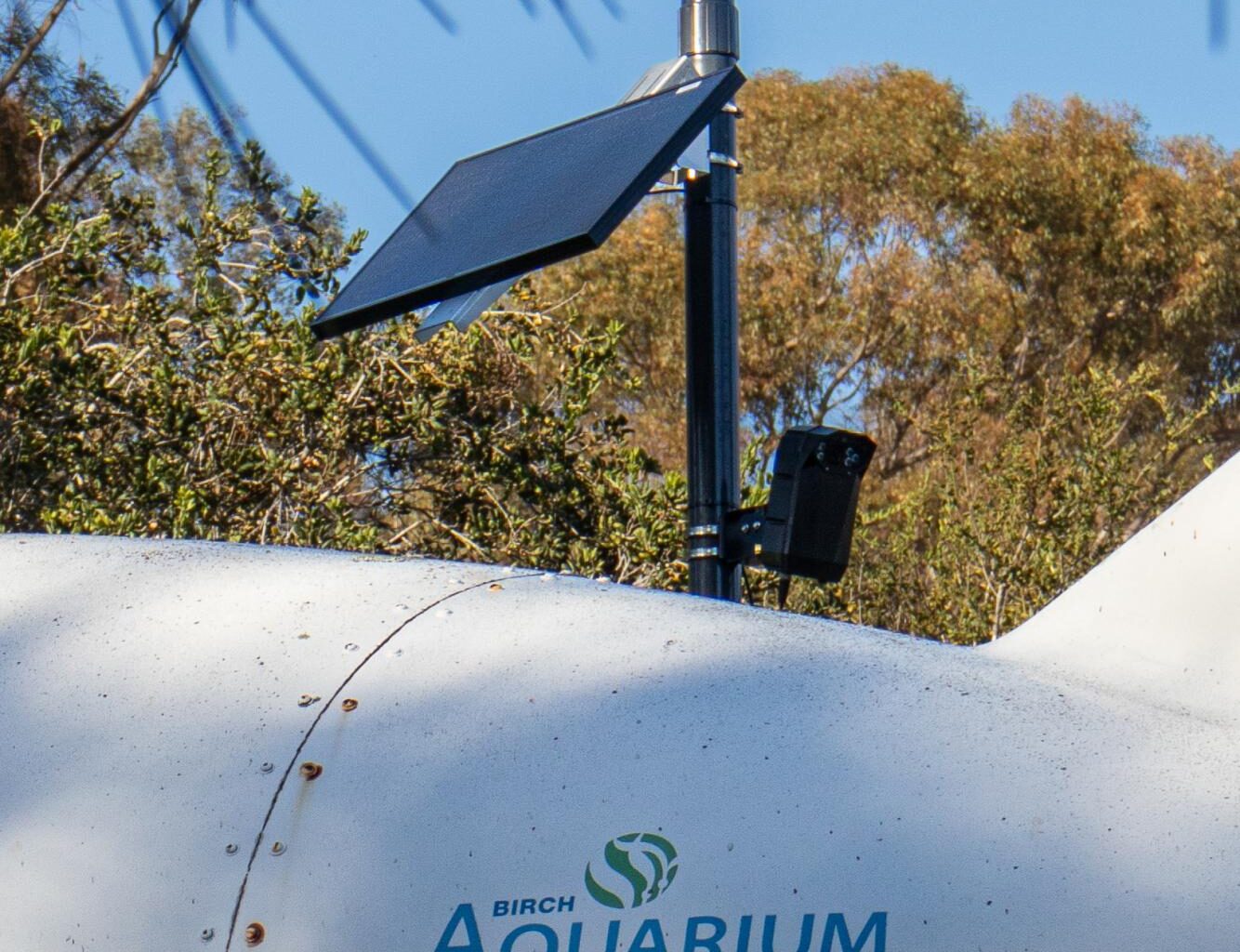
On Sept. 30, the Partnership for the Advancement of New Americans partnered with the American Civil Liberties Union of San Diego and Imperial Counties, filing a lawsuit against both the City of San Diego and the San Diego Police Department over their use of citywide Automated License Plate Readers made by Flock Safety.
The lawsuit claims the use of ALPR surveillance and the practice of sharing ALPR data with law enforcement agencies outside of California violates the California Constitution, in turn impeding Californians’ rights to privacy and from unreasonable search and seizures. SDPD formerly shared ALPR data with external law enforcement agencies, until the state attorney general informed them in 2025 the practice violated California law.
ALPRs are cameras installed on public roads that record and collect license plate number information on all vehicles in frame. The Department of Homeland Security states that the ALPRs software “compares license plate numbers against databases to generate alerts and create records of vehicle activity.”
Flock Safety is a technology and software company that works with local law enforcement agencies and city governments across the United States to install cameras. Additionally, Flock provides software to create a searchable database for law enforcement to use in criminal investigations.
Flock Safety describes the purpose of license plate recognition systems, saying that “a license plate recognition (LPR) camera captures license plates and key vehicle characteristics, such as make, color, and body type, to help generate investigative leads.” LPR technology is often used for criminal investigations, locating stolen vehicles, finding missing individuals and responding to security incidents, according to Flock Safety.
The ACLU demands that the City of San Diego stop the use of ALPRs, remove all Flock Safety and ALPR cameras in the city and delete all of the data recorded from the current use of ALPRs.
In an ACLU press release, Samantha Itazawa, advancing justice staff attorney at the ACLU San Diego Imperial Counties, described how the kind of information flock cameras gather can construct information about an individual’s personal life.
“This information can demonstrate travel patterns of individuals as they go to work, drop their children off at school, or attend a house of worship, doctor’s office or protest,” she wrote.
Itazawa added this data collection poses “serious threats to communities’ privacy and freedom of movement.”
San Diego Mayor Todd Gloria commented on the use of ALPRs in San Diego in a press release on Oct. 13, writing about their effectiveness in assisting police in over 900 criminal investigations and helping recover over $8.7 million in stolen property.
Gloria said the city has set the “gold standard” for transparency and oversight of surveillance technology, with “a public review process, independent privacy oversight and clear requirements governing how surveillance technology is evaluated and used.”
On March 15, 2024, Gloria helped pass the Transparent and Responsible Use of Surveillance Technology into San Diego municipal code. TRUST sets procedures on how surveillance technologies are implemented in San Diego, where city departments are required to publicly disclose the current surveillance technologies being used.
TRUST requires that any information collected by surveillance technology must minimize data collected outside of its intended purpose. It also contains procedures for data security. All collected data is required to be safeguarded with encryption and key-logging, and collected data must be routinely deleted.
Additionally, internal records are kept of those who access surveillance technology information and on how info is used.
TRUST also states the City Privacy Advisory Board must review and choose to recommend the use of any new surveillance technology. The City Council must approve the use of any new surveillance technology before it is implemented.
San Diego’s use of ALPRs has sparked controversy in the past. In June 2025, the SDPD received a letter from State Attorney General Rob Bonta informing the department that its sharing of ALPR-collected information violated state law.
This letter from Bonta came after SDPD inadvertently shared ALPR collected information with external law enforcement agencies. SDPD then subsequently ended sharing information.
Senate Bill 34, which passed in 2015, explicitly prevents California police from sharing information with law enforcement agencies outside of the state.
At UC San Diego, Parking and Commuter Services utilize ALPRs campuswide to help parking enforcement efficiency and minimize costs, but claim it does not use any hardware or software from Flock.
UCSD’s ALPR policy is explained on the Transportation Services website, stating that the “ALPR systems that Parking and Commuter Services uses and the use of resulting data are strictly regulated by campus policy.”
UCSDs ALPR policy also states that Transportation Services can share the data outside of the school, if relevant to an issue that poses a significant and articulable threat to safety, in cases where data subjects consent to the sharing of information, and when required by law, in cases where court order or warrants apply.
ALPR data is kept for 24 hours after its collection and later deleted. Data kept for 24 hours is used in aggregate for parking analytics.
Melina Battenberg, associate UCSD communications director, spoke on UCSD Transportation’s use of ALPRs in a written response to The UCSD Guardian’s request for comment.
“Transportation Services uses ALPRs in accordance with their policy,” she wrote. “The department has eight fixed ALPR cameras that support five different parking lots, and seven mobile units that are used in parking compliance. Transportation ALPR units are focused exclusively on parking areas or the roadways approaching parking areas.”