
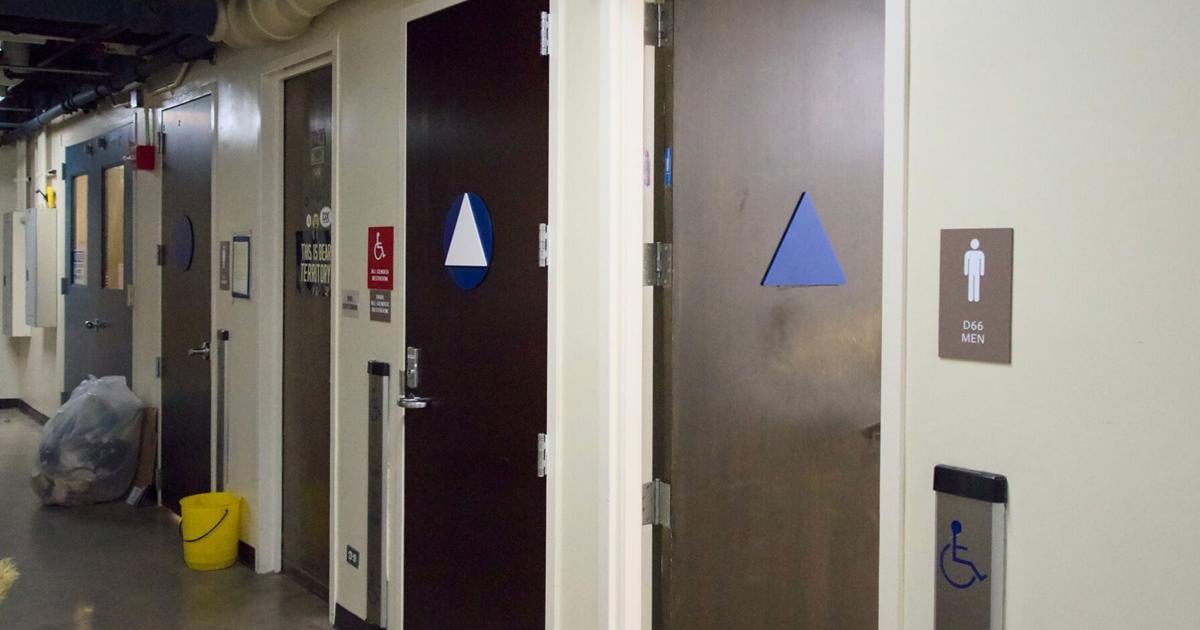
The ASUC unanimously voted Oct. 14 to pass a resolution urging UC Berkeley to convert a single-gender restroom facility in the basement of Latimer Hall into a gender-neutral, Americans with Disabilities Act accessible bathroom.
The Latimer Hall basement currently lacks a restroom for female-identifying students altogether, which affects a large number of students in introductory STEM classes that take place in Pimentel Hall, according to the resolution.
The resolution also notes that many gender-inclusive restrooms throughout campus exist in “obscure and/or far locations” from major lecture halls, which forces gender-nonconforming individuals to walk farther to access facilities.
“Gender is not a binary, and ability differs from person to person, so only having inaccessible, male and/or female restrooms is not acceptable for any university that claims it is inclusive and wishes to foster a positive campus community,” said Women and Nonbinary Community-endorsed ASUC Senator Karuna Gray in an email. Gray is the resolution’s primary sponsor.
Gray said the Latimer Hall bathroom was a priority because it affects “all STEM students,” and poses both gender equity and ADA accessibility issues. However, she argued that other buildings on campus, including Morrison Hall and the Anthropology and Art Practice building, also lack accessible facilities.
The resolution asks campus to mount clear signage to the doorframe of every gender-neutral restroom facility and commit to updating physical and digital restroom maps to make the locations of gender-neutral facilities more clear.
Gray’s office met with UC Berkeley administrators while drafting the resolution; however, her office said administration has not reached out since its passage.
“The restroom in Latimer Hall referenced in the resolution has been evaluated through the campus’s existing restroom conversion process,” said campus spokesperson Lindsey Michels in an email. “The proposed conversion would require a larger capital project due to the building’s structural conditions and applicable building code requirements.”
Gray’s office is working to fundraise for the project so converting the restroom can begin by the end of this academic year.
According to Michels, converting existing facilities into gender-inclusive restrooms is done through a request-based process that takes into account feasibility, available funding and community needs. Any member of the UC Berkeley community can submit conversion requests.
“While we are hoping (campus) will be able to cover costs, we understand that we may not receive as much as we wish for, or it may be slow to start,” Gray said.