
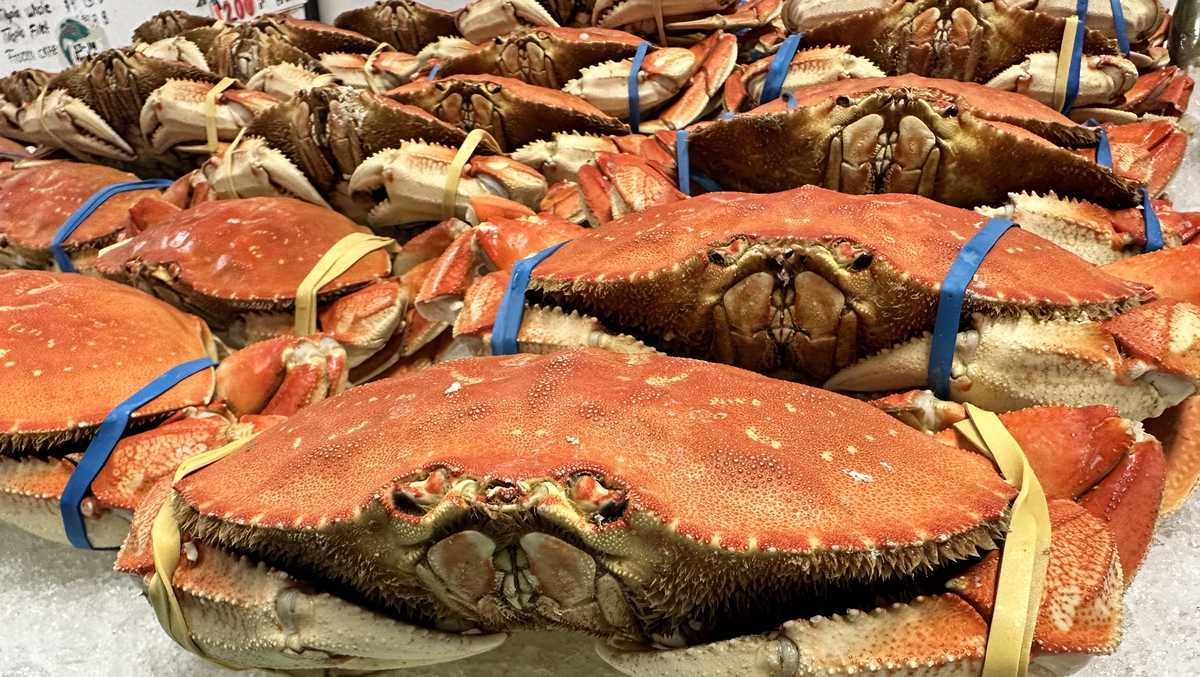

California’s commercial Dungeness crab season will be delayed until at least the start of 2027, because of the risk of whale entanglements in fishing gear, the California Department of Fish and Wildlife announced Friday.
The recreational season is scheduled to open Nov. 7 in most areas, but crab traps will be restricted from the California-Oregon border to Point Conception until at least Jan. 1.
Recreational crabbers can still use hoop nets and crab snares in open areas. CDFW also issued an advisory asking crabbers to avoid setting gear where whales are present.
The recreational season will remain closed in waters from Cape Mendocino to the Ten Mile State Marine Reserve because of elevated domoic acid levels in crab caught in the area. The toxin can cause illness in people who eat contaminated crab.
State regulations require the CDFW director to delay the commercial fishery and restrict recreational traps when the number of confirmed humpback whale entanglements in California commercial Dungeness crab gear reaches three in a calendar year. The supplied information reports three confirmed entanglements in commercial gear and two in recreational gear this year, along with several in unidentified gear.
Preliminary figures presented by NOAA Fisheries indicate there have been 47 humpback whale entanglements off the U.S. West Coast in 2026, according to Oceana. The group said that number is on pace to be the highest recorded in a year.
“By the time fishery managers detected high numbers of whales returning, it was already too late,” said Geoff Shester, Oceana’s fisheries innovation director and senior scientist. He criticized managers’ decisions to allow conventional gear to remain in use into the spring.
CDFW said it expects to conduct another risk assessment in mid-December to help determine whether the commercial fishery can open and recreational trap restrictions can be lifted around the new year.
In 2026, California authorized pop-up gear for the first time in the commercial fishery. The gear keeps its lines and buoys coiled on the seafloor until a fisherman triggers a buoy to rise, reducing the time lines are in the water. Shester said Oceana supports expanding the use of the gear.