
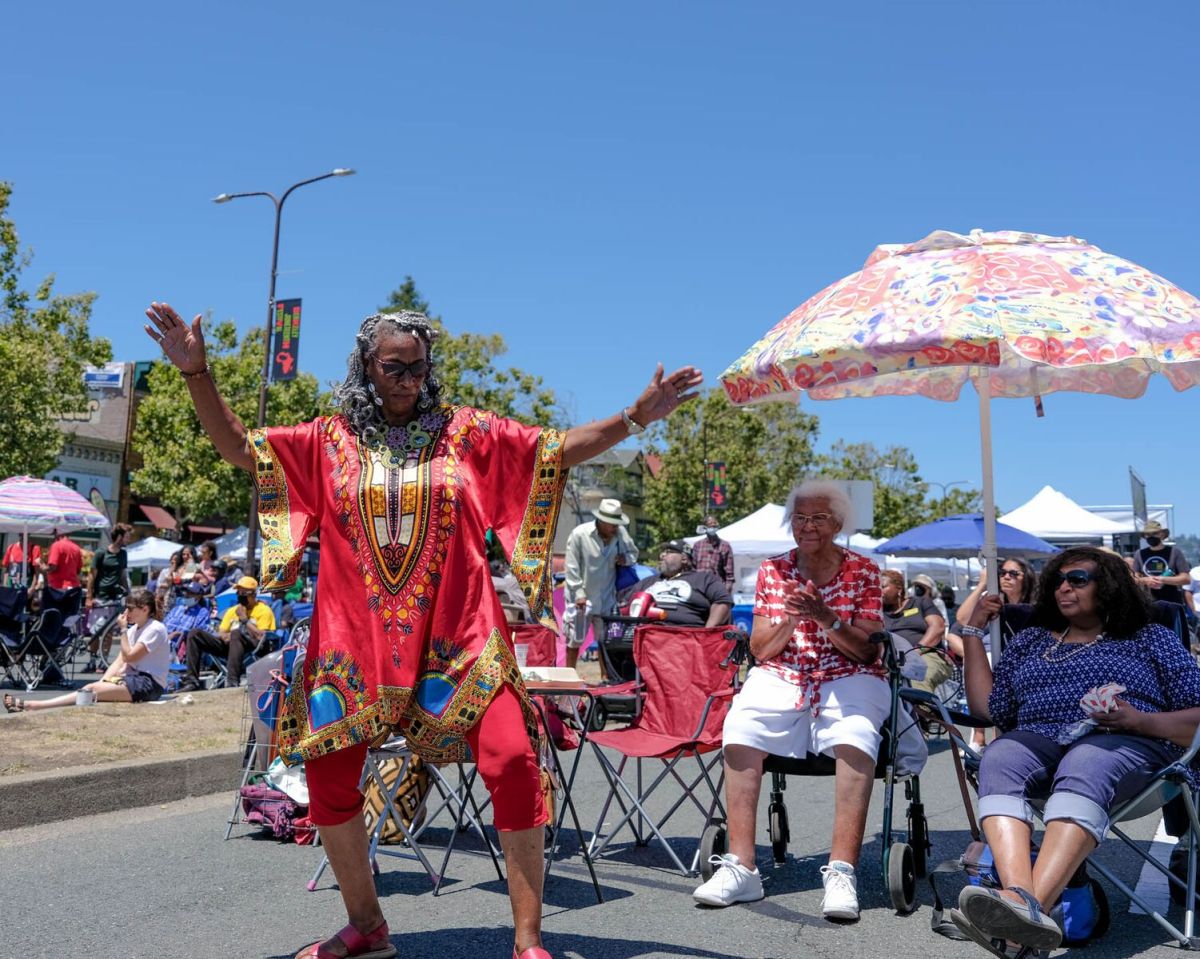
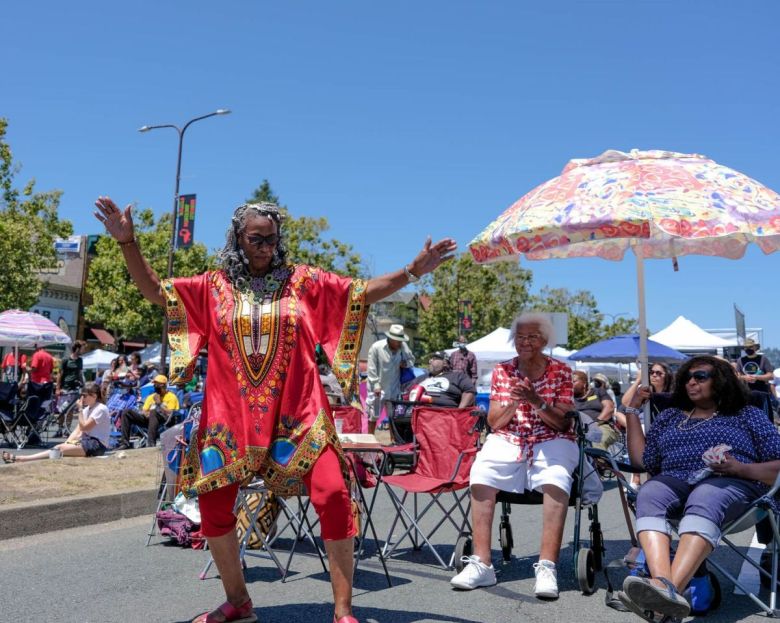
 Anita Fowler dances as her mother Gracie Stover (middle) watches during the Berkeley Juneteenth Festival in 2022. The festival has been held on Adeline Street, between Harmon Street and Alcatraz Avenue, since the 1980s. Credit: Ximena Natera, Berkeleyside/CatchLight
A change to how Berkeley enforces the state fire code will force two popular street events, the city’s Juneteenth Festival and a holiday gift market on Telegraph Avenue, out of the locations where they’ve been held for decades.
Meanwhile, city officials are also moving to increase the fees they charge organizers for those and other events — an effort to better reflect the staff work that goes into planning for street festivals that is expected to add thousands of dollars to the cost of permits.
Either one of those changes would represent a significant challenge for the Juneteenth celebration and the Telegraph Holiday Fair, according to their organizers, who say the festivals run on tight budgets with little margin for new expenses. Taken together, they say, the city’s steps could prove fatal for those and other events that are fixtures of Berkeley’s cultural calendar.
“We’re almost being told that we’re kind of like a nuisance, and they want to down-size us and streamline us so that it’s less of a [burden] financially,” said Delores Cooper, an organizer of the Berkeley Juneteenth Festival. “They’re just kind of squeezing out the festivals, so that you really have to have big bucks in order to put on a festival.”
The head of Berkeley’s Neighborhood Services Division, Peter Radu, wrote in a report to the City Council last month that the move to relocate the festivals is necessary to ensure events don’t block fire lanes or routes for emergency vehicles. And the fee hike, Radu said, will help recoup more of the costs the city now takes on for planning major events, which require extensive coordination from workers across a long list of city departments.
The city and Berkeley Fire Department declined an interview request for this story. But in response to written questions from Berkeleyside, spokesperson Matthai Chakko wrote that the city is committed to hosting festivals safely, and that without higher fees, other residents and merchants are in effect subsidizing those events.
“City staff have helped event organizers put on more events than ever,” Chakko wrote. “In fact, we now surpass pre-pandemic numbers of events. Our fees are far below comparable jurisdictions. Fiscal prudence means that we recover the cost of services from vendors and event organizers while making sure that events don’t create hazards, disrupt the community unduly or put people at risk.”
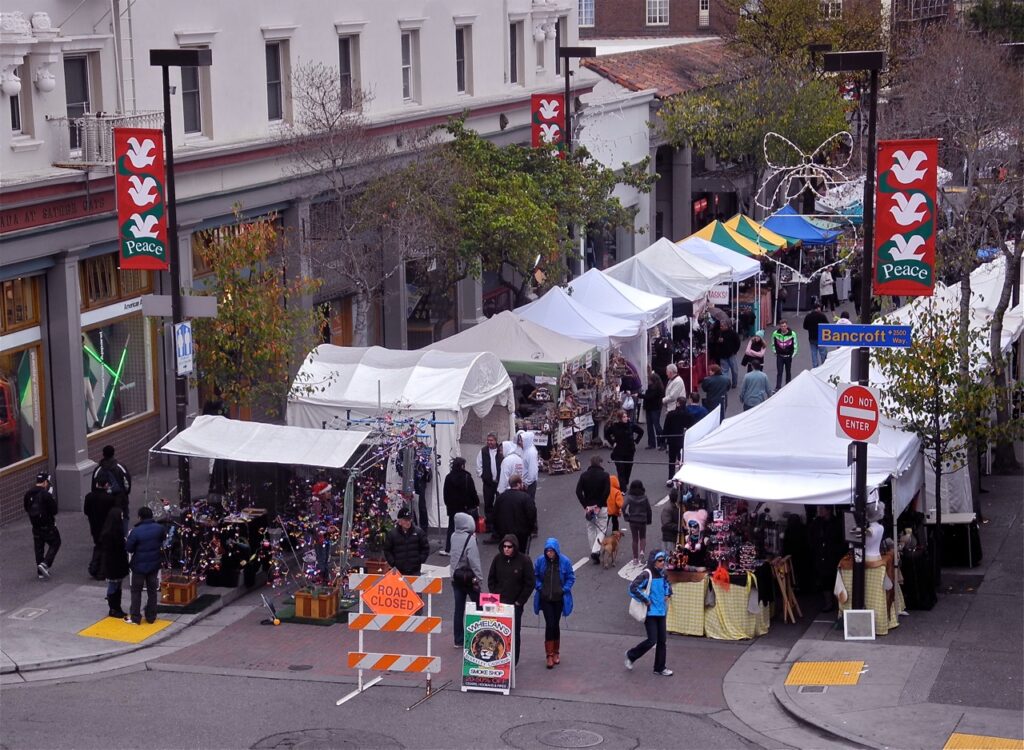 The Telegraph Holiday Fair, shown here in a 2012 file photo, has been told it can no longer block off the north end of Telegraph Avenue. It’s planning to move more than a mile away, to Adeline Street in South Berkeley. Credit: Ted Friedman
City won’t allow events on Telegraph or Adeline, citing fire code
Generations of Black Berkeleyans have gathered each summer to celebrate Juneteenth in South Berkeley. More recently, organizer Duane deJoie says, the festival has come to function as a homecoming: Berkeley’s Black population has declined by two-thirds since 1970, as skyrocketing housing costs mean homes in the formerly working-class neighborhood now sell for well over $1 million, pushing families to less-expensive cities.
“There are so many people who do not live in South Berkeley any more who look forward to coming back to this particular section of the community, as they have from childhood,” deJoie said. “That’s the most Black people you’ll see in Berkeley at any one place.”
The festival has been held on Adeline Street, between Harmon Street and Alcatraz Avenue, for nearly four decades, organizers say. But Cooper and deJoie say city staff have told them that location won’t work any more, and want next year’s festival to be along Adeline between Ashby Avenue and Woolsey Street.
While the new location is just a few blocks north, they contend it represents a serious downgrade: Cooper described the setting near the Ashby BART station as a “concrete desert” with little connection to the surrounding neighborhood.
Next month’s Telegraph Holiday Fair will be held at Adeline and Ashby as well — more than a mile from the market’s home for the past 42 years at the north end of Telegraph Avenue. Organizer Grace Teasdale said city officials similarly told her she could no longer hold the event there.
In his report to the council, Radu wrote that portions of both Telegraph Avenue and Adeline Street are “unavailable for future street closures” because Berkeley Fire Department officials are placing a “renewed focus” on state fire code standards.
That includes ensuring 26-foot-wide fire lanes are kept clear on any streets with buildings that are more than three stories tall, Radu wrote, and mandating that other street closures “do not in any way impede public safety vehicle access and critical mutual aid pathways.” Blocking major streets, Chakko said, slows police and fire department responses to life-threatening emergencies.
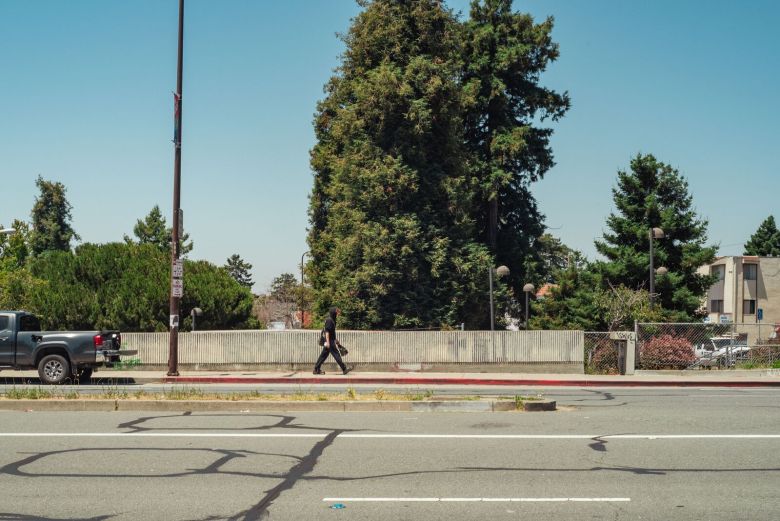 One Juneteenth Festival organizer called the stretch of Adeline Street where city officials want the event to move a “concrete desert” with little connection to the surrounding neighborhood. Credit: Ximena Natera, Berkeleyside/CatchLight
The organizers of the Juneteenth and Telegraph events fear their moves will drive down attendance. The holiday fair typically has about 150 vendor applications by now, Teasdale said, but so far this year she’s gotten less than half that many, and several sellers have told her they don’t want to come to the new location. She said she doesn’t understand why the move is necessary.
“How has this been OK for 42 years, and now all of the sudden it’s not?” Teasdale said.
Chakko declined to discuss the impact of the changes on specific festivals, saying city officials plan to meet with event organizers. But he said the context around Telegraph Avenue has evolved — there is an “unprecedented amount of housing being built for students in the Southside neighborhood,” he said, and several streets have active construction projects underway or were recently redesigned in a city traffic safety project to limit vehicle lanes.
“That increases the pressure on the stretch [of Telegraph Avenue] from Dwight to Bancroft,” Chakko wrote. “Closing that stretch off for a private or publicly run event at this time endangers others.”
If the city won’t allow the event at its longtime home, Teasdale said she hopes it could be held on the wider blocks of Telegraph south of Dwight Way, rather than leaving the avenue entirely — or that certain fees could be waived to make up for having to move.
The push to more tightly enforce the fire code forced organizers of Berkeley’s farmers markets to change the layout of vendor booths earlier this year. Southside Councilmember Cecilia Lunaparra said she hopes officials can reach a similar compromise and allow the Telegraph Holiday Fair to remain. But it’s unclear whether that will be feasible — two of the three farmers markets don’t involve closing an entire street, and Chakko noted the one that does, the downtown Berkeley market on Center Street, doesn’t affect a major artery.
Fees don’t match work that goes into events, city says
When someone wants to put on a street festival, staff in Berkeley’s Public Works Department have to handle tasks like setting up traffic barricades to divert drivers around the closure, and message boards alerting people to the detour. Inspectors from the fire department must review event plans and keep watch during the festival for potential fire hazards. Workers in the Environmental Health Division regulate permits for food vendors and amplified sound. Other city hall workers take care of countless more minute details, like plans for trash pickup and coordination with AC Transit to reroute buses around blocked streets.
The fees the city charges event organizers today don’t come close to reflecting those costs, Radu wrote in his report. The Public Works Department alone spent nearly $1.5 million on staffing for special events in the 2024 fiscal year, he said, but made back less than $32,000 from permit fees.
Meanwhile, city officials are looking for ways to address a structural budget deficit estimated at more than $20 million, a figure that could be worse next year amid uncertainty about the economy and federal funding under the Trump administration.
Several city departments have begun asking the City Council to approve a slate of fee increases meant to better reflect the cost of putting on major events, Radu wrote. The requests include raising the cost of permits for street closures, food vendors and sound systems, as well as imposing new charges for the work of fire inspectors. The Public Works Department also wants event organizers to foot the bill for their own traffic-control equipment — such as message boards, barriers and cones — and produce more detailed traffic engineering plans.
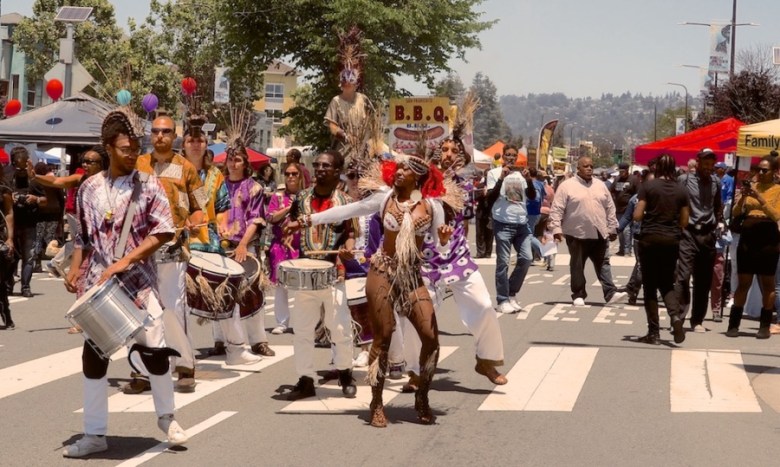 Drummers and dancers perform at the 2019 Juneteenth Festival. Berkeley’s Black population has declined by more than two-thirds since 1970, and organizers say the festival serves as a homecoming for residents who have left. Photo: Nancy Rubin
The memo did not list a cumulative estimate for how much the new fees and charges would cost. But message boards alone can cost more than $1,000 per day for a major event, Radu wrote, while the traffic plans can run as much as $5,000, though they could be reused from year to year.
Teasdale estimated the increases could raise the cost of putting on the Telegraph Holiday Fair by $20,000. She charges most vendors $100 per day, with discounts for smaller sellers, and is loath to raise that rate on artisans who rely on the market for a major share of their annual income.
“That’s not sustainable,” she said.
Lunaparra said she is concerned about how Berkeley fire officials are interpreting the state code, describing the city’s new rules as much more strict than those in other jurisdictions. But while she understands the concerns about higher permit fees, Lunaparra said, the city is not in a position to continue helping organizers put on their events at such a substantial discount.
“We do need to increase them, because we are in a gigantic budget deficit,” she said. “We need to figure out how to balance the things that we provide to our residents and minimize the disruption.”
Changes could lead to fewer events
City officials laid out a similar rationale when they raised fees for events at the Berkeley Marina in 2019. Three years later, the organizer of the Berkeley Kite Festival said he would not be able to bring the popular event at Cesar Chavez Park back from its pandemic-induced hiatus because of the new fees, which he said totaled more than $40,000.
That’s what the Telegraph and Juneteenth event organizers worry will happen to their festivals and others if the city raises its fees.
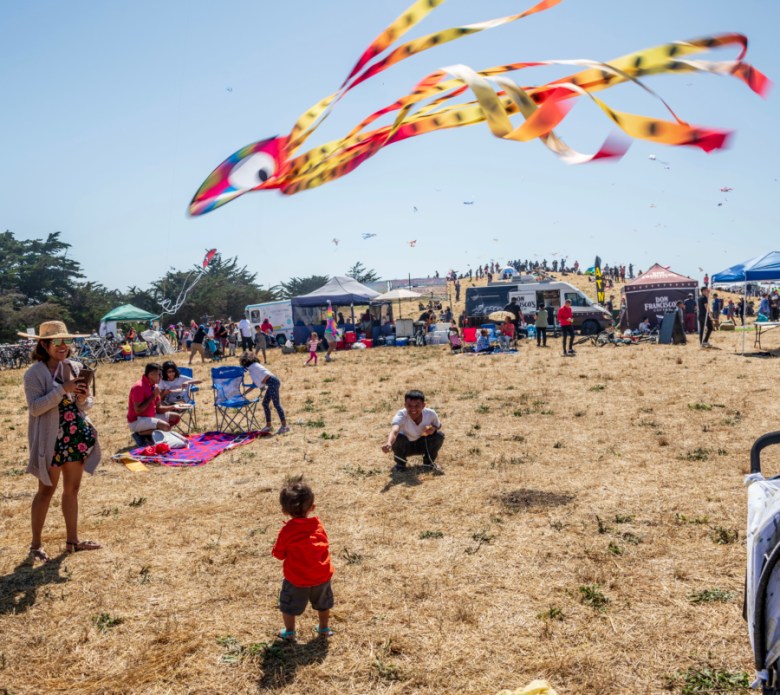 The last Berkeley Kite Festival was held in 2019. Its organizer said fees imposed by the city on events at the marina added more than $40,000 to permit costs, and rendered the event infeasible. Photo: Ave Goldstein
Cooper’s event is mainly organized by volunteers, and doesn’t have dedicated fundraising staff who could solicit donations to cover major new permit costs. That could threaten the future of the Juneteenth Festival, she said, and potentially “eliminate a lot of worthy cultural events who can’t afford to pay.”
Radu acknowledged that possibility in his report, saying some events might not continue under the proposed new fees.
“The Special Events Team is committed and works tirelessly to support the vibrancy of Berkeley’s street and park events scene and does not take this outcome lightly,” he wrote. “Staff are committed to working with all event applicants, especially those of longstanding and beloved events in the community, to understand these requirements and evaluate all options for compliance.”
Losing one of Black Berkeley’s most important cultural events would be devastating, according to deJoie.
“This seems to be another step in that gentrification pattern that we’ve suffered,” he said.
Chakko declined to respond directly to deJoie’s comments.
Both Cooper and Teasdale say they hope to convince Berkeley officials to allow their festivals to stay in their longtime locations, and for the City Council to reject the proposed fee increases. Cooper and other local event producers have drafted a letter to the City Council expressing their concern about the “prohibitively expensive” fee increases and asking the city to develop a more streamlined permitting process that could reduce the work that goes into each festival.
Cooper said she is sympathetic that Berkeley needs to shore up its finances, but described the decision as a matter of city leaders’ priorities.
“Either they want us, and they want a vibrant art and cultural community, or they don’t,” she said. “They can’t keep piling all these fees on us — eventually the cultural organizations will go away.”
“*” indicates required fields