
Come next summer, San Jose will open dozens more beds for homeless people who want to stay in a sober living environment.
The Salvation Army on Nov. 3 broke ground on a tiny home village called HOPE Community, which will add 74 beds on its property. Each tiny home could house several people, and residents may stay there overnight or participate in the transitional housing program for up to two years. Salvation Army will provide life skills workshops, job training, meals and case managers to help residents remain sober.
Maj. Daniel Freeman, Salvation Army’s Silicon Valley coordinator, said this housing fills a needed gap for homeless people in recovery.
“Recovery from addiction is never a nice linear process,” Freeman told San José Spotlight. “The feeling that we get from the people that come to this program is they just feel a whole lot safer in a much more stable place, because there isn’t all the behaviors associated with addictions.”
The $6 million project received a $1 million donation from philanthropist John A. Sobrato. Santa Clara County provided $4 million and San Jose gave $1 million. It will cost about $15 million to operate the facility over a span of 10 years.
“I really find that when philanthropy does that, it catalyzes the rest. It makes it so much harder for (the) City Council to say no,” Elizabeth Funk, CEO of DignityMoves, the developer of the site, told San José Spotlight.
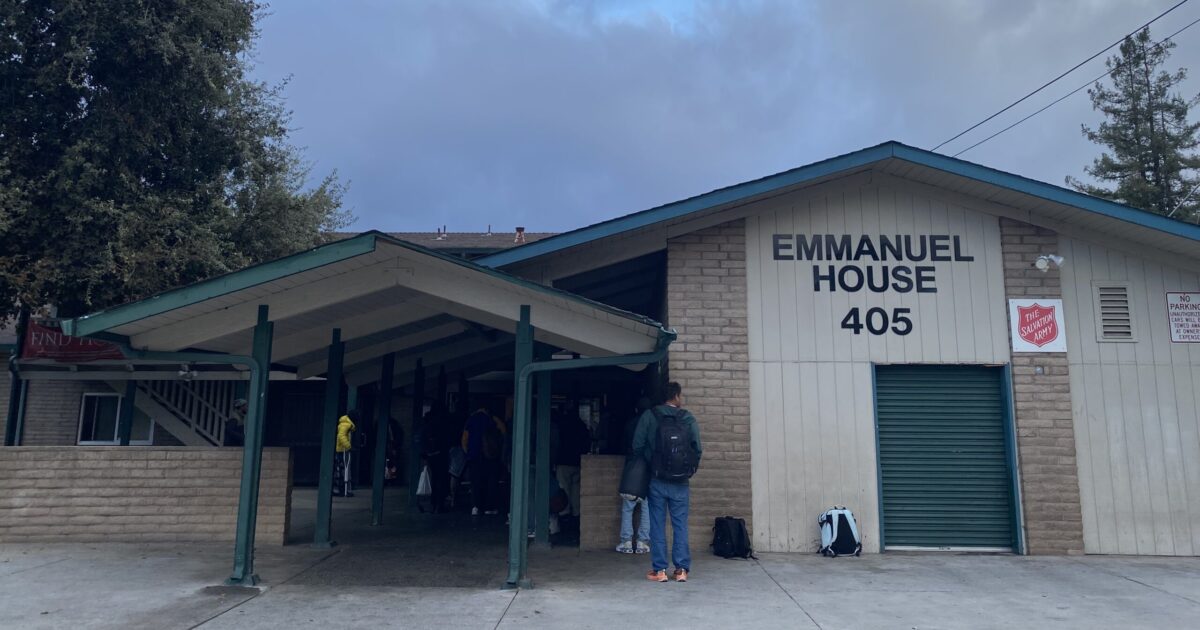
The Salvation Army has also been working on expanding its shelter, which sits on the other side of where HOPE Community will be located. The shelter is a 70-bed men’s sober living facility, with overnight stays and temporary housing. The expansion will build a second floor, with more than 40 beds that will become the women’s quarters. The renovations will include private bathrooms and showers.
The expansion was supposed to have been completed last year, but Freeman said they hit some snags in the process of finding funding for the construction, negotiating contracts and securing permits. Freeman said construction is expected to begin next year.
While Emmanuel House is under construction, people staying there will be transferred to HOPE Community. The long-term plan for HOPE Community is to have spaces set aside for specific demographics such as older adults, families or people aging out of the foster system, depending on the community’s needs.
When HOPE Community is built and the Emmanuel House expansion is complete, Salvation Army’s 2.3-acre site on Fourth Street will have a total of 184 beds.
Homelessness in Santa Clara County is at an all-time high, with more than 10,700 homeless people according to a point-in-time count conducted in January. San Jose’s homeless population has increased by 237 people since the last count two years ago, to 6,503 people, with more people becoming homeless for the first time.
“For individuals who want recovery, want to be sober, this is going to be critical for their personal plan toward self sufficiency and housing security,” Santa Clara County Supervisor Betty Duong, whose District 2 includes the site, told San José Spotlight. Her predecessor, former Supervisor Cindy Chavez, championed the expansion of Emmanuel House.
Residents who stay in The Salvation Army’s overnight or temporary housing must pass a sobriety test for alcohol. Those who choose to opt in for the temporary housing program must remain sober or be working toward sobriety and pay a program fee. Residents can participate in Alcohol Anonymous and Narcotics Anonymous classes at night. The program does not offer treatment, but provides counseling and peer support to help residents stay sober.  Though residents can stay up to two years in the program, most move on after a few months, Freeman said. Nearly 80% of people who graduate from the program are still housed a year later, according to The Salvation Army data.
“People have different reasons for their homelessness, and we can’t assume that there’s just one cookie cutter way to take care of everyone’s problems,” Freeman said. “At The Salvation Army, we’re not trying to be the answer for everybody, but there’s a significant group of people that are looking for an answer that we could give them. The evidence is we fill (Emmanuel House) every night.”
Contact Joyce Chu at [email protected] or @joyce_speaks on X.