
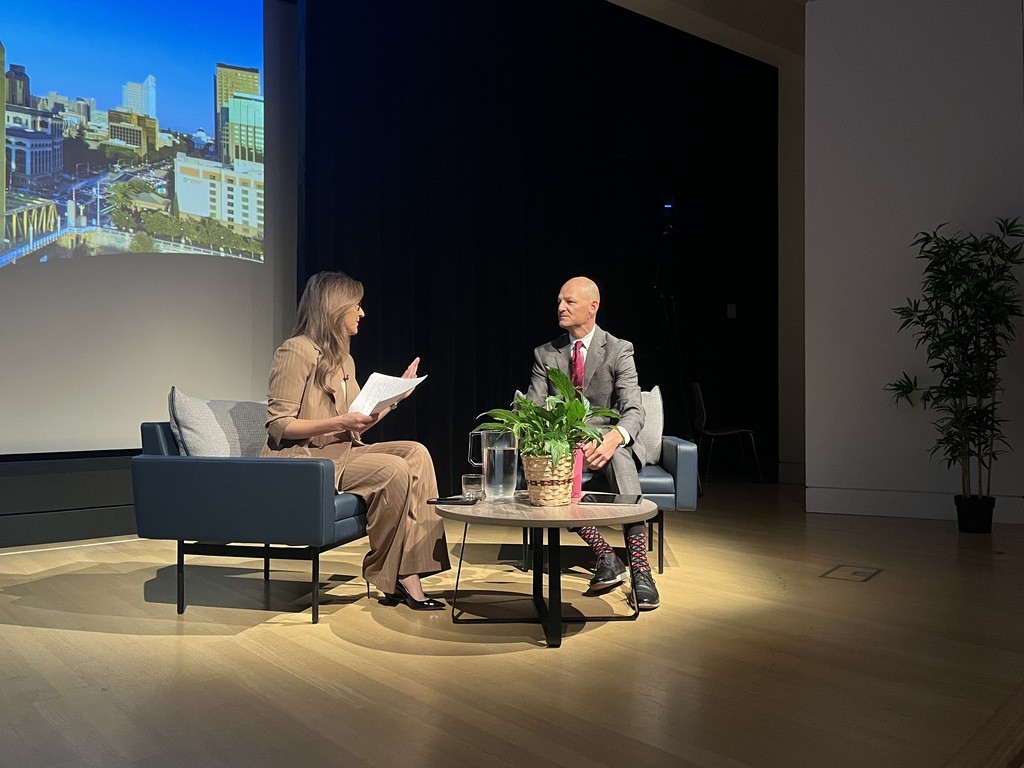
Sacramento’s Mayor Kevin McCarty gave his second annual State of the City address this week where he tackled hot-button issues such as homelessness, immigration and data centers.
Homelessness was the major focus of the Q&A McCarty gave with FOX40 correspondent Nikki Laurenzo. He said the city has made great strides since he was elected.
“ We are making progress,” McCarty said. “Are we done? No. Is the mission accomplished? No. But we have remarkable success.”
Unsheltered homelessness is down in the city by 50% since 2022, he said. By contrast, data for the county as a whole shows unsheltered homelessness has increased over the past couple years.
McCarty said the city is working on getting 500 more shelter beds at established shelter sites on Roseville Road and Stockton Boulevard. At a time like this, the mayor said collaboration with the county is more important than ever, particularly when it comes to building housing.
“The problem is we don’t have enough places for people to graduate, to go from there to permanent supportive housing,” he said.
Arturo Baiocchi is a professor of Social Work at Sacramento State. He said the current picture of homelessness in the city is a mixed bag. He and other advocates in the city believe that data from the 2024 PIT count was underreported, which skews the information.
He believes investments under McCarty have been working to get people off the street, but other factors are also at play.
“ I do think the city and the sheriff’s department are much quicker to close down encampments, and I think that’s actually the biggest contributor to it,” Baiocchi said. “But has homelessness overall gotten better? I think that’s hard to say.”
McCarty also gave an update on his six-point plan on homelessness, which he rolled out at last year’s State of the City. He said they are currently building two out of the four 40-unit tiny home villages promised for unhoused seniors.
The mayor admitted that the project is becoming more costly and time consuming than anticipated.
“ They’re more expensive than we thought,” he said. “Everything’s more expensive. Everything’s slower, concrete and labor costs.”
The city is pursuing two permanent supportive housing sites for veterans and is looking for a location for a safe parking site in South Sacramento.
The Robin Moore Tiny Home Program is also making strides. The program will award three nonprofits $10,000 each in private grant money to construct tiny home shelters.
Baiocchi said that some of McCarty’s efforts are working, but there’s a time element to it.
“ I think there’s new energy, and the mayor is announcing some new plans, and he’s talking about opening up new shelters,” Baiocchi said. “On the other hand, it’s also taking a while for these things to come online.”
Outside of developing housing and shelter, McCarty said he is going to help lead an effort to advocate for reforms to the CARE court system on the legislative level. CARE court is intended to connect individuals struggling with extreme mental health disorders to housing and behavioral services.
The program is voluntary, and McCarty believes it shouldn’t be. McCarty referenced the story of a local Sacramento woman who struggled with addiction and rejected help from the CARE court, devastating her family.
“ We need to focus on how we can make things better, the existing system, imperfect system work,” McCarty said.
McCarty says city can’t do much about immigration enforcement
Ahead of the election, Immigration & Customs Enforcement activity surged within the city of Sacramento. McCarty denounced ICE’s presence at the State of the City but said there’s limits to local power.
McCarty said that local law enforcement does not help with ICE enforcement. This comes after City Manager Maraskeisha Smith directed Sacramento police to not assist in ICE operations last week
“ We don’t help, but on the flip side, we can’t hinder. So if we know that there’s an operation going around there, and we go and tell this and that, we’re potentially putting ourselves at risk.”
Giselle Garcia, director of local immigration advocacy group Norcal Resist, rebukes the mayor’s statement.
“ Norcal Resist and other immigrant advocacy organizations that have been doing this for even longer than we have understand the nuance of the Supremacy Clause and the division between federal enforcement and state power,” Garcia said. “ However other local jurisdictions in California have shown us, have proven that there is much more that still can be done as a city.”
Garcia noted that cities in the Bay Area have made sure they have a responsive rapid response legal service program, and are trying to combat data sharing with mass surveillance technology.
“ ICE enforcement officers are using license plate data to identify individuals that they’re pulling over,” she said. “It is very important to note that Sacramento can do more.”
A data center conversation and new developments for 2027
Data centers entered public debate in September, when news broke that a development company was eying south Sacramento for a large-scale data center.
McCarty said that they are not allowed in the city, but there will be a workshop in January of next year to explore what that would look like and if there would be any benefit for Sacramento to entertain them.
“Those are all driven by data centers and technology. Our 911 centers, our water meters, our hospital systems; we need information technology super, super fast,” he said. “So these issues aren’t going away and we’re trying to get ahead of the issue.”
Looking to next year, McCarty said development is top of mind. McCarty said the city is working on Sacramento State Downtown campus, the Republic soccer stadium which is under construction and the Railyards project.
“ Next year we’re excited to see our beloved Railyards development, the largest infill development in the United States under construction, doubling the size of our downtown,” he said. “Exciting news for 2027.”
Though excitement is ahead, McCarty said he ran as a less exciting political figure.
“ When I ran, I said I was gonna be a boring mayor,” he said, adding that it’s one campaign promise he’s willing go back on. “Hopefully I’m not that boring.”