
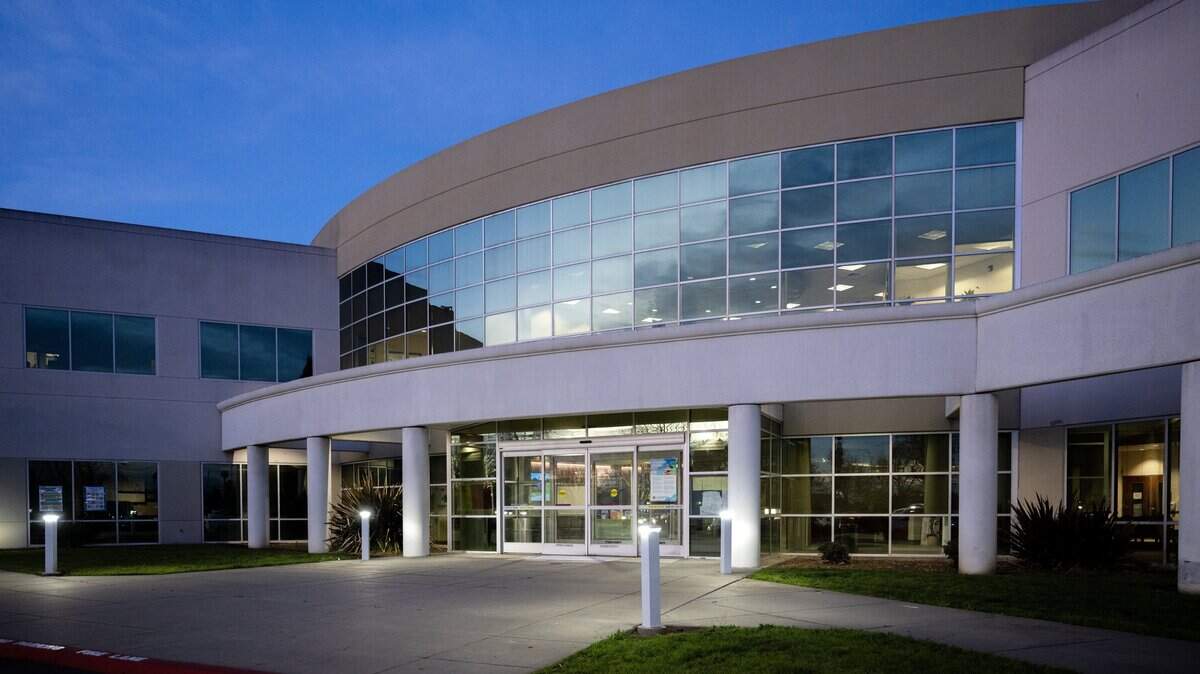
The Serna Center – headquarters of the Sacramento City Unified School District – on Thursday, Feb. 5, 2026.
JOSÉ LUIS VILLEGAS
jvillegas@sacbee.com
The clock is ticking on Sacramento City Unified School District’s revised budget, as its fiscal overseer, the county education office, must decide by Monday whether to approve or reject it. But the two sides have yet to bridge their differences over the budget.
Now, the district is preparing to seek state help reviewing its budget if the revised budget gets rejected.
The looming budget decision comes amid SCUSD’s yearlong fiscal crisis, with the district and Sacramento County Office of Education still at odds over how to address its $222 million structural deficit.
By Monday, the Sacramento County Office of Education must decide whether the district’s budget revisions address its current and future financial obligations. SCOE has already signaled concerns about them, warning that the revised budget relies on uncertain revenue and solutions outside the district’s control.
The district faces three possible outcomes. If SCOE approves the revised budget, the district avoids a Budget Review Committee, which would bring added scrutiny.
If SCOE disapproves it, the budget goes to a BRC. The committee would have three fiscal experts selected by the district board from a list provided by the state superintendent, and it would review the budget and could recommend changes.
A third option, if SCOE disapproves the budget, is for the district and county office to agree to waive the BRC process. In that case, SCOE would take on the review committee’s role, while the state would ensure a balanced budget is adopted by Dec. 31.
The district has faced county budget disapprovals before. SCOE disapproved SCUSD’s budgets three years in a row, from fall 2018 through summer 2021, but the district received a waiver from the BRC process each time, according to the district chief business officer Gerardo Castillo.
Several board members, including Jasjit Singh and Taylor Kayata, voiced frustration with the county office and signaled support for a BRC review if the county office rejects the budget again. Singh said the district has received “a slap on the hand” from the county office instead of the support and partnership it has sought in addressing the financial distress.
“If we don’t have the partnerships here, we’ll go seeking the partnerships elsewhere,” Singh added.
Kayata said the district’s efforts to seek guidance were met with little support, and that the county office seemed focused on a state loan rather than considering other options.
“And they don’t accept the idea that we don’t want to do that,” Kayatta said.
The board made no budget decisions Thursday as the item was informational, and board president Tara Jeane said trustees would revisit next steps at a meeting later this month.
The dispute over future revenue
On Sept. 17, the Sac City Unified board approved the revised 2026-27 budget projecting to improve the district’s financial position by $208.3 million, days after the county office rejected the original budget the board had approved in June.
The disagreement between the two agencies centers on the district’s projections for future revenue. The state-funded Fiscal Crisis and Management Assistance Team revised its estimate of when SCUSD could run out of cash, moving it from January or February to April or early May, while former FCMAT CEO Michael Fine said the district could make it through the fiscal year.
But SCOE’s concern is that the district lacks a long-term plan to address its structural deficit. The revised budget counted two one-time revenue sources as ongoing funding, a practice financial experts criticized for not being a standard budget practice.
“Once again, budget solutions must be feasible. Speculative budget solutions will not support the district’s cash position and ability to make payroll,” wrote Luz Cazares, SCOE’s appointed fiscal advisor, in a letter to the district superintendent Cancy McArn on Sept. 23.
State Superintendent Tony Thurmond, who had warned SCOE he could take over its oversight of SCUSD if he found the county office ineffective in addressing the district’s fiscal crisis, echoed SCOE’s concerns when it came to the budget assumptions.
“Superintendent Thurmond has been consistent and clear on the following: One, one-time funding is not guaranteed in subsequent years and should not be relied upon to balance an ongoing budget,” Julie Lautsch, a spokesperson for the California Department of Education, said in October.
“Two, that sound fiscal planning requires contingency plans in case anticipated one-time funding doesn’t materialize. And three, that his priority remains ensuring that Sac City has a credible path to long-term solvency.”
Related Stories from Sacramento Bee

The Sacramento Bee
Chaewon Chung is an education reporter for The Sacramento Bee. She has previously covered climate and environmental issues, focusing on energy and water. Before joining The Bee, she worked as a climate and environment reporter at the Winston-Salem Journal in North Carolina.