
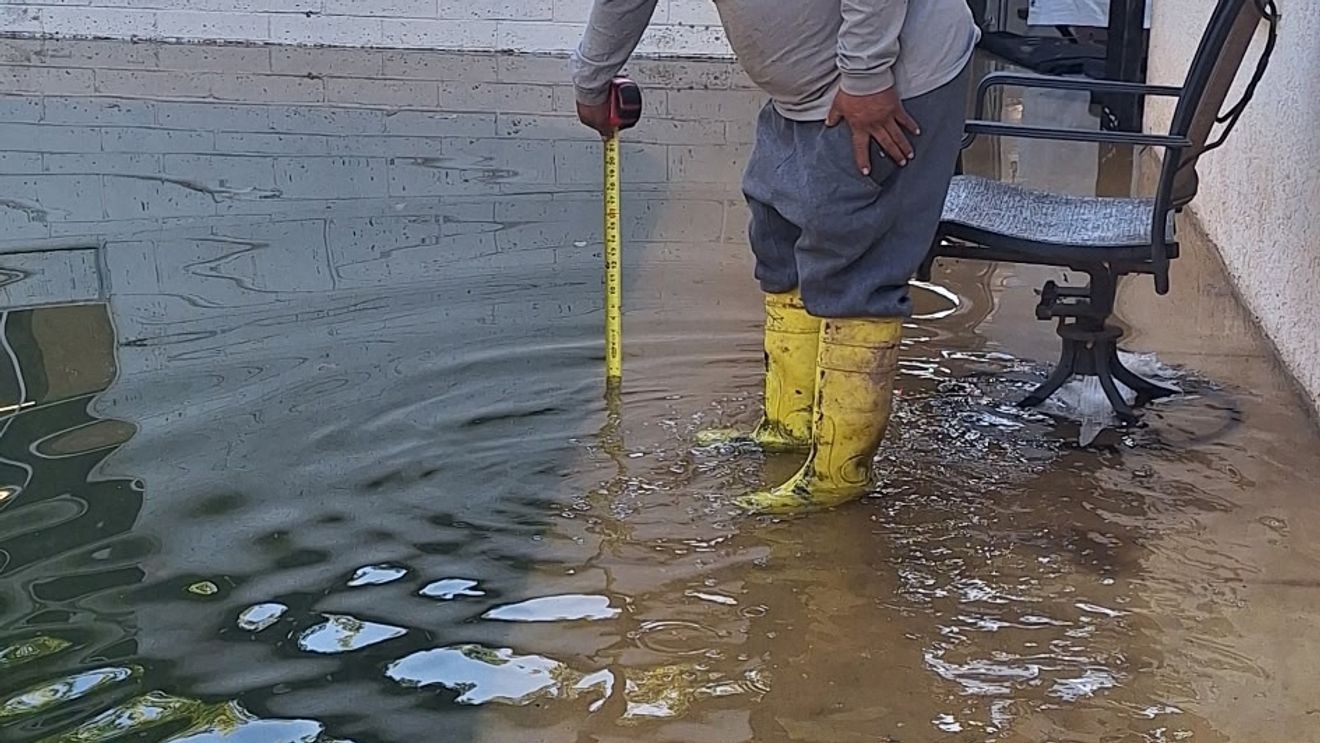
FRESNO, Calif. (FOX26) — A burst water main flooded homes and caused a massive sinkhole in southeast Fresno early Monday morning, leaving some residents with as much as three feet of water inside their homes.
Nearly 24 hours after the break, the water had stopped flowing, but the damage was still visible throughout the neighborhood. Residents were left dealing with destroyed belongings, damaged property and uncertainty about when they would be able to return home.
The water main burst shortly after 1 a.m. Monday, quickly sending water rushing through the neighborhood.
For Betty Gaona and her family, there was little time to react.
“As soon as he told me, the water rushed in and all my family, you know, got into our cars. We went across the street,” Gaona said.
Water tore through her home, damaging floors, appliances and personal belongings.
“It breaks my heart. It does. I know it’s just material things, but still hard to see,” she said.
Just down the street, Cindy Alvarez was also assessing the damage to her property.
The flooding destroyed her iron gate, damaged the motors connected to it and left cracks in a stucco wall.
“It ruined my iron gate. We just, we built that. The stucco wall, it’s cracked. We have motors on the gate, it ruined that,” Alvarez said.
The force of the water also saturated the surrounding soil. About five hours after the water main broke, a tree in Alvarez’s front yard toppled over.
She says she first noticed something was wrong when she heard cracking sounds.
“First I started hearing crackling, so I looked and then I noticed it fell so fast,” Alvarez said.
The damage has raised questions about why a water main installed only about 30 years ago failed.
Fresno Public Utilities Director Paul Amico says the pipe was made with a thinner material used by the city during a period of rapid growth in the 1980s and 1990s.
“There was a period in time when the city constructed these 16-inch water mains out of a thinner material, and this was in the 80s and 90s when the city was undergoing a lot of growth,” Amico said. “It was a material that was selected at the time that has not proven to be as durable as the current materials that we’ve been using.”
Amico says the city is now considering shortening its water main replacement cycle from 400 years to 100 years.
That means pipes originally expected to last centuries could require replacement much sooner.
According to Amico, other water mains made with similar materials have already been identified as priorities for replacement.
“Those have been identified as a high priority for replacement over the coming years,” he said.
Meanwhile, families affected by the flooding are facing an uncertain timeline for returning to their homes. For some, repairs could take days, weeks or even months.
Alvarez, a mother of two with several pets, says the city contacted her about temporary housing, but she initially had no confirmed place to stay.
“Is it frustrating for you that you still don’t know where you’re going to sleep tonight?” she was asked.
“Yes, ’cause I have two kids and I have pets, and there’s no clear answers. I mean, they’re saying that they’re gonna give us a place to stay, but we don’t know that yet,” Alvarez said.
Alvarez later confirmed that the city found her temporary housing, but she was unable to move in that night. She planned to sleep at her home.
For drivers, South Clovis Avenue between Butler and Columbia avenues was expected to remain closed until Tuesday afternoon as crews continued repair work.
The city has not yet determined how much the repairs will cost.
Amico says officials hope to discuss accelerating water main replacements with the city during the next round of water rate discussions.
As residents begin the difficult process of recovering from the flooding, the incident is also highlighting broader questions about the condition of Fresno’s water infrastructure and how quickly the city can replace pipes that may be more vulnerable to failure.