
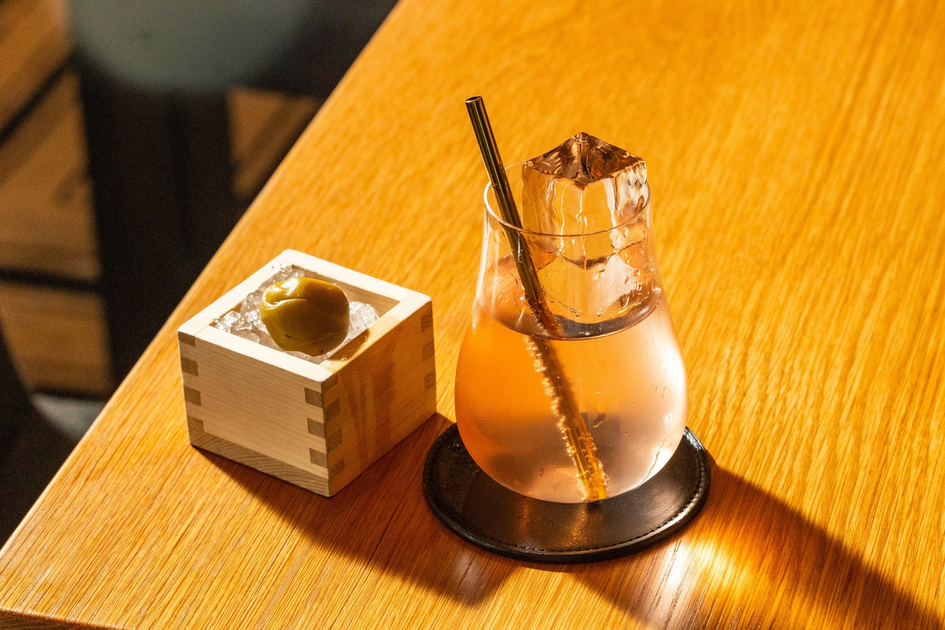
At Bar Iris in Russian Hill, bartender Timofei Osipenko uses ume to make umeshu and umeboshi. | Source: Morgan Ellis/The Standard
For a few short weeks every spring, San Francisco chefs and bartenders race to get their hands on ume, a tart Japanese plum with skin the color of a tennis ball. It’s not because they’re good to eat; in fact, they’re inedible raw. But once the golf-ball-size fruits have been coated in sugar and steeped in spirits for at least half a year, the infusion becomes one of the most sought-after cocktail ingredients of the moment: umeshu.
California-grown ume are in season for only a few weeks in May — and only if unexpected weather hasn’t wiped out an orchard’s supply. “Sourcing,” Sylvan Mishima Brackett writes in his 2023 cookbook “Rintaro,” “is the hardest part.” Brackett makes around 150 gallons of umeshu at Rintaro every spring; the Mission izakaya serves the sweet-and-sour liqueur over a large ice cube or with seltzer.
This annual ritual is gaining popularity among Bay Area bartenders. In recent years, more cocktail pros have started snapping up hard-to-find local ume just to spend months turning them into umeshu. Pantries are also stocked with housemade salted plum syrups and savory tinctures. It’s slow work, but it offers a way to explore a traditional Japanese ingredient while putting a distinctly California twist on what ends up in the glass.
 Osipenko serves umeboshi made from California-grown ume, a tart fruit commonly called a Japanese plum. | Source: Morgan Ellis/The Standard
The standard way to prepare umeshu is to put cleaned ume in a jar with sugar and alcohol, then leave it to steep for six months to as long as two years. Chelsea Nichols of Oakland’s Ramen Shop uses St. George Spirits unflavored vodka as a base; she serves her housemade umeshu in a highball with tonic water and lemon. At The Progress, bar manager William Cao is also steeping ume in vodka, with hopes that his batch will be cocktail-ready in December. How the Michelin-starred restaurant will use it is up for debate. Chef Stuart Brioza “was thinking of a highball-style drink,” Cao says. “But I was gonna do a stirred drink with it, probably agave-spirit based.”
At Yutori, a market and restaurant in Palo Alto, chef Jerome Ito sources plums from the local farmers market to make umeshu and umeboshi, salt-preserved ume that’s often colored with red shiso leaves. The former ends up in bar director Francisco Carranza’s cocktail Ume Chuai, made with shochu-based umeshu, elderflower, and tonic and garnished with an ume fruit.
“Most people don’t know that they can eat it,” says Kayoko Akabori, cofounder of Umami Mart in Oakland, which uses an ume garnish on the Umehattan, a Manhattan riff that swaps umeshu for sweet vermouth. Admittedly, the fruit looks like a wet prune and lacks the camera-friendly shine of a lime wheel or edible orchid, but Akabori says it tastes like “crunchy, tart delights.”
Other bartenders are finding ways to use the difficult little fruits beyond umeshu. Timofei Osipenko and his team at Bar Iris in Russian Hill make preserves from several varieties of ume, which they source from long-established growers in Napa and Sonoma. Originally, they imported ume from Japan, but they found it inferior to the California-grown fruit they could source through their network.
 Ethan Wamsley prepares a cocktail made with house-made umeshu at Bar Iris. | Source: Morgan Ellis/The Standard
 Umeboshi, preserved Japanese plums, at Bar Iris. | Source: Morgan Ellis/The Standard
Osipenko processes the fruit as soon as it arrives — “It’s not up to you when it’s ready,” he cautions — pulling the smallest, greenest ume for umeshu, which he ages for two years in an expensive, high-proof awamori spirit base. Using larger fruit at medium ripeness, he also makes umeboshi, which is used in low-volume liquids like bitters, tinctures, and a honey infusion called hachimitsu that finds its way into nonalcoholic cocktails. The prep takes time and effort, and there are commercial versions of umeshu he could use instead. But Osipenko says those products simply can’t match what he makes in-house: “The flavor is unbeatable.”
On Bar Iris’ spring cocktail menu, umeshu starred in a savory cocktail alongside sake, miso vermouth, and umeboshi vinegar. On the current menu is a cocktail Osipenko describes as a “red shiso ume highball” made with Japanese pepper and ginger, bergamot, violet, and umeshu.
Jennifer Colliau, bar director at Roses on Adeline in Berkeley, started experimenting with ume several years ago. “I’m so obsessed with this flavor,” she says. She was inspired by the recipe for a Chilled Sour Plum Infusion from the Chinese cookbook “All Under Heaven” by Carolyn Phillips.
The recipe begins with dried “sour plums,” but Colliau wasn’t satisfied with any of the commercial brands she found in Chinatown, so she did it the hard way: She sourced ume from Berkeley-based distiller Pekut and Carwick and made salt-cured umeboshi. She added salt to pull the liquid out of the plums, then pureed the solids to create a base “stock” she uses in a salted plum syrup to be sold by her brand, Small Hand Foods.
While that is in process (the syrup should be released by early December), she soaked the remaining ume solids in neutral spirit for three months to create a tincture, which she uses in a daiquiri and a gin Collins at Roses on Adeline. “Those are clean, fairly neutral-tasting cocktails, ripe for modification,” she says. “It’s also great in a vodka soda for the no-sugar crowd who prefers La Croix.”
Local spirit-makers are similarly embracing the fickle plum. Independent bottlers Pekut and Carwick make an umeshu called Prunus Mume, with an extra-dry version coming this winter, alongside a store bottling for Umami Mart.
More than a decade ago, distillers at Alameda’s St. George Spirits were experimenting with umeshu in small quantities while also planning a Japanese-inspired whiskey. Over meals and highballs at Ramen Shop, the two concepts came together, according to head distiller Dave Smith. They started seasoning casks with umeshu, then transferred aged single-malt whiskey into the casks to further age it. In 2016, they released the first batch of this whiskey, Baller.
 Source: Morgan Ellis/The Standard
The umeshu used for seasoning was poured from cask to cask, oxidizing along the way and developing richer, caramelized flavors. The team saved each year’s umeshu, and last month, they blended batches produced from 2015 to 2022 to make a limited-release liqueur called St. George California Umeshu. It’s fragrant, jammy, rich, and tart — like a boozy apricot marmalade that would put Paddington into a stupor of delight.
Berkeley’s Mosswood Spirits has also seasoned barrels with ume-infused alcohol to make batches of Umeshu Barrel Aged Whiskey and has produced a slightly sweetened Ume Plum Flavored Rum. Like St. George, Mosswood will release a stand-alone umeshu called Oomayshoo for the first time this year. It’s a blend of batches aged four to eight years in barrels after the initial ume infusion. “We only just finished this one and are still doing labeling,” says owner Jake Chevedden.
With umeshu’s popularity on the rise, the competition for sourcing the plums will likely become even more fierce. Already, one maker of umeshu bitters said he couldn’t justify the rising prices of the past two years and paused production; St. George’s won’t be releasing an umeshu blend this year because the crop from its source failed.
Umami Mart’s Akabori, who now gets a small quantity of fresh ume from Pekut and Carwick’s large annual order, says she’s determined to continue trying despite the challenges. “It’s really expensive, especially to go organic,” she says. “You kind of have to find your own farmer.”