
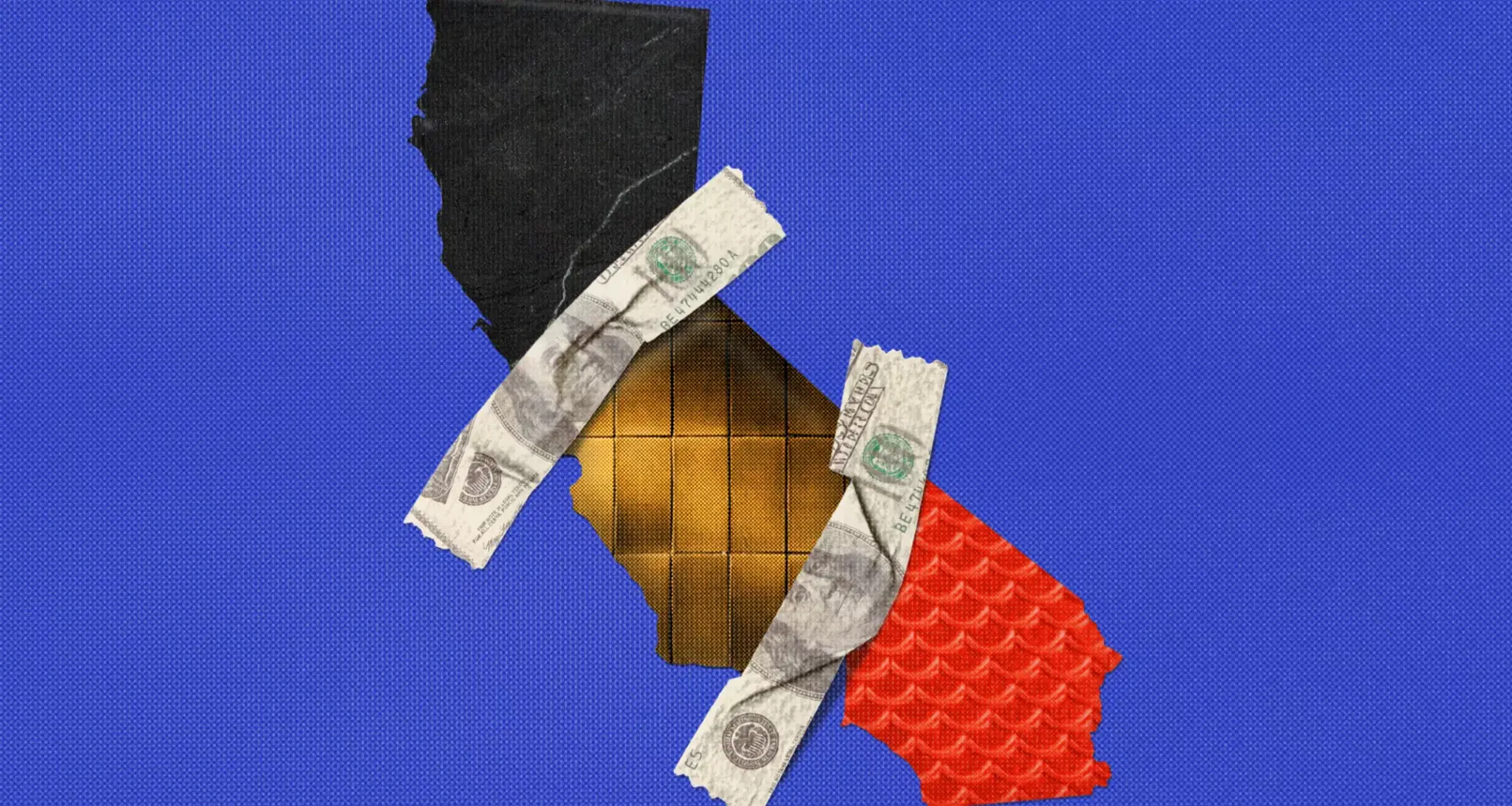
The totality of these policies has proved poisonous to California citizens. Since Gov. Arnold Schwarzenegger left office in 2011, California’s budget has grown two and a half times (opens in new tab) to almost $300 billion. But no rider of BART, parent of a California student, or renter or prospective homebuyer in the state would say their life is two and a half times better.
The root of California’s tax-and-spend political economy was Gov. Gray Davis’ 1999 decision to grant a norm-shattering (opens in new tab)retroactive pension increase (opens in new tab) to state employees. Since then, (opens in new tab)annual state pension spending (opens in new tab) has risen more than tenfold — not due to state employees delivering exponentially better services but because benefit formulas were enhanced even as investment returns failed to keep pace with projected results.
Not even the most staunchly conservative California governor could undo these changes. Pension obligations are constitutionally protected in California, creating a one-way ratchet where benefits can only increase. When investment returns for CalPERS, the state’s pension fund, fall short, taxpayers must cover the difference. State employees and pensioners are California’s untouchables.
Since taking office in 2019, Newsom has boosted staffing in the executive branch by 20% (opens in new tab) and added $11 billion to annual spending on compensation and benefits. When faced with recent deficits, he tapped budget reserves rather than freeze hiring or compensation. This isn’t incompetence — it’s political self-preservation.
Meanwhile, Texas and Florida have absorbed massive population growth (opens in new tab) while keeping per-capita spending increases below the rate of inflation. The difference isn’t the cost of living; it’s the cost of elected officials in California giving in to public employee unions. Breaking that cycle requires citizen action. Real change will come only when voters reward politicians who serve them instead of special interests.
As Newsom eyes the White House in 2028, he faces a question that could define his candidacy: Should he roll over and endorse two new taxes and even higher spending? Or does he have the will to challenge the unions that have funded his campaigns (opens in new tab)?
At the same time, California voters should ask a simple question: If the last $104 billion in “temporary” taxes produced so little improvement while sending pension costs soaring, why would the next $100 billion be any different?
David Crane is a lecturer in public policy at Stanford University and president of Govern for California (opens in new tab).