
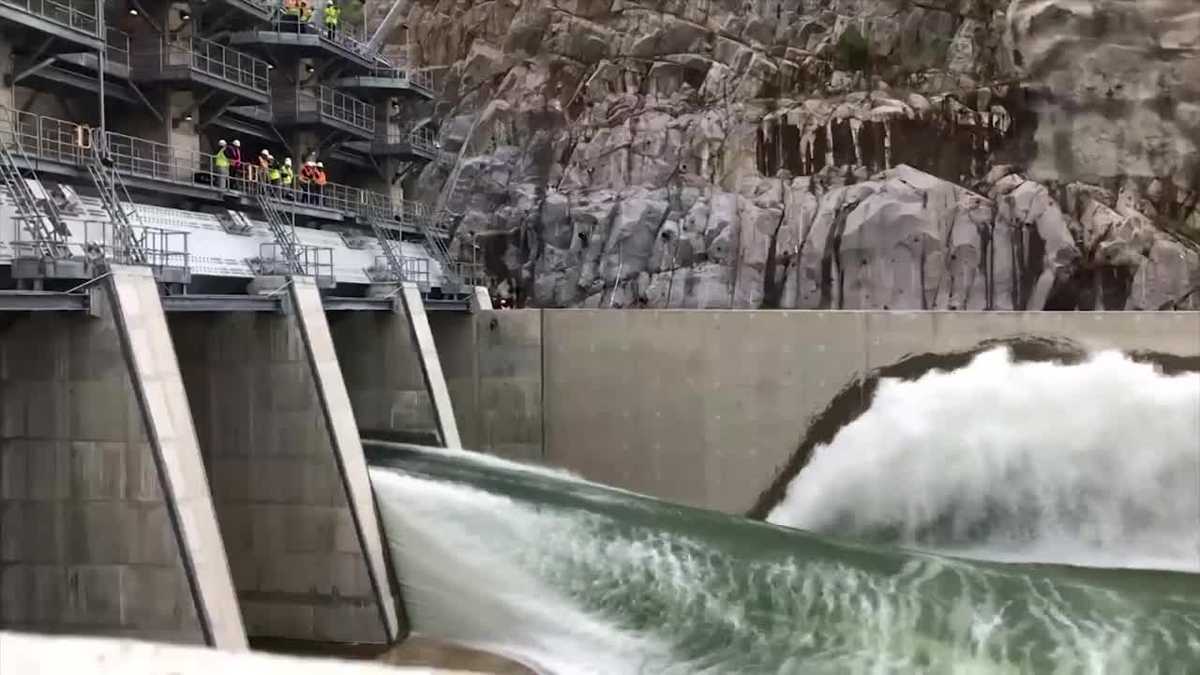
Water managers say lessons from the floods of 1997 have led to stronger levees, bigger dam gates and better forecasts that give them more time to prepare.

Northern California has seen just about everything during El Niño winters.
Some have brought abundant rain and flooding. Others have been much drier than expected.
That history is especially important this year as a likely historic El Niño event takes shape in the tropical Pacific.
On Sunday at 9 p.m., you can watch our KCRA 3 special: Preparing for an El Niño winter
But water managers aren’t assuming a wet winter is coming. Instead, they’re preparing for a range of possibilities and relying on decades of lessons learned from some of the region’s most memorable floods.
A lot has changed since the 1997-1998 winter.
Levees have been rebuilt and moved back from rivers. Dams have been upgraded. Reservoir operations have become more sophisticated. And advances in atmospheric river forecasting now give water managers several days of additional information before some of the biggest storms arrive.
The January 1997 flood, which actually occurred before El Niño developed, left a lasting mark on Yuba County.
After the Feather River overwhelmed the area’s levee system, local leaders made a major change: instead of rebuilding the levee in the same location, they moved it farther back.
The so-called “setback levee”, completed in 2010, gives the Feather River more room to spread out during high water flows. This reduces the stress on the levee.
“It provides more capacity through the Feather River,” said Willie Whittlesey, general manager of Yuba Water Agency.
That setback levee is built to 200-year flood standards.
“So the folks in Plumas Lake, Arboga, Olivehurst, Linda, they’re now protected by a modern state-of-the-art levee in that area,” Whittlesey said.
Folsom Lake has also been given major upgrades.
The addition of larger gates at Folsom Dam along with the emergency spillway allows operators to move more water through the system while maintaining better control of the reservoir. That gives operators more flexibility when a major storm is approaching.
“The Lower American can now pass a lot more water than it used to. Safely,” said Andy Fecko, general manager of Placer County Water Agency.
Weather forecasting has changed the game
Perhaps the biggest change since 1997 is improvements in weather forecasting both in the short term and long range.
Atmospheric rivers are among California’s biggest sources of both water supply and flood risk. In recent years, improvements in atmospheric river research and forecasting have given water managers a much better understanding of what is coming.
“What is the timing of the storm? What is the duration of the storm? And what is the location of the storm?” Whittlesey said.
Those details help managers estimate how much water will flow into reservoirs and determine how much space they may need.
“You’re more accurately able to predict the peak runoff,” Whittlesey said. “And that’s what you’re trying to do when you’re operating a reservoir for flood risk reduction.”
Fecko said the change in forecasting has fundamentally altered how water managers approach storms.
“We used to sort of just think that we were victims of the weather,” he said. “But now we can see those things coming much further ahead.”
Even with better levees, upgraded dams and improved forecasts, water managers aren’t suggesting the region is immune to flooding.
The improvements since 1997 mean Northern California has more ways to manage a major storm than it did nearly three decades ago.
But infrastructure can only do so much.
Whittlesey wants people who live in flood-prone areas to understand their risk before the rain starts.
“We don’t want them to be scared of that risk,” he said. “But we want them to understand that we do live in a flood-prone area.”
For residents, that means knowing whether they live in a flood-prone area, understanding local evacuation information and being prepared for the possibility of rapidly changing conditions during a major storm.
And while flood preparation is the priority for water managers, a wet winter would have plenty of benefits.
More surface water could improve reservoir storage, reduce the need for groundwater pumping, support recreation and generate more hydropower.
“When we have these wet years, let’s take advantage of that,” Fecko said. “Let’s use surface water. Let’s not pump groundwater. Let’s put as much water from the surface into the ground as we can.”
That’s the balancing act for Northern California heading into a potentially historic El Niño:
Prepare for the possibility of too much water, while hoping for enough.
See more coverage of top California stories here | Download our app | Subscribe to our morning newsletter | Find us on YouTube here and subscribe to our channel.