
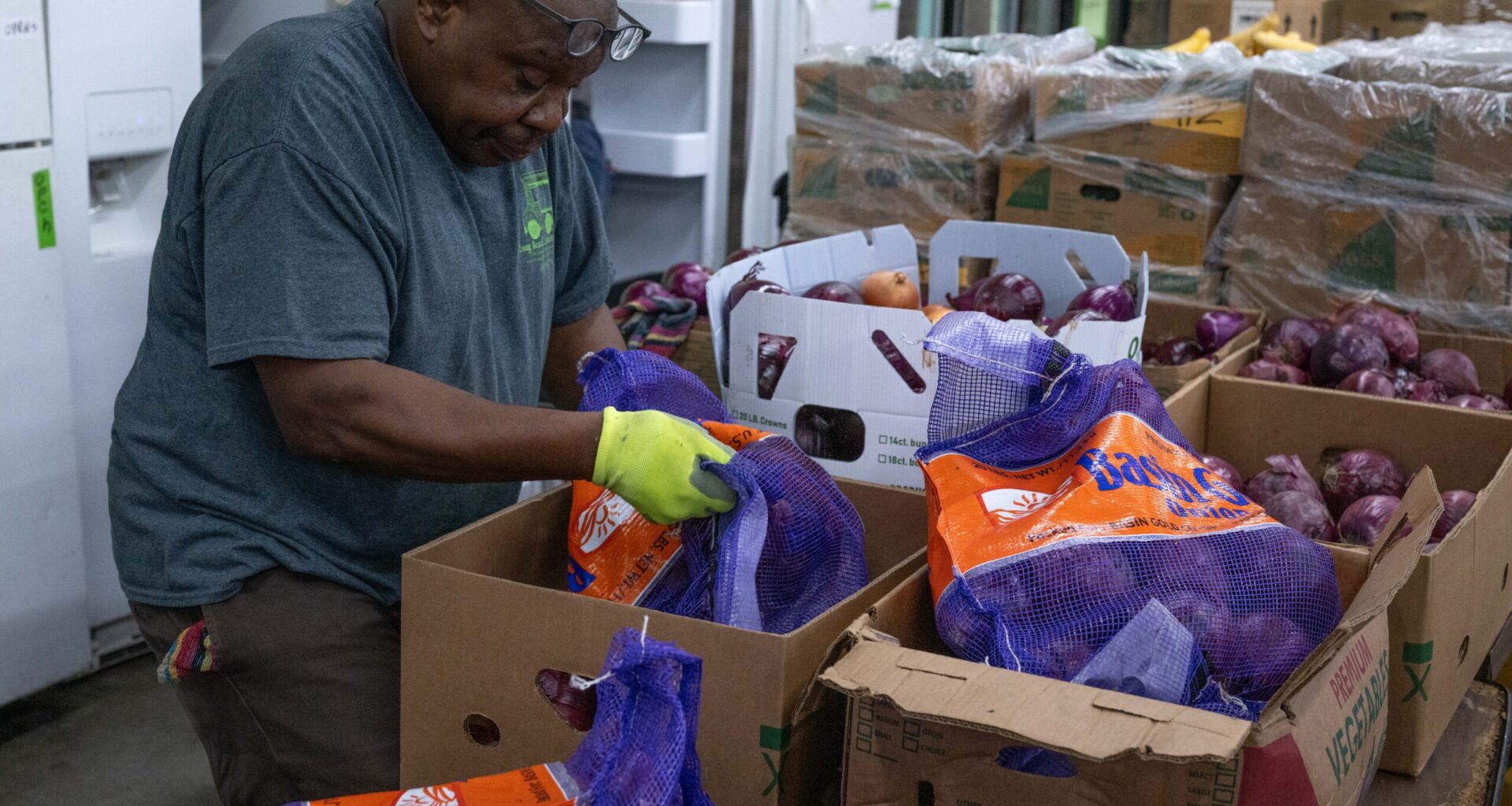
Volunteers open several boxes of produce for residents by request at the Long Beach Community Table on Nov. 14. The community table is in full operation as residents receive food and resources in time for the holiday season. Jorge Hernandez | Long Beach Current
Californians are set to have their Supplemental Nutrition Assistance Program benefits reinstated; however, the dates for reinstatement are unclear.
As the holidays near, food insecurity heightens the already stressful time for many students and their families.
On-campus resources, including the Basic Needs program and the Laurén Chalmers ‘83 Beach Pantry, are ready to accommodate Beach-goers in need. Still, the impending fall break may leave many students searching for supplies in the greater Los Angeles area.
Long Beach Community Table, a nonprofit cooperative with a warehouse in north Long Beach, now provides produce, meat, dairy products and more to 7,000 people every week.
The organization’s executive director, Kristen Cox, began her career as a nurse and got into politics before becoming a clinical psychologist. Yet, she knew her calling had always been with social justice reform.
Cox and her husband founded the Community Table in 2018, donating food to 25 people on the first weekend. Despite growing exponentially since then, Cox has stayed true to her mission of “growing sustainable community with compassion and dignity.”
“A month and a half ago, we were at 5,500 [people]—but joblessness is up, rent is up, inflation is up, cost of living is up,” Cox said. “SNAP benefits being taken were the last straw for a lot of people.”
SNAP impact
Cox has seen a dramatic spike in donations of food, clothing and basic essentials since the government shutdown began at the start of October.
“Just yesterday, I spoke to Southern California Edison negotiating for a lower rate due to our nonprofit status,” Cox said. “There are hundreds of people relying on us for food, and our 50 freezers and refrigerators working at commercial strength make for a high electric bill.”
Community Outreach
The focus on efficiency and organization has led Cox to seek out partnerships with other nonprofits.
“Maybe you have a surplus of vegetables, and we have a bunch of starches,” Cox said. “The more of us who come together to work on a [food] grant, the stronger we are.”
Some recipients of the Community Table’s large-scale food acquisitions may qualify for their home delivery program, the Homebound Program. However, applicants are screened to make sure no household members are physically able to pick it up.
“We try to make it as clear as possible that we have very few resources,” said the operations manager of the home delivery program, who wished to be referenced by his first name, Asher.
The warehouse and delivery program will be closed on Thanksgiving and Christmas this year, according to Asher. “We’ll be receiving some whole turkeys on the Friday before Thanksgiving, and a lot of seasonal food items like Christmas cookies will also be in stock,” Asher said.
How you can get involved
Long Beach Community Table currently has about 600 to 700 volunteers, many of whom are college students interning in nutrition or human development.
“You start getting the same people on your route every week, develop relationships with them, and they look forward to that,” Cox said. “Socialized isolation is one of the worst things for you.”
Cox has been overjoyed at the amount of support her initiative has received in the past few months. Local businesses are hosting food drives in addition to eight fundraisers around Long Beach.
Cox expressed gratitude for community humanitarians delivering food to around 600 houses every week, and shared her desire to give more people the ability to cook healthier meals.
“Teaching people how to grow, cook and preserve their own food is my next goal,” Cox said.
Anyone can pick up food at Long Beach Community Table—no application, ID or appointment necessary. Popup locations, listed on their website, can be found on the weekends.
“Food is freedom—it gives you the ability to pay for your prescriptions, or put fuel in your car,” Cox said. “For many who rely on us, it helps them reintegrate into society.”