
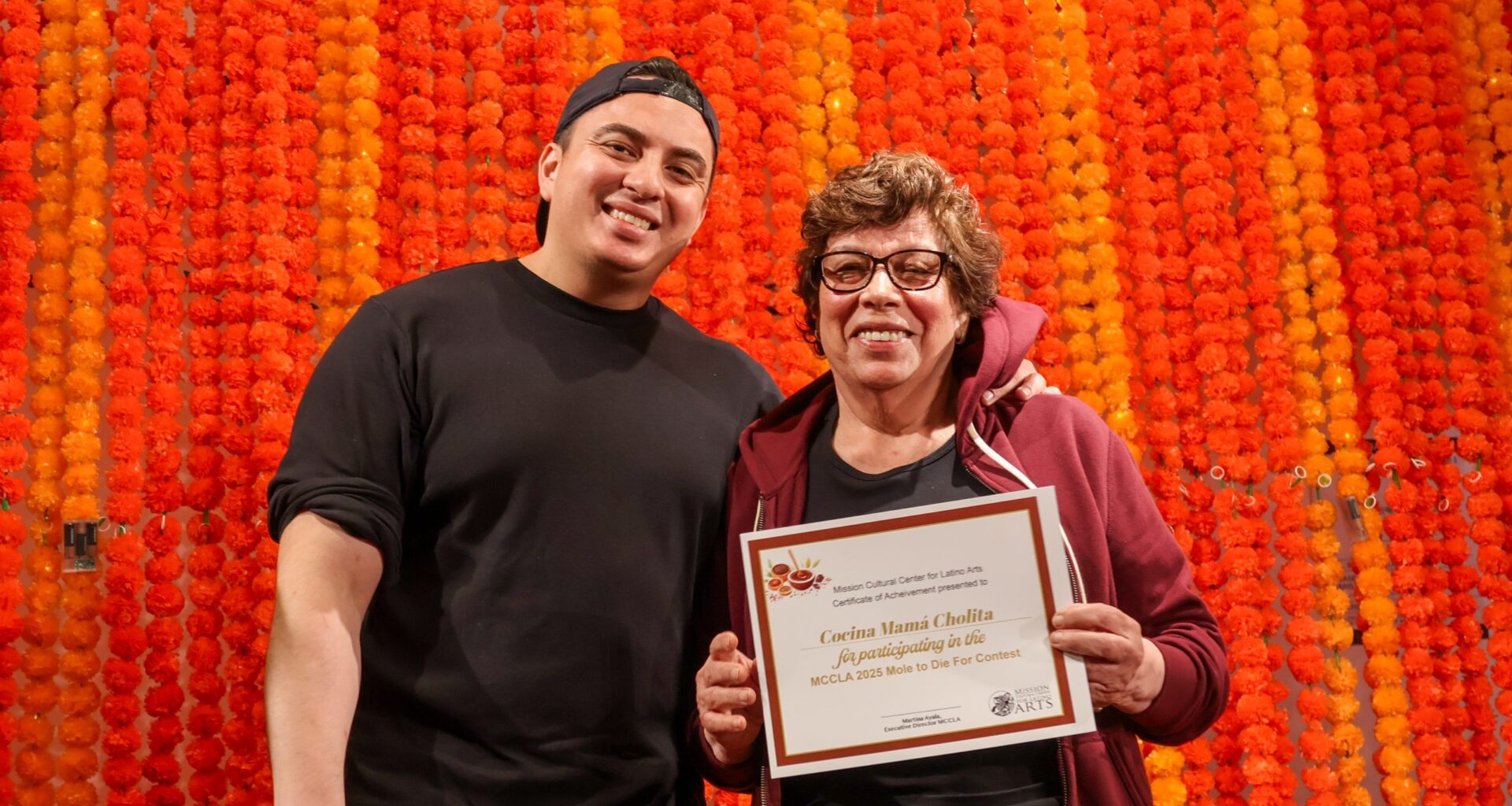
In front of a wall decorated with strings of marigold flowers, Mission District chef Jose Villegas stood beside his mother inside the Mission Cultural Center for Latino Arts waving a first-place award that the duo won on Saturday for their Michoacan-style mole.
Only an hour earlier, the chefs had participated in the 20th annual Mole to Die For Competition. Ten restaurants vied for first place this year and some 75 community members acted as judges.
Villegas and his mother Delfina own Cocina Mamá Cholita, a Mission District restaurant at 3471 Mission St.
“It makes me think of my mother,” said Delfina Villegas, who began cooking beside her mother in Michoacán, Mexico, before migrating to the United States. “When I was little, everyone invited my mom to cook for quinceañeras and weddings,” she said. “I saw how she did it and continued in her footsteps.”
Her son, Jose, also found a calling in cooking. “I would cook for her and then she would return it,” he said of his grandmother, whom he cared for until she passed away at 95. During their time together, he refined his technique and three years ago opened Cocina Mamá Cholita alongside his mother.
Now, the pair pride themselves on serving family recipes made entirely from scratch. With a bright smile, Delfina said, “this win makes me want to cry,” and her son gently squeezed her shoulder.
Cantina Los Mayas took home second-place. All chefs wore bright smiles as the audience snapped photos and clapped.
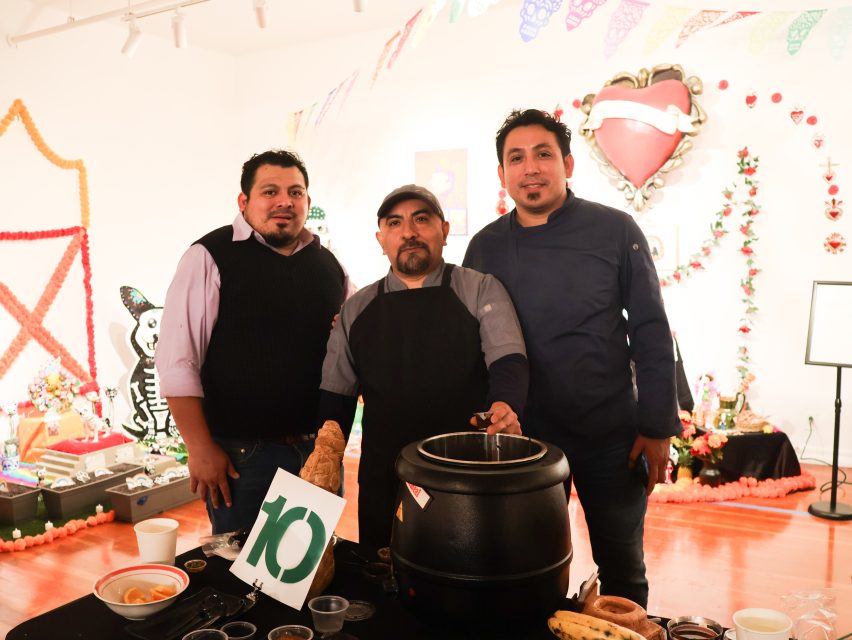 The Cantina Los Mayas chef Marcos Mendoza stands beside his team mates at the Mole to Die For competition. Photo by Sage Rios Mace.
Mole’s origins trace back centuries in southern Mexico, particularly to Oaxaca and Puebla, where indigenous cooks blended local chiles, seeds, cacao and spices into early versions of the sauce. In Nahuatl, the Uto-Aztecan language spoken by the Aztec people, “molli” means “sauce” or “mixture.”
Over generations, families developed distinct regional styles, from rich, chocolate-tinged mole negro to the bright, herbaceous mole verde. Today’s winner was a Mole-Michoacano with a deep red and brown sauce.
Marcos Mendoza, head chef at Cantina Los Mayas, on 431 Balboa St. in San Francisco, said of his Yucatan mole, “It is a lengthy process with many ingredients.” It includes onions, garlic, almonds, peanuts and peanuts, chiles and chocolate. His secret ingredient: a plantain, which adds “a bit more sweetness.”
The result, Mendoza said, is an “explosion of spiciness and sweetness.”
Inside the gallery, a long line stretched from table to table as attendees collected small tasting cups of mole from each restaurant before finding seats at the event’s two communal dining tables. Brightly colored Día de los Muertos ofrendas lined the space’s walls and singers performed classics from artists including Juan Gabriel and José José.
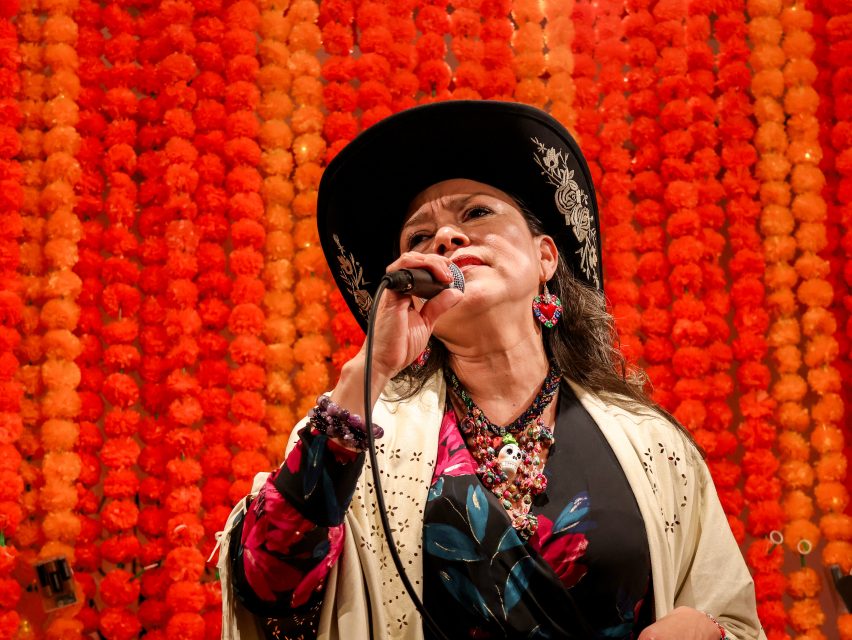 A singer performs at the Mole to Die For competition at the Mission Cultural Center for Latino Arts. Photo by Sage Rios Mace.
Laughter and conversation drifted over the music as neighbors and families sat down to compare flavors. One community member, Marcos Gutierrez, who runs the 1010 San Francisco radio station, delighted in Cantina Los Mayas’ dish. “I really loved number ten,” he said. “Every flavor stood out, like the peanuts, and everything tasted natural.” His tablemates nodded, while another praised “number six,” a milder mole defined by a rich peanut flavor without the spicy kick of the Cantina’s.
After tasting, guests filled out forms marking their favorite mole by table number. Event staff tallied the votes before the center’s executive director Dr. Martina Ayala took the stage to announce the winners and thank the community for its support.
This year’s remarks from Ayala’s team mate, however, highlighted the center’s financial challenges amidst recent budget cuts. Daisy Mariah, who greeted guests and performed music, told the audience, “We are in a critical position and we do not know what will happen but we are grateful for your support.”