
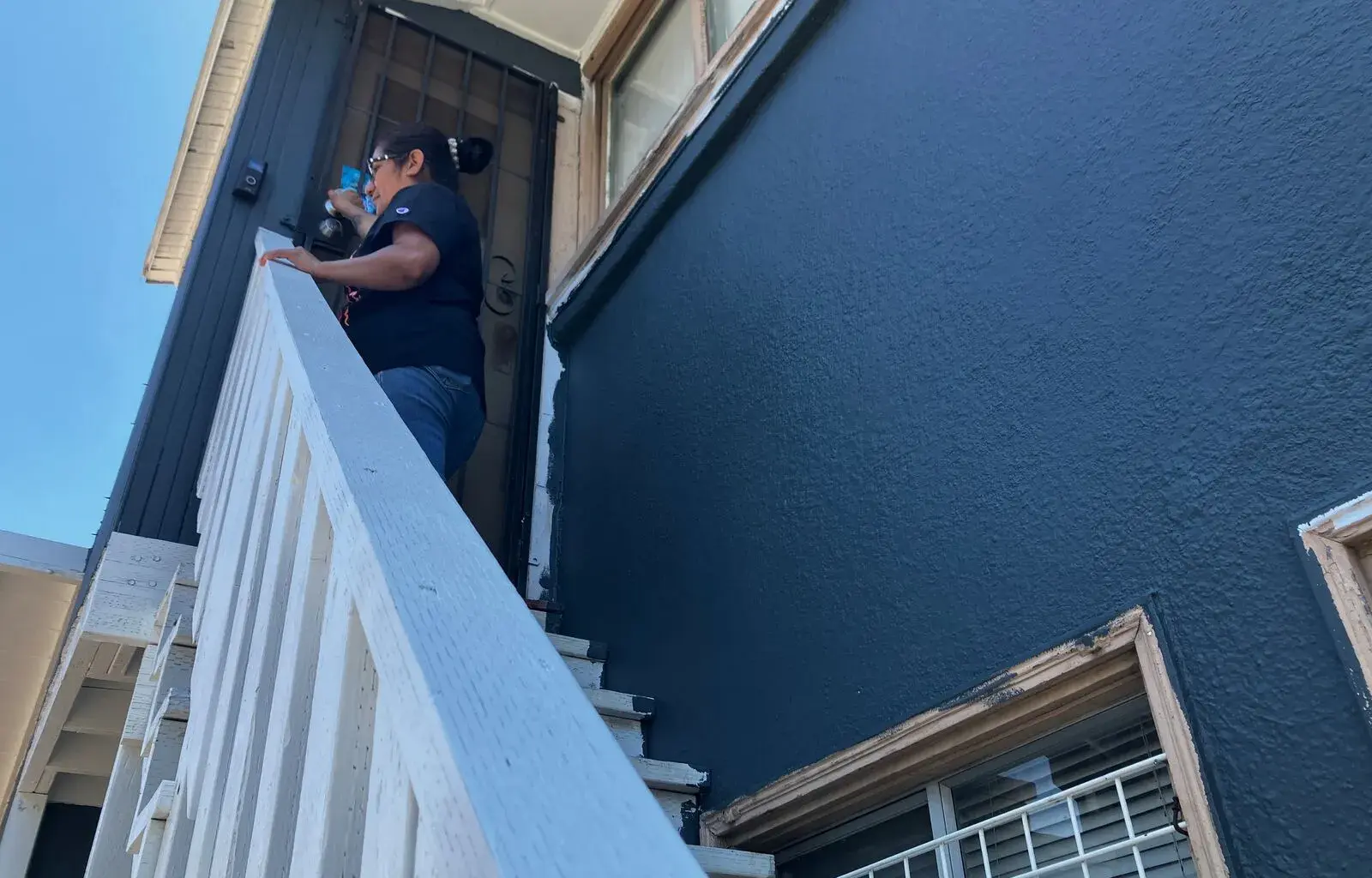
A group of long-time Fruitvale renters is suing their new landlord, accusing him of trying to push them out by threatening to call ICE on them and taking other illegal eviction steps.
Darrick Chavis bought the four-unit rental property on Princeton Street and Fairfax Avenue this spring, inheriting its tenants, who pay below-market rates after living in the rent-controlled homes for years. Almost immediately, Chavis offered his new tenants buyouts if they’d leave.
In Oakland, landlords can only raise rents by nominal amounts each year in rent-controlled buildings — but if a tenant moves out, they can establish any new starting rate for the next renter.
The offers Chavis made were below the minimum required by Oakland’s tenant protection law, the tenants claim in a lawsuit filed last week in Alameda County Superior Court. The tenants are represented in the case by attorneys with the California Center for Movement Legal Services.
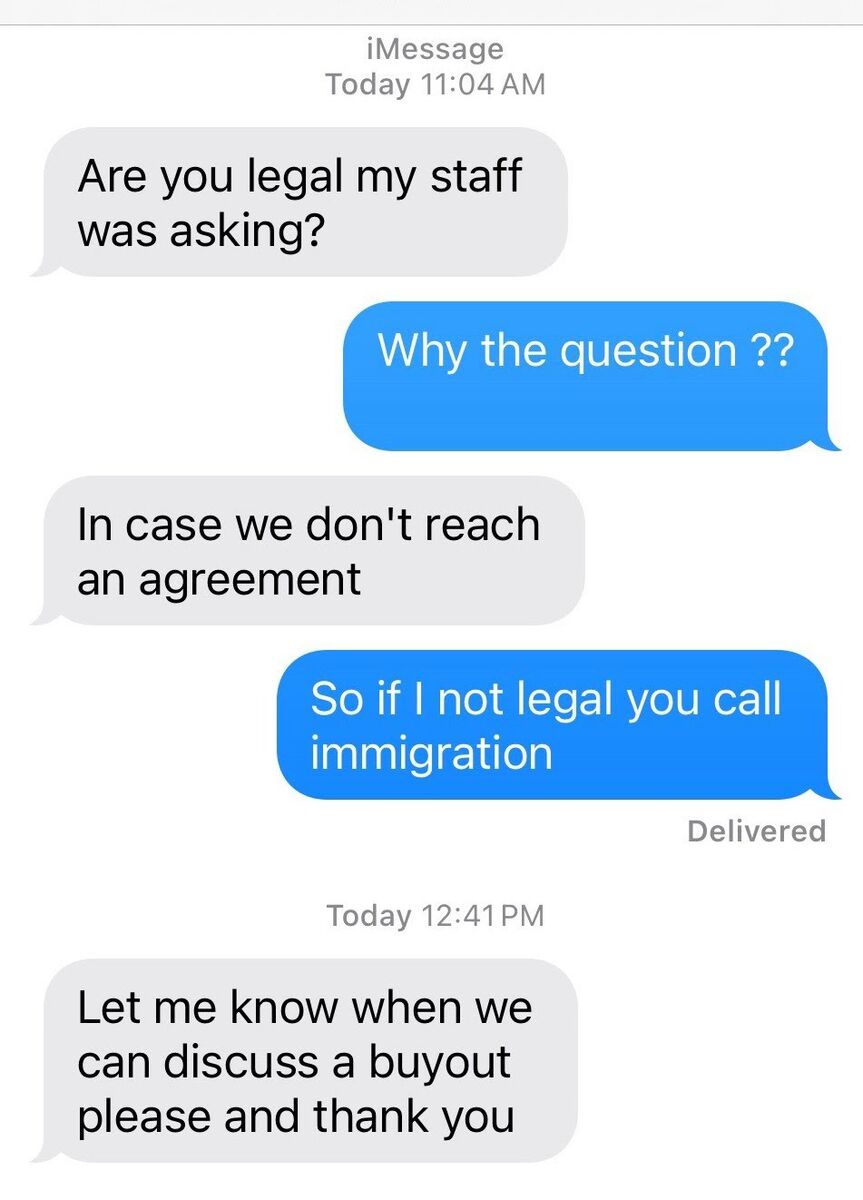 A text message from Chavis to a tenant. Credit: Courtesy Veronica
In text messages to tenants in each occupied unit, which The Oaklandside reviewed and reported on in July, Chavis asked about their immigration status. Most or all of the tenants in the property are Spanish-speaking immigrants. Some live with their children or grandchildren.
“Are you legal my staff was asking?” Chavis wrote in a text message to one tenant. When the renter questioned the ask, Chavis clarified: “In case we don’t reach an agreement.” The tenant took this as a threat to call Immigration and Customs Enforcement if they didn’t accept a buyout.
Chavis told another tenant he wanted to make a move-out deal with him. When the renter declined, Chavis shot back, “Ok no problem, hope your legal you’ll hear from my attorneys soon and yes we’re checking,” the lawsuit claims.
“When the tenants asserted their rights, Chavis racially profiled and threatened the tenants by illegally inquiring into their immigration status,” the complaint reads.
Chavis did not immediately respond to an interview request for this story. When we spoke with him in June, he denied all of the tenants’ accusations, saying, “None of it is true.” He claimed the texts asking about his tenants’ immigration status were not written by him.
On Friday, Nov. 14, the city of Oakland’s rent program sent an email advising tenants that landlords cannot legally ask about immigration status, threaten to disclose immigration status to authorities, or harass renters based on immigration status. It’s unclear if the message was sent in response to the lawsuit that was filed two days earlier.
A ‘harassment campaign’
In their suit, the Fruitvale tenants also accuse the property owner of waging a “harassment campaign by attempting to make the properties unlivable.” Despite the tenants’ long list of pending maintenance requests, the landlord sent construction workers to the property unannounced for other projects, according to the complaint. The workers left piles of unsanitary debris, made noise for days on end, and blocked the driveway and door entrances, the lawsuit says.
“The pressure and the threats are constant and the presence of construction workers is making me sick and worried about my safety,” an 89-year-old tenant named Ana said through an interpreter at a press conference Wednesday. The tenants and their attorneys requested that The Oaklandside use only their first names out of concern for their privacy and safety.
“A home is not just an address,” Ana continued. “I raised my grandchildren in my home for multiple years and it’s a place where I thought I would find peace and dignity in my old age.”
Another long-time renter, Veronica, said her family has legal status but Chavis’ alleged actions still made them concerned for their community.
“I risked everything to come to this country, and I’ve been here for two decades,” she said Wednesday. Immigrants “are the workers that clean, that cook, that build for Oakland. And we’re still told we’re disposable.”
Chavis refused to accept rent payments from June to October and ignored questions about where to send checks, according to the tenants. Their lawyers said they see this as yet another tactic in a campaign to push the renters to move out.
The Oakland City Attorney’s Office contacted Chavis in June after receiving complaints from the tenants and an advocacy group, ACCE, the Alliance of Californians for Community Action, which has been working with them. The city warned Chavis that the alleged eviction threats, construction work, and habitability issues were likely illegal and said the office would consider legal action if the problems persisted.
But “nothing seems to stop him,” said Leah Simon-Weisberg, director of Movement Legal, about why the organization ultimately decided to sue.
Adam Morton, one of the organization’s attorneys on the lawsuit, said that the Fruitvale plaintiffs, due to their legal status, are in a relatively safe position to fight against the threats that he said are growing against immigrant tenants in rental properties across California.
“It also helps that in Oakland we have local laws and protections that add an extra layer on top of the state laws,” Morton said.
This is not the first time Chavis, who has a recent address in Fairfield, has been sued over his real estate dealings. We identified 15 other properties owned by Chavis or his company Franchise Investment Properties, including three in Oakland.
Tenants in at least five of his properties, including the Fruitvale one, have sued Chavis, claiming habitability issues and other problems. In June, tenants in a San Francisco building Chavis bought in December 2024 filed suit claiming he was trying to push them out illegally. In a 2016 case, a group of Oakland tenants claimed Chavis had charged them for illegal rent increases and threatened to call ICE on them, too. It’s unclear, based on the public court record, how that case was resolved.
Chavis has a history with the criminal justice system as well as the civil court system. About 20 years ago, Chavis went to prison after pleading guilty to federal charges of mail fraud and filing a false tax return after participating in a scheme to defraud the city of Hercules, where he worked at the time, of nearly $400,000. The money came out of a program intended to provide home repair loans to low-income residents.
“*” indicates required fields