
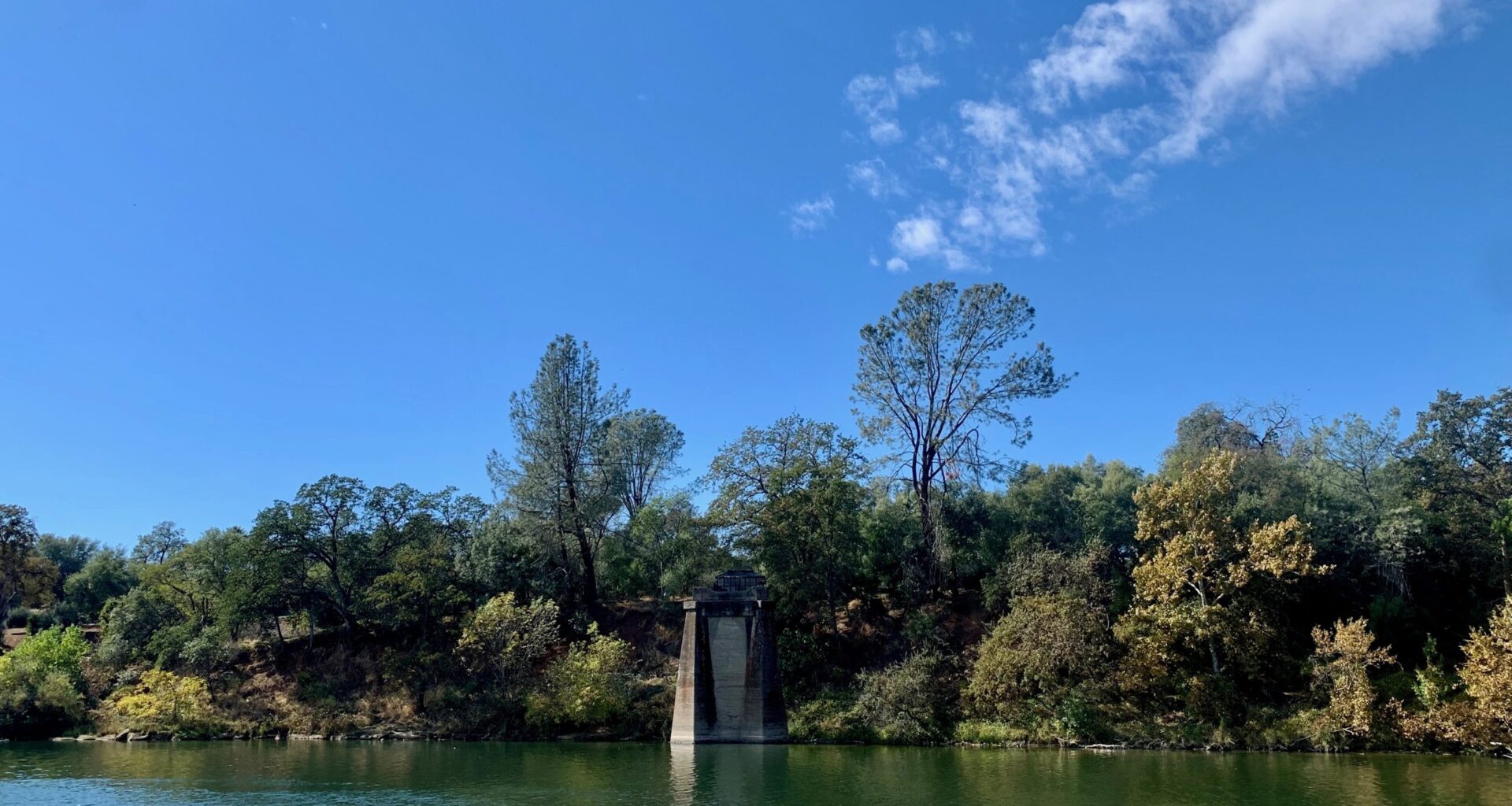
 The Feather River in Oroville. Photo by CN&RBy Dan Bacher
Preliminary data suggests Fall-run Chinook salmon returns to the Feather, Sacramento and Klamath river systems are looking much better in 2025, following the third year of a total closure of commercial ocean salmon fishing in California coast.
An estimated 40,000-plus king salmon have returned to Coleman National Fish Hatchery on Battle Creek, which is important to the Sacramento River, according to James Stone, President of the Nor Cal Guides and Sportsmen’s Association. Hatchery staff took in 28 to 30 million total eggs for Fall-run Chinook this year to date, a big improvement from the previous year when the facility had to obtain eggs from the Feather, Nimbus and Mokelumne hatcheries to meet its production goal.
Due to the low numbers of fish that returned to Coleman the last three years, recreational salmon fishing on the Sacramento River was closed for the third year in a row, although there has been a limited salmon season allowed on the Feather, American and Mokelumne rivers. The Feather River, the Sacramento River’s largest tributary, saw another good salmon run. A total of 39,587 Fall-run Chinook salmon passed through the Feather River Fish Monitoring Station from July 1 through present. That is close to the 40,380 fish that returned by the end of last year. The number of Spring-run Chinook salmon counted at the station between April 16 through June 30 was 17,712, the biggest return of spring Chinooks in over a decade.
On the lower American River, the ladder at Nimbus Hatchery opened on Friday, November 8. Egg-taking took place the following Monday and the next spawn happened the same week.
Vance Staplin, Executive Director of the Golden State Salmon Association, reported that the Mokelumne River Hatchery is also kicking off the season “with an impressive early return: Over 6,400 Chinook counted in the river so far, and 2.8 million eggs already collected and fertilized.”
Staplin added, “With numbers like this, hatchery managers are confident they’ll exceed their goal of 7.4 million fertilized eggs this season.”
On the Klamath River, it’s clear that, as of October 22, some 883 Chinook salmon had returned to the Fall Creek Hatchery above the former dam site. It’s also known that the fall Chinook weir counts on the Klamath River, Shasta River and Scott River – and their tributaries – are over three-times higher than they were last year, which is also the first year that the salmon were able to spawn upriver above the former dam sites.
“The numbers from this year’s fall Chinook salmon run tell a striking story,” noted Jay A. Martin of the Yreka News. “By mid-October 2024, the Shasta River had counted 1,871 adult Chinook salmon. At nearly the same point in 2025, that number stands at 5,745 – more than triple last year’s count. Across every tributary monitored by the California Department of Fish and Wildlife, 2025 is delivering substantially stronger returns than 2024.”
What else do we know about the Klamath salmon and steelhead runs this year?
“We know for certain salmon and other anadromous fish are now spawning in places they haven’t done so in over a century,” said Craig Tucker, natural resources consultant for the Karuk Tribe. “We now know that water quality has improved in the fall when adult fish are migrating. And we know that we have all but eliminated toxic algae blooms in the former reservoir reach.”
Another bright spot involves the fact that around 140 Klamath River Chinooks have returned to the Sprague River, Williamson River and other tributaries of Upper Klamath to spawn again for the first time in over 100 years.