
What’s at stake?
The Fresno County Board of Supervisors and City Council want to regulate the distribution, possession and use of a kratom, a plant that can be used to create byproducts found in health supplements. State and county health officials have placed no restrictions on the plant, but local leaders say that’s no excuse to not be proactive
The Board also resurrected rumors of competing county transportation tax measures in next year’s ballot, and unanimously approved a new public health director.
The Fresno County Board of Supervisors on Tuesday unanimously approved a move toward introducing regulations against kratom — a plant that has drawn scrutiny in recent years from state and federal health officials.
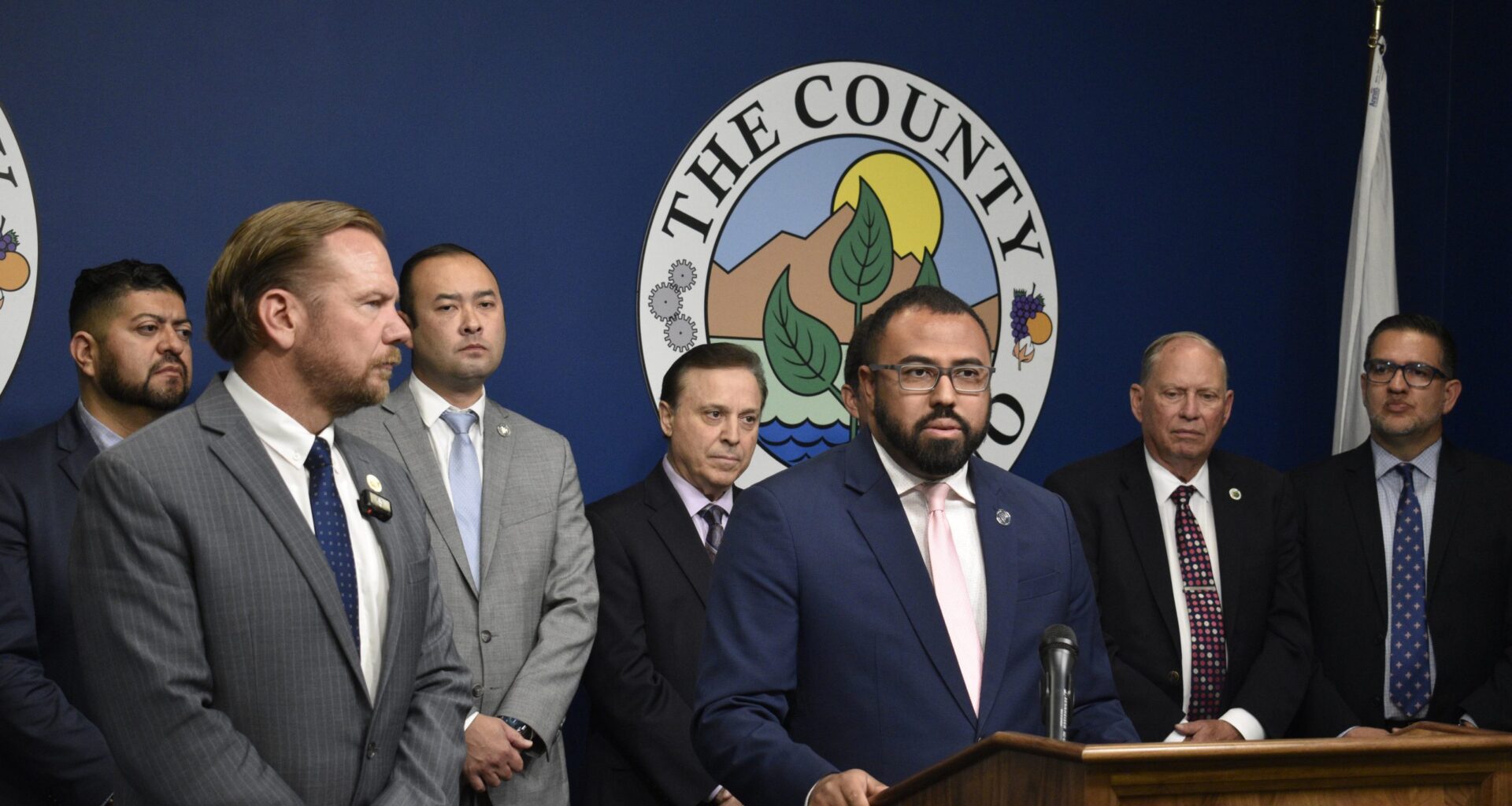
The hearing preceded a joint news conference with Fresno City Councilmember Nelson Esparza and leading county health officials.
Kratom is a tree native to southeast Asia with leaves used in some health supplements.
Supporters of kratom tout a wide range of benefits, claiming it can relieve pain or be used as a healthier alternative to sugar and caffeine-laden energy drinks, according to the Mayo Clinic. Some claims go as far as saying kratom is a viable treatment to help people with substance addictions kick the habit. Critics, however, argue that there are too few studies on the plant to be able to confidently support any claims of legitimate medicinal use.
The Mayo Clinic reports that studies on kratom have uncovered dangerous side effects, labeling the drug as “unsafe and ineffective.”
State and federal health officials do not have any regulations against kratom, in spite of the plant’s growing notoriety. At the news conference, Esparza said that doesn’t absolve local leaders from passing their own restrictions on the drug, which he referred to as “gas station heroin.”
“If state and federal governments can’t move quickly enough, then the cities and counties here must,” Esparza said. “Our neighborhoods deserve protection from the predatory market of unregulated and dangerous drugs.”
The Fresno City Council will hold their own hearing to introduce regulations against the drug on Thursday. It will be brought forward by Councilmembers Esparza and Tyler Maxwell.
The Tuesday afternoon news conference went smoother than the hearing held at the board meeting earlier in the day, where it momentarily seemed like the ordinance may have its initial vote delayed.
The ordinance was brought forward by Fresno County Supervisor Nathan Magsig alongside key officials from the county Department of Public Health.
The ordinance went through several iterations before being publicly introduced this week, and even saw multiple changes done on-the-fly at Tuesday’s hearing. The sudden changes led to initial skepticism from Supervisor Brain Pacheco and Board Chair Buddy Mendes.
Mendes said the ordinance was originally supposed to come before the board at their last meeting on Nov. 4, but that “it wasn’t even close” to being ready then. The proposed ordinance, after initially being posted early last week, saw further revisions on Friday.
“When we do those kinds of things…we want them on the agenda, but they’re not ready for prime time,” Mendes said. “We need something, there’s no doubt about that, but I think we’re a little too soon.”
Pacheco said regulating drugs that federal and state officials haven’t is possibly “going above and beyond” the county’s responsibility.
“To me, it always seems we want less government, and here we’re going to make more government,” Pacheco said. “How do you justify that?”
San Diego, Newport Beach and Oceanside have passed complete bans on the sale, possession and distribution of kratom products, according to county documents. The City of Pasadena also had their public health department issue a notice on Tuesday advising people against using the plant.
U.S. Health and Human Services Secretary Robert F. Kennedy also announced earlier this year plans to restrict kratom use.
Tuesday’s hearing drew several residents to speak out, with many opposing the ordinance.
Supporters of the drug argued that there is a difference between natural and “synthetic” kratom. Kratom contains the Miragynine and 7-hydroxymitragynine (7-OH), the latter of which has been the source of greatest concern among health advocates due to its potential addictive qualities.
The board eventually felt comfortable approving an ordinance that would ban kratom products that are synthetic, or have a concentration of 7-OH higher than 2%. Legal, or “natural” kratom products will be required to be sold at shops that sell tobacco products behind a counter.
The ordinance will come back to the board for a final reading at their next meeting on Dec. 9.
Supervisors revive specter of rival transportation taxes
Comments by multiple supervisors Tuesday resurrected a lingering question: Will Fresno County voters have to choose between two rival transportation taxes on the November 2026 ballot?
The Fresno County Board of Supervisors heard a presentation on the funding allocations proposed by the Measure C Steering Committee earlier this month.
Measure C, the county’s half-cent sales tax for roads and transit, is set to expire in 2027. Efforts to renew the tax have failed at the ballot box as recently as 2022.
A last-ditch attempt to save the measure may come before voters in 2026. That is, if the county’s transportation leaders can agree on what a proposal for the measure’s renewal should look like.
The recently-backed proposal from the Fresno Council of Governments’ Measure C Steering Committee would use 65% of Measure C funding on roads, with 25% set-aside for public transit.
Fresno County Supervisor Garry Bredefeld said he opposes the plan, arguing that it does not allocate enough funding toward roads – which he said should get closer to 75-85%, based on what he heard from constituents during his campaign for the supervisor seat last year.
He said he also takes issue with the current road allocation being lumped into the same section as categories like bike lanes, which he said “the majority of people don’t want.”
“This new proposal put forward by this steering committee…will lie to the people again and say the roads will be fixed,” Bredefeld said.
Mendes also took issue with the plan, calling it a “foul deal” since it’ll give the county less money than it currently gets.
Bredefeld has also taken issue with the steering committee itself, which went through a radical change this year, adding a large bloc of members from community organizations following pressure from the Transportation for All coalition, who have been critical of public participation and transparency in past processes.
Bredefeld has taken issue with many of the new members, calling them “radicals” and “left-wing lunatics,” and even called the entire renewal process a “shitshow” at Tuesday’s meeting.
“The majority of the mayors basically abdicated their responsibility as elected leaders to come up with an expenditure plan and punted it toward a steering committee of unelected people,” Bredefeld said.
Perhaps the biggest blow for Measure C supporters, however, was dealt by Supervisor Luis Chavez, who seemed to think that all the work done by the steering committee may all be for nothing.
“I’m going to save my colleagues some time and possibly some heartache. I don’t think we’re going to vote on this. I really don’t,” Chavez said. “I really think that they’re going to be two competing ballots from the conversation that I’m hearing right now.”
Bredefeld added merit to the prospect of rival transportation ballot measures by referencing a recently submitted alternative Measure C spending proposal submitted to the county’s transportation board by a coalition of leaders including Diana Gomez, former Central Valley Director of the California High-Speed Rail Authority, and Tony Boren, a retired planner and former director of the Fresno Council of Governments.
Their proposal would significantly reduce funding for public transit and significantly increase money for road projects in rural areas, along with more money to fix freeway interchanges.
Fresno County’s new public health director is a familiar face
The Fresno County Board of Supervisors unanimously approved to appoint Joe Prado as the director of the Department of Public Health. Prado had been serving as an interim director since August.
“I look forward to leading the department to ensure public safety, to improve access to health care, and really work towards data integration throughout the entire county system,” said Prado, who accepted the position with his wife of 31 years, Gladys, by his side.
County Administrative Officer Paul Nerland said it was “an honor” to be able to hire an internal candidate for the position.
Related