
Federal attorneys on Tuesday asked that at least half a dozen asylum-seekers who appeared in San Francisco immigration court be removed from the United States and sent to Honduras, despite the fact that none of those asylum-seekers were actually from there.
The maneuver by lawyers representing the Department of Homeland Security appears to be the latest attempt by the Trump administration to make it more difficult for immigrants to get their asylum cases heard.
The judges hearing the Tuesday cases denied all of the motions, but left the door open for DHS lawyers to put them forward in the future.
Milli Atkinson, who leads immigrant legal defense at the Bar Association of San Francisco, said she first became aware of the change of tactics in San Francisco’s immigration courtrooms last Thursday, Nov. 13.
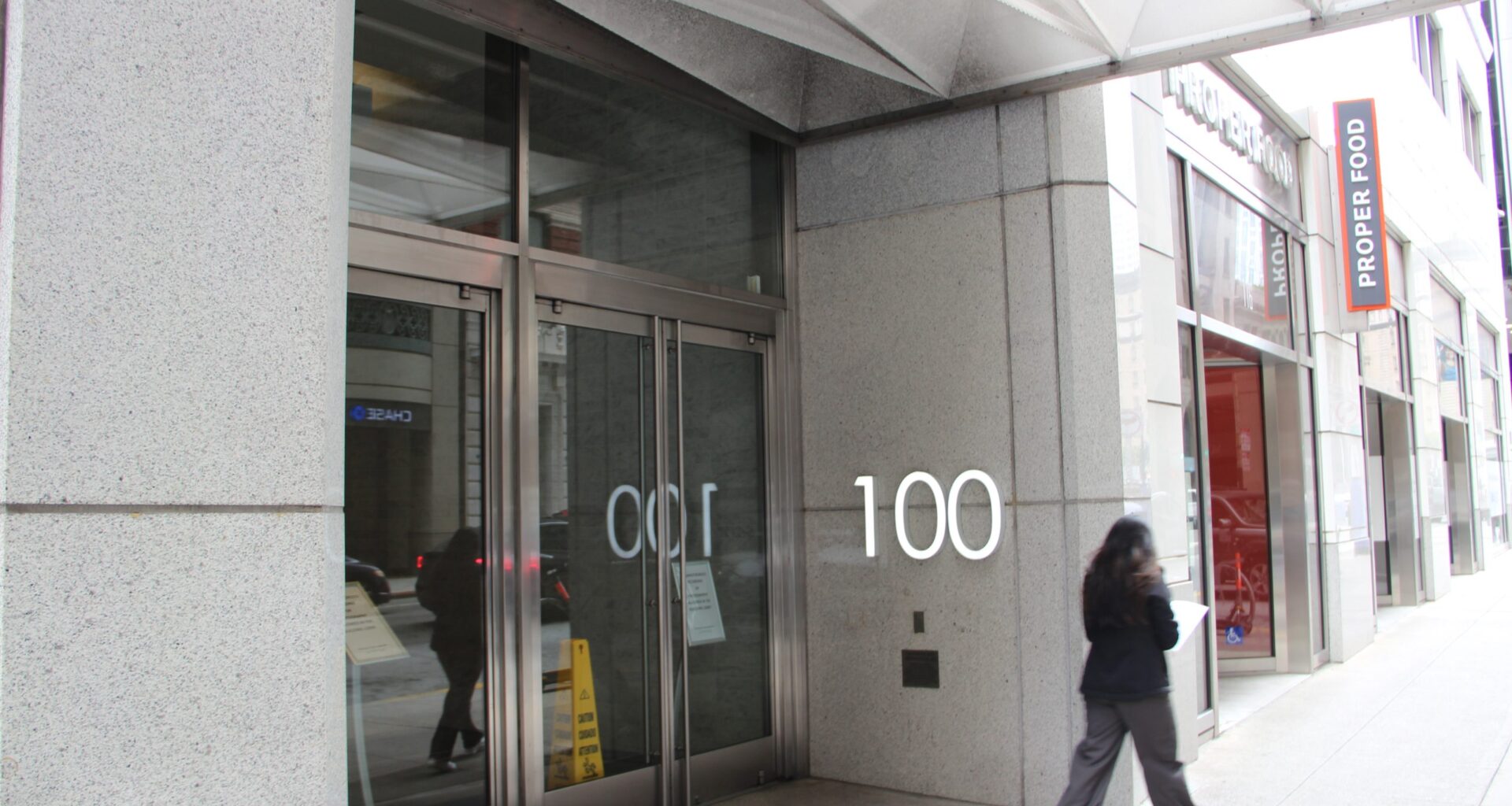
Mission Local observed government lawyers on Tuesday asking to move asylum seekers to Honduras in two different courtrooms at 100 Montgomery St.
In both courtrooms, asylum-seekers were present for “master calendar hearings” — routine hearings early in a person’s asylum process. Many of the asylum-seekers were having their first hearing in court.
In both courtrooms, a lawyer representing the Department of Homeland Security put forward motions to “pretermit” people’s asylum cases. This would essentially end their asylum case in San Francisco, Judge Jeremiah Johnson explained to the asylum-seekers in his court, and have them removed to Honduras.
Asylum-seekers would then ostensibly pursue seeking asylum in Honduras, according to an Oct. 31 decision from the Board of Immigration Appeals, which handles appeals from United States immigration courts.
Some asylum-seekers looked confused Tuesday at the news that they might be sent to Honduras. Others asked follow-up questions.
These motions appear to result from an agreement struck in March between the United States and Honduras. Under the agreement, Honduras agreed to accept some immigrants seeking asylum in the United States with the exception of those seeking asylum from Honduras, who are not eligible to be sent back to the country from which they are fleeing.
The Board of Immigration Appeals’ Oct. 31 decision laid out a roadmap for how immigration judges should handle these motions to pretermit cases — beginning with holding a short, public hearing to evaluate whether the person would face persecution in Honduras. If that hearing concludes they won’t, the board’s directions are to grant the Department of Homeland Security’s motion.
Nonetheless, the roll-out of the Honduras plan got off to a rocky start on Tuesday. Mission Local saw the motions begin just after 9 a.m., during Judge Johnson’s morning hearings.
 Protesters hold a sign reading “Abolish ICE” in front of 100 Montgomery immigration court on Oct. 29, 2025. Photo by Mariana Garcia.
The Homeland Security attorney put forward the motion to pretermit the case of an asylum-seeker from Guatemala. Johnson immediately denied it, on the grounds that these motions are complicated and the asylum-seeker had no legal representation to explain it to her. (She had been, in fact, a victim of fraud, Johnnson said.) Johnson asked the DHS attorney to put the motion in writing so that the asylum-seeker could read it and respond.
Johnson then asked the government attorney how many more oral motions would be put forward that day. When the attorney started listing out the identification numbers of other immigrants, Johnson cut him short.
“You do know I’m going to deny every single oral motion?” Johnson said, adding he wanted the motions in all cases in writing. “You’re wasting the court’s time.”
Johnson spent Tuesday morning switching between these public, “master calendar” hearings and private hearings for people who have been detained out of state, a task that he’s recently taken on which has made his morning hearings much busier (and part of why he seemed so peeved at the DHS attorney for “wasting the court’s time).
After asking all the asylum-seekers to step out so he could hear a detained case, he then got back to the motions to pretermit. Johnson asked the DHS attorney again which cases would have these motions on them and which wouldn’t.
Despite having earlier rattled off a list of possible asylum-seekers who would have motions earlier, the attorney seemed confused and was unable to state which cases would have motions and which wouldn’t.
“The department is not exactly sure which motion to make in which case,” Johnson said to the immigrants. “That’s why I’m generally disinclined to grant or entertain oral motions on the day of.”
At the end of the hearing, as Johnson, still sat on the bench, Mission Local asked from the gallery which cases had motions on them.
“I have no idea,” Johnson said. He asked the Homeland Security attorney if he’d like to clarify for the press. The attorney declined.
That same afternoon, in Judge Shuting Chen’s courtroom, the DHS lawyer seemed similarly confused about exactly who she would be putting the motions on as well.
Chen’s first two asylum cases were uneventful. In the third case, she was about to assign a final hearing date to an asylum-seeker from Colombia when a different Homeland Security attorney from the one in Johnson’s court interrupted with the motion to pretermit.
Chen paused, then asked if there would be any other immigrants with similar motions that day so she could explain to them all at once what the motion was.
“It’s whoever’s here, your honor,” the attorney said.
Ultimately, the attorney put forward motions on four of the seven asylum-seekers in court that day.
In all four cases, Chen denied the motions, as Johnson had. She set special hearings for each immigrant to determine whether they would face persecution if they were sent to Honduras. Similarly to Johnson, Chen noted Homeland Security could put forward the motions again in the future.
“I’m sure this is very confusing news to you and I’m sure this is very surprising news to you,” Chen said to one of the asylum-seekers, who was from Colombia.
“This will only prolong the [asylum] process,” she told the asylum-seeker. “I apologize for any further delays in your case.”
San Francisco’s immigration courts have been a political battleground since the end of May, when Homeland Security attorneys began to put forward motions to dismiss asylum-seekers’ cases. If granted, these motions would essentially remove immigrants from the asylum process, and put them into a different process that would fast-track them out of the country, without seeing an immigration judge again.
A federal judge temporarily blocked the administration’s use of this fast-track process, called expedited removal, on Aug 30.
Still, Immigration and Customs Enforcement officers have been staking out immigration court, arresting immigrants after motions to dismiss — even when the motions are denied.
The arrests take place in the hallways outside of the courtrooms. Those motions — and arrests — declined sharply in San Francisco during October. The most recent such arrest was Nov. 6 when just one person was taken. Lawyers aren’t sure exactly why, but point to their success in using habeas corpus petitions to release immigrants soon after they are arrested.