
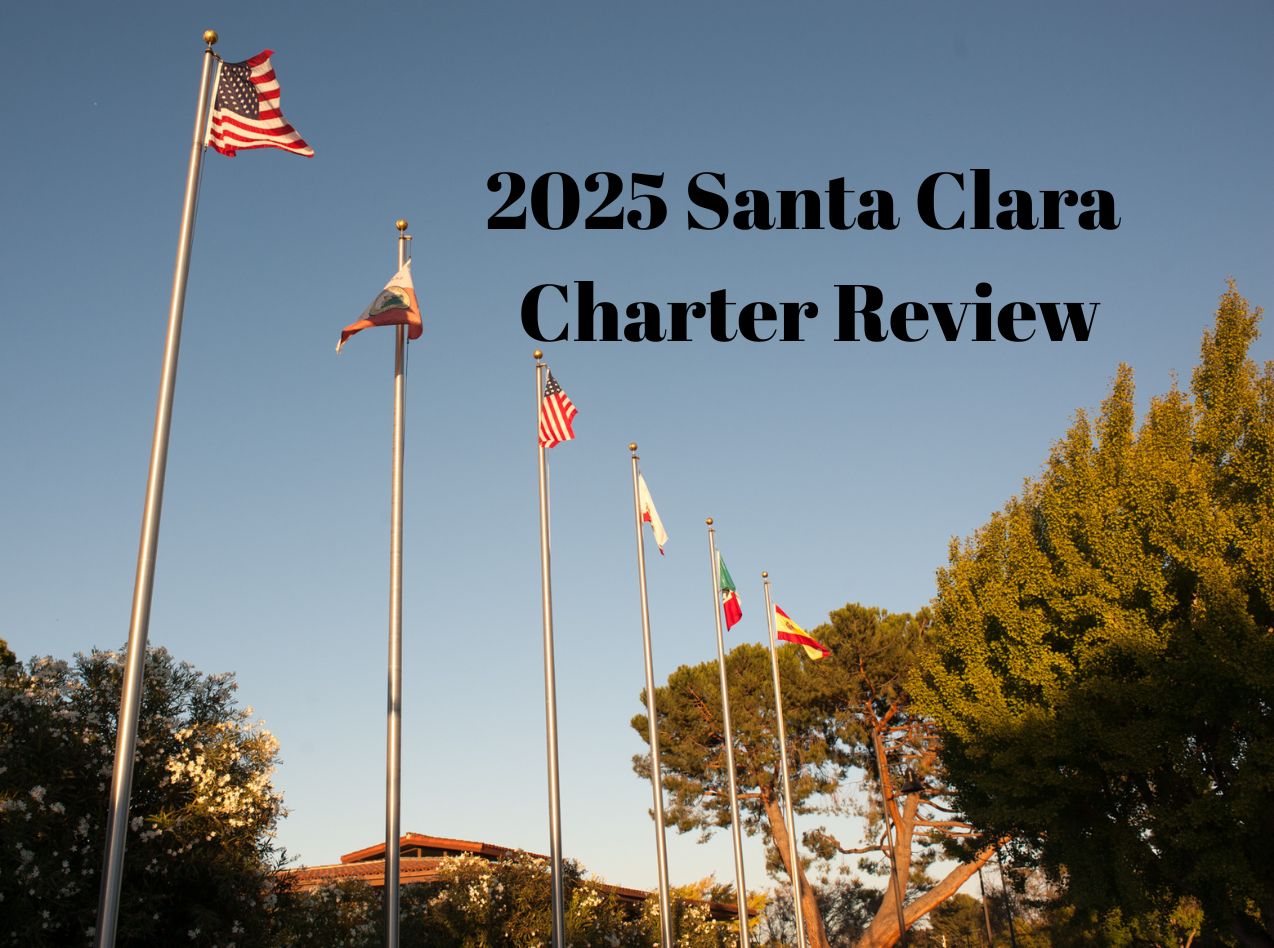
At last month’s Santa Clara Charter Review Committee, some questioned whether certain subcommittee members might be pursuing political agendas behind closed doors. Because these smaller groups aren’t subject to California’s open meeting law, the Brown Act, the question is: Are these private discussions in the spirit of the transparency that’s at the heart of the Brown Act?
The subcommittees’ structure and limited purpose exempt them from public meeting requirements. They aren’t made up of a quorum of the larger committee’s membership and have a limited task and duration. But some say that the work they’re doing — overhauling the city’s governing document — shouldn’t happen out of public view.
“It’s not an attempt to avoid transparency, but to get work done efficiently,” said Santa Clara City Attorney Glen Googins, the committee’s advisor. “The subcommittees are working groups. They need flexibility in how and when they meet in order to make progress.”
SPONSORED

SPONSORED

City staff are present at each subcommittee meeting. Further, subcommittee work will be reported monthly to the full committee, which is subject to the Brown Act. Finally, the whole committee must approve proposed changes before forwarding them to the City Council. After that, it’s up to the council to put proposed changes before voters.
The Charter Review committee’s scope is also tightly specified by its bylaws: (section 3.4): “The proposed ‘top to bottom’ review process is intended to be driven by practical and legal considerations, with the prime objective being to bring the Charter up to current ‘best practices’ for City operations,” said Googins. “It is not intended to implement any major restructuring of City operations or to change the City’s election process.
“Its purpose is to align the city charter with best practices and current law,” Googins continued, “not to reshape city government or revisit past controversies.”
What that puts off limits, Googins explained, are structural changes like adopting a strong mayor form of government or whether the city clerk should be elected.
Transparency vs. Practicality
The Brown Act makes certain exceptions — for example, real estate, negotiation, consultations with lawyers, and some personnel issues. Another exception is for ad hoc subcommittees: small groups formed for a specific purpose and duration that don’t include a quorum of their parent body.
Still, some observers question whether keeping these sessions private is harmonious with the spirit of open government.
“The issue is complicated,” said David Loy, legal director of the First Amendment Coalition (FAC).
“The full committee is certainly subject to the Brown Act. But when it comes to ad hoc groups, reasonable people can agree to disagree. Absolute transparency carries costs, and so does absolute secrecy.”
While the law doesn’t require the subcommittees to meet in public, Loy said, there is “no bar” against making meetings open to the public, or publishing transcripts to keep the community informed.
At the end of the day, subcommittees are designed for practicality.
“It’s an appropriate way to get work done,” Santa Clara City Attorney Googins said. “The full Charter Review committee’s meetings remain open to the public, with opportunities for comment. All final recommendations must go through that public process before any proposed charter changes reach the ballot.”
“These are the meetings where the real work happens,” Loy said. “That’s true in Congress, it’s true here. The question is always how to strike the right balance between openness and effectiveness.”
SPONSORED
