
Last summer, a dog attacked a 3-year-old in San Francisco’s Marina District. Later that year, three dogs attacked a pedestrian in the Fillmore district, according to police.
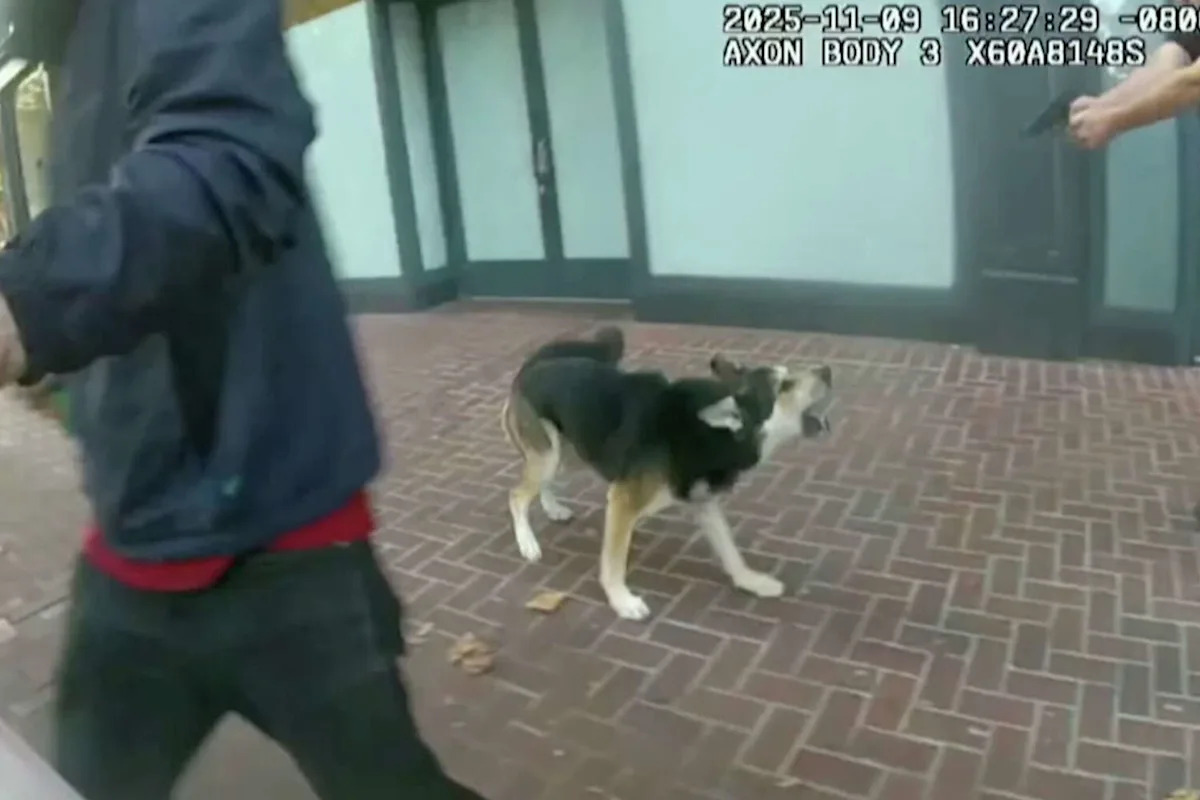
And just this month, San Francisco police officers shot a dog that bit an officer and a bystander before that on Market and Fourth streets. The officers also shot the owner of the dog, who struggled with the officers before they shot him, according to officials. Both the dog and the owner were expected to survive.
The incidents appear to be a part of a growing trend: the number of dog bites reported in San Francisco is rising, according to data from San Francisco Animal Care and Control.
While the number of dog bites reported slowed during the pandemic as lockdowns kept people and their animals at home and away from each other, it has rebounded to higher levels than it was before. Between 2018 and 2024, the number of dog bites reported to animal control increased from 786 to 868 – a 10% increase. That increase occurred over a period when San Francisco’s population declined.
And this year, the number is on track to surpass 900 before the end of the year.
{ “__type”: “devHubFreeformEmbed”, “__id”: “Datawrapper”, “__fallbackImage”: “https://datawrapper.dwcdn.net/x9fmh/mobile.png”, “__data”: { “datawrapper_id”: “x9fmh” } }
The problem is not limited to San Francisco. Statewide, the number of emergency room visits due to a dog bite has also been on the rise since 2020, hitting a high last year of 145 emergency room visits for every 100,000 residents. Data was not available for 2025.
{ “__type”: “devHubFreeformEmbed”, “__id”: “Datawrapper”, “__fallbackImage”: “https://datawrapper.dwcdn.net/fc24I/mobile.png”, “__data”: { “datawrapper_id”: “fc24I” } }
Nationwide, the number of insurance claims for dog bites has also increased in recent years, according to data from the Insurance Information Institute.
Within San Francisco, the increase so far this year is particularly sharp in the Tenderloin and the Mission, according to dog bite reports submitted to SFPD, which make up roughly half of the totals collected by Animal Control.
Dr. Melissa Bain, an animal behaviorist at the UC Davis School of Veterinary Medicine, said that many factors could be impacting the numbers – it could be that there are simply more dogs around; or that there are more large dogs that can do more damage with a bite; or it could be that more people are simply reporting dog bites more often.
A research paper out of England suggested that the lack of socialization for puppies during the pandemic may have led to dogs being more aggressive.
But at the end of the day, Bain said, it’s impossible to know exactly what’s driving the change.
Virginia Donahue, the executive director of SF Animal Care and Control had a similar sentiment, saying in a statement that the agency is unsure of whether there has truly been an increase in dog bites or just an increase in reporting.
“We certainly don’t want people to be bitten by dogs,” she said. “Guardians should keep their dogs on leash, except in designated off-leash areas where they must be under voice control. Dogs need to be appropriately managed; they should be muzzled if there are concerns they could bite.”
Bain said there are several steps dog owners can take to make sure their dog doesn’t act out or get aggressive. Dogs need to be socialized before they hit 16 weeks old, exposing them to different kinds of people and environments so that they are less anxious or scared in unfamiliar situations. Working with a trainer who uses positive reinforcement is also incredibly helpful, she said.
“Aggression in dogs is based in fear,” she said.
For those who adopted an older dog or missed the socialization window, she said, should talk to their vets as early as possible, especially if they have any concerns. And if there are any known triggers for the dog, owners can control the environment as much as possible to not reinforce negative behaviors, she explained.
For example, if a dog always barks at the mailman coming to the front door, the owner can prevent the dog from having access to the front door when the mailman comes so that the dog doesn’t repeat the bad behavior. From there, the owner can work on gradually desensitizing the dog to the situation.
“Managing the environment is imperative,” she said.
Knowing the signs that a dog is getting ready to bite – licking or curling their lips, growling, a tense stance – is also important for dog owners to be aware of, so they can redirect the dog before anything bad happens.
As the number of dog bites is rising, those who are attacked by dogs in the city may have little recourse. The San Francisco Standard, which previously reported on the rise in dog bites, also reported last month that the hearings in the city’s canine court, which decide how to sentence vicious dogs, have been suspended.
This article originally published at Dog bites are on the rise in San Francisco.