
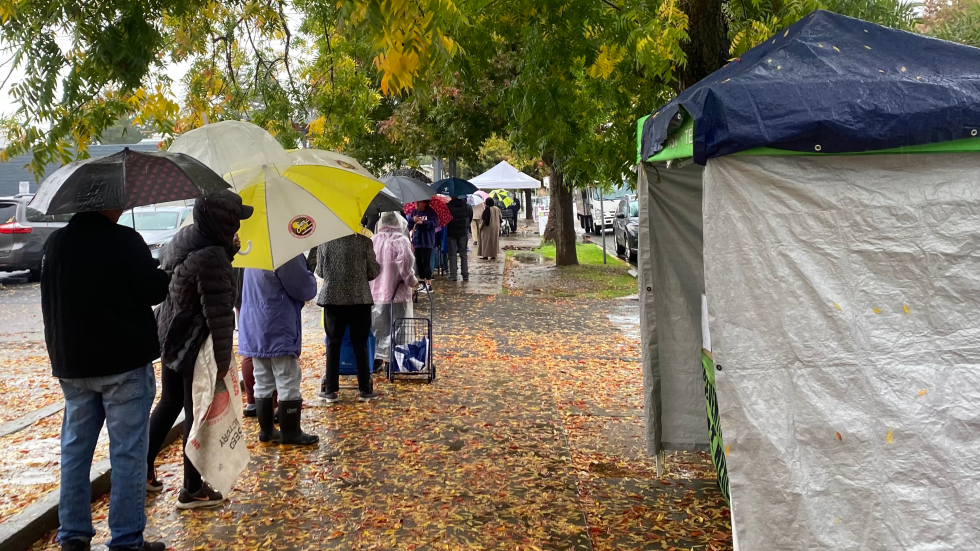
It’s a waterlogged Thursday morning in mid-November, and a line
of umbrellas leads up to the entrance of the open-air
distribution center at River City Food Bank in Midtown. Across
the street is the Sacramento Natural Foods Co-op (a major
supporter of the food bank), where $5 might get you an organic
head of cabbage.
There’s no shortage of patrons at either location, though today,
the one with free produce might be better staffed. Volunteers
huddle shoulder to shoulder, handing out staples like potatoes,
rice and lentils to those pushing carts through the line,
relieved to be out of the rain. Inside the warehouse, other
volunteers receive shipments, organize and prep food for
distribution. It’s a bustling operation that appears well under
control. You wouldn’t know they’re in the eye of the storm.
“This is definitely the worst food insecurity crisis I’ve seen,”
says Amanda McCarthy, executive director at River City, who’s
worked at food banks on and off for more than 25 years. She cites
an amalgamation of factors that have been snowballing since
COVID-19 — job losses, unaffordable housing, resettling refugees,
rising grocery prices and, most recently, the federal government
shutdown and temporary suspension of SNAP food benefits (known as
CalFresh in California), which affected 270,000 recipients in
Sacramento County and
5.5 million
statewide.
As the shutdown commenced on Oct. 1, state and county government
entities, food banks and their community partners followed the
political volley over food stamps and disseminated information to
CalFresh recipients. In the first week of November, a critical
point was reached at which benefits had not been deposited for
that pay period. Recipients were in limbo for seven days as a
legal battle played out in the federal courts over whether the
Trump administration would cover food stamps during the shutdown.
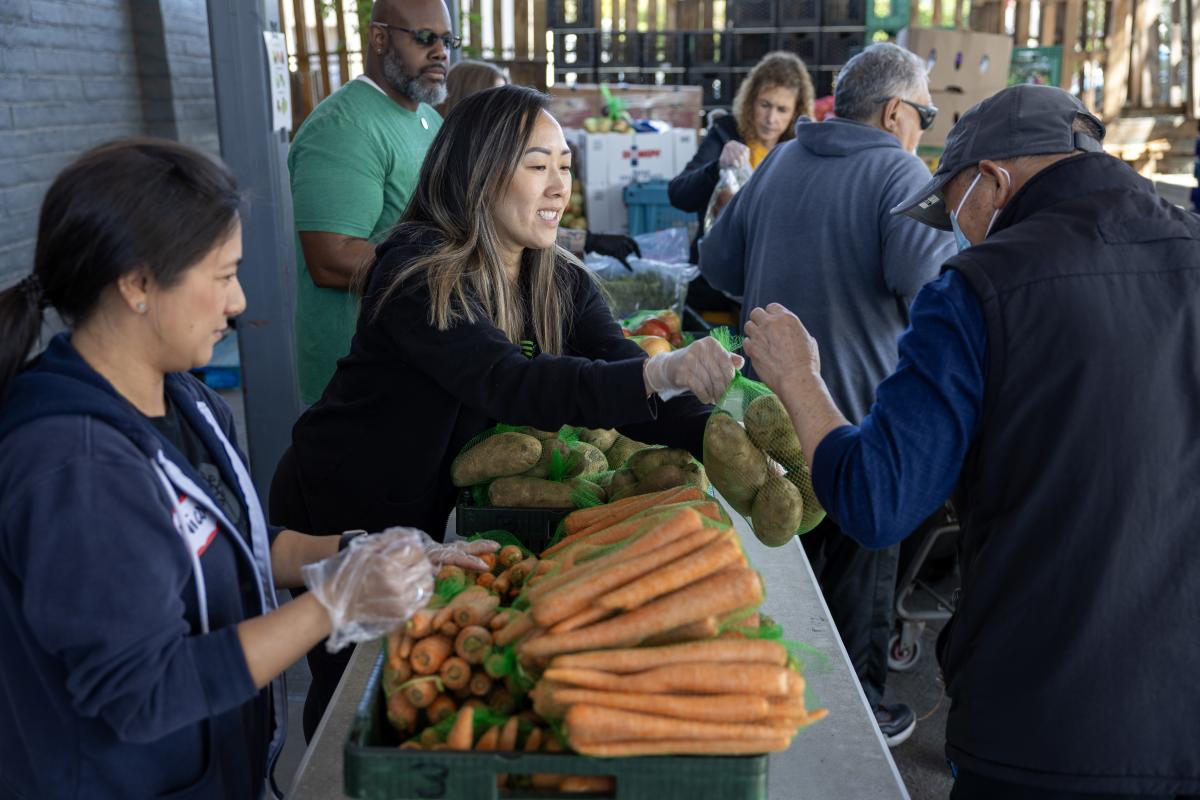
Volunteers distribute carrots and other products at River City
Food Bank. (Photo courtesy of River City Food Bank)
“Things were changing every day,” says Amy Dierlam, a CalFresh
outreach director who works at River City Food Bank’s Midtown
location. “What we found was people had a lot of questions and a
lot of anxiety. They really rely on this money. … Some people
were panicking.”
For many CalFresh recipients, feeding one’s family means juggling
food stamps, food bank handouts and personal funds. In
California, the monthly individual benefit can be as little as
$24. Recipients may need to visit multiple food banks throughout
the week, requiring transportation and the free time to stand in
line.
And those lines stretched in the last week of October and first
week of November as food banks launched into crisis mode. “Long,
long lines,” Dierlam says, though River City did not run out of
food at either of its dual locations in Midtown and Arden Arcade.
“We did not run out of food because the community stepped up in a
big way,” McCarthy says. More people volunteered. Supporters like
the Co-op rallied to collect donations, keeping food on the
shelves.
Related: There’s
Free Food Every Weeknight at This Davis Park
It was the same story in Folsom.
“In crisis times like this, it’s easy to see the worst in people,
but … we’ve also seen the best of humanity stepping up,” says
Lisa Tuter, executive director at Twin Lakes Food Bank. “Quite
honestly, our community did a lot better than our government did
in the past couple months.”
On Nov. 7, suspended CalFresh benefits were paid in full due to a
court ruling, and the government shutdown ended on Nov. 12.
Still, almost a week after the resolution, the struggle continues
for many. Because payments were late, “people may have had to
defer bills or take other actions to help get through a really
difficult period of time,” McCarthy says.
Ripples of frustration and uncertainty can be felt in the River
City Food Bank line in Midtown.
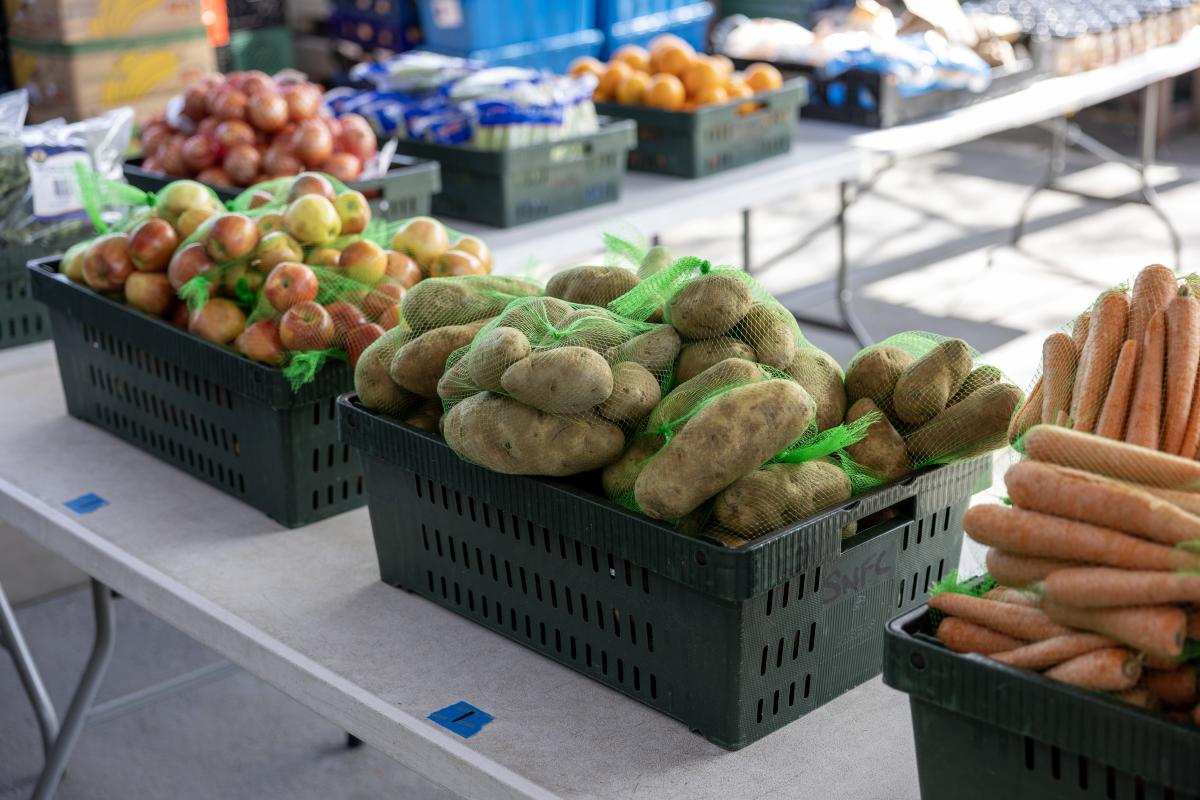
Fresh produce is available at River City Food Bank. (Photo
courtesy of River City Food Bank)
One woman waiting in line demands to know why I hadn’t been out
there a week ago, when food stamps were still frozen. While the
news media may attempt to convey the dread of food insecurity and
private desperation of hunger, these things stretch by the
minutes. In this crisis, circumstances changed by the day and
even by the hour. Unlike a wildfire or an economic recession,
this was an artificially inflicted crisis, alleviated by mandate.
So the anxiety lingers. “The SNAP recipients being used as a pawn
for the government shutdown is a cautionary tale of how
assistance could be impacted in the future,” says Tuter.
However, she adds, rising prices are perhaps the single greatest
detriment to food security, which has been attributed to
pandemic-era inflation, labor shortages, environmental changes
and tariffs, among other factors.
Billy Baker, a longtime River City Food Bank volunteer who relies
on CalFresh because he has a disability, echoes what many are
saying: Getting by is only getting harder. Everything is more
expensive. “Our numbers are exceedingly growing. We’ve seen a lot
of new individuals come in; they’re afraid, they don’t know
what’s going on,” he says.
In Folsom, Twin Lakes has seen an influx of elderly people
needing assistance. “So many stories I’ve heard, especially this
year, from seniors who’ve worked their entire lives and never
thought they’d be in a situation where they needed help; and all
of a sudden, really can’t afford to meet basic needs,” says
Tuter.
That need will grow during the holidays as food banks face their
busiest time of year. “We were already serving 30,000 a month,
and in the last few weeks we’ve seen an 18 percent increase,”
says McCarthy. “We’re planning at least through the end of the
year for a 15 to 20 percent increase in need.”
But food banks are also worried about the new year, when
donations and volunteers are expected to drop off with news
coverage in the post-giving season.
“Holidays shine a light on the need in our community and our
neighbors experiencing food insecurity, but really it’s a
year-round concern,” says McCarthy, who emphasizes that River
City and many other food banks do not have requirements to
receive food. “We want to make sure our community knows that
we’re here.”
Reflecting the region’s diversity, Sacramento County’s 111 food
distribution sites serve vastly different demographics. River
City’s Arden location, for example, caters to the area’s Afghan
refugee population, offering cuisine staples and, occasionally,
halal meat such as lamb.
Due to these varied and ever-evolving needs, McCarthy says,
flexible funding from donations is critical.
Consistency is key, Tuter adds. “Even if you donate $25 every
month, everybody doing a little bit on a consistent basis is
going to ensure that people coming through get their food,” she
says. “If we have excess, we stash it away for a rainy day,
because there will be a rainy day. In the eight years I’ve been
in this role, there’ve been some rainy days.”
To find a food bank near you in Sacramento County,
visit https://www.sacramentofoodbank.org/find-food.
–
Stay up to date on business in the Capital Region:
Subscribe to the Comstock’s
newsletter.