
Since Turning Point USA, or TPUSA, ended its nationwide tour in Zellerbach Hall, UC Berkeley has been going viral across social media platforms and news outlets for the “bloody brawls” and “violent riots” that took place before the event.
As the roughly 200 protesters chanted “TPUSA out of the Bay” and “UCPD, KKK, IOF, they’re all the same” behind barricades on Lower Sproul Plaza, one protester got into a physical altercation with an attendee selling merchandise for TPUSA, leading to both their arrests. Another protester was arrested for attempting to cross the fence in front of the venue.
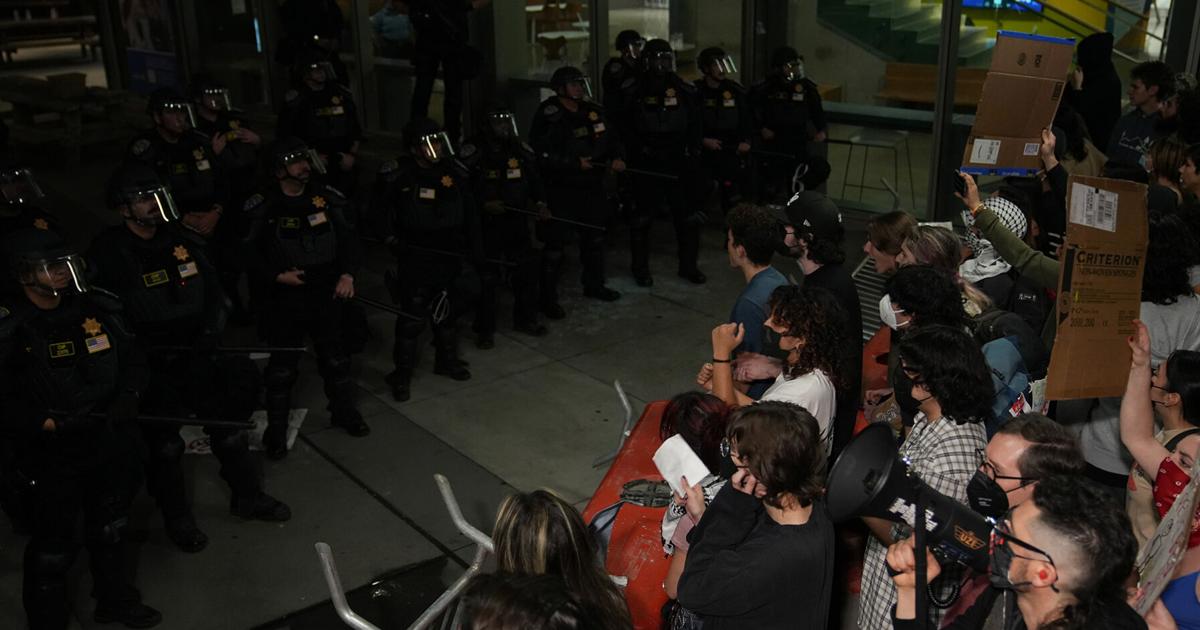
Aside from five arrests total, the protest remained largely peaceful, featuring no more than 200 people chanting in front of about 50 California Highway Patrol officers.
But while headlines equated the physical confrontation between a protester and TPUSA attendee to riots, they neglected to mention the 300 police officers clad in riot gear patrolling Lower Sproul and balconies overlooking the plaza, the helicopters ensnaring campus in drone-like sounds and the shutdown of multiple student hubs preceding the event.
Peaceful protest has long been the preferred avenue of dissent. Of course, the appeal of peaceful protest is not hard to deny. In a perfect world, all opposing views can be debated through civil discourse. But for disagreements to be ironed out through conversations, the playing field must be level.
As UC Berkeley fenced off Lower Sproul; shut down the Open Computing Facility, Basic Needs Center, Student Learning Center; and sent hundreds of officers from UCPD, Berkeley Police Department, the U.S. Coast Guard and the San Francisco Sheriff’s Office to campus, it is clear that certain voices are privileged over others.
As law enforcement officers and TPUSA attendees outnumbered protesters, it is commendable that protesters remained generally nondisruptive. In UC Berkeley’s excessive security measures, it seems that the campus was anticipating a riot.
Or rather, they were inviting one.
The press uses the paradigm of peaceful protests to punish protesters who fail to follow the ever-fluctuating codes of “peace,” ceaselessly lamenting protesters who challenge systems of power for their dissemination of “violence” and “riots.” It does not matter that the protests against TPUSA were small in numbers and largely free of violence: When systems of power feel threatened, the media creates a binary narrative that paints TPUSA as victims and protesters as villains.
The negative characterization of protesters blatantly distracts the public from the actual institutions protesters are fighting against, hailing these institutions as victims the public should instead sympathize with.
TPUSA notoriously stands behind its misogynistic, racist, homophobic and transphobic hate speech. To protect an organization that proudly cracks jokes, attacking the marginalized communities of UC Berkeley, is to assert that their speech is worth the protection of police officers in riot gear and the closure of necessary student facilities. Not only does the media’s attention on protesters distract from TPUSA’s harmful messaging, but it diverts attention from UC Berkeley’s actions favoring such speech over the safety of students.
Perhaps protesters could have been smarter in their methods of demonstration, refraining from physical fights and writing less provocative messages on signs. Perhaps the left played directly into TPUSA’s media strategy, intent on painting the left as violent “vermin.”
But no matter the method of protest, the media has long used the idea of peaceful protest to condemn protesters and absolve powerful institutions of blame.
Narratives of pro-Palestinian protests at UC Berkeley and nationwide are intent on discrediting protesters by declaring such protests as antisemitic — a narrative that UC Berkeley has complied with and used to disadvantage protesters. Campus administrators have cracked down on electrical engineering and computer sciences lecturer Peyrin Kao for speaking about the devastation of the Palestinian genocide in his CS 61B lecture, asserting that political speech stirs anxiety in students who fear discrimination. Just as UC Berkeley protects TPUSA, is policies and actions seem to imply that Zionist students deserve more protection from discrimination than Palestinian students, creating conditions where cordial discourse is impossible.
Effective protests demand disruption and persistence. When UC Berkeley threatened student speech in the fall of 1964, students protested the denial of First Amendment rights through sit-ins, marches and rallies. The protests culminated in the arrest of 733 students after roughly 1,000 students occupied Sproul Hall, resulting in a student strike that led UC Berkeley to reverse the former restriction on on-campus political activities. UC Berkeley students were also at the forefront of protests against South African apartheid: their sustained sit-ins, walkouts and protests led to the university divesting from companies in partnership with the South African apartheid government.
The media villainizes protesters to absolve institutions in power of responsibility for their injustices, discouraging the public from participating in disruptive protests — protests that are the most effective in nature. When the press paints protesters as violent, condemning them for their non-peaceful methodology, the media is simultaneously discouraging disruptive protests and distracting the public from what protesters are actually fighting against.
If we want to champion causes we believe in, we cannot fall prey to the media’s harmful narrative of disruptive protest. Disruption in systems of power is necessary to change systems that protect the elites. This means we cannot be afraid to be direct with our protests. This means we cannot be afraid to strike, boycott and stage sit-ins.
In all honesty, the protests against TPUSA were small in quantity. If we truly want to hold UC Berkeley accountable, our protest must be clear in its demands and persistent. The media will continue to vilify protesters — they always have. But it is our duty to be disruptive in the fight toward justice.