
FRESNO COUNTY – Representatives from nearly two-thirds of the county’s cities have approved a funding allocation plan for the next version of Measure C, clearing a major hurdle in the process to renew the countywide transportation tax.
The Fresno Council of Governments Policy Board voted 9-5 on Nov. 20 to move forward with the plan that was recommended by the Measure C Steering Committee earlier in the month. The board did this despite the possibility that opposition to the specific allocations could jeopardize the measure’s chances of making it onto the ballot.
“The only thing I can say is that this time, finally, it is a give and take, and we are working together to try to get a little more for our communities, because we have been left behind for a very long time — I’ve been here 11 years — and it’s it’s finally changing,” said Parlier Mayor Alma Beltran, who chairs the board.
The Fresno COG Policy Board is a 16-member group made up of elected officials — typically mayors — from each incorporated city and the Fresno County Board of Supervisors. The five votes against the plan came from the board of supervisors and the cities of Kingsburg, Reedley, Sanger and Selma. Representatives from Fowler and Orange Cove were not at the meeting.
This vote, which took place over three hours into the board’s Thursday evening meeting, is important because it allows the Fresno County Transportation Authority to move forward with its Measure C ballot proposal.
Why this matters
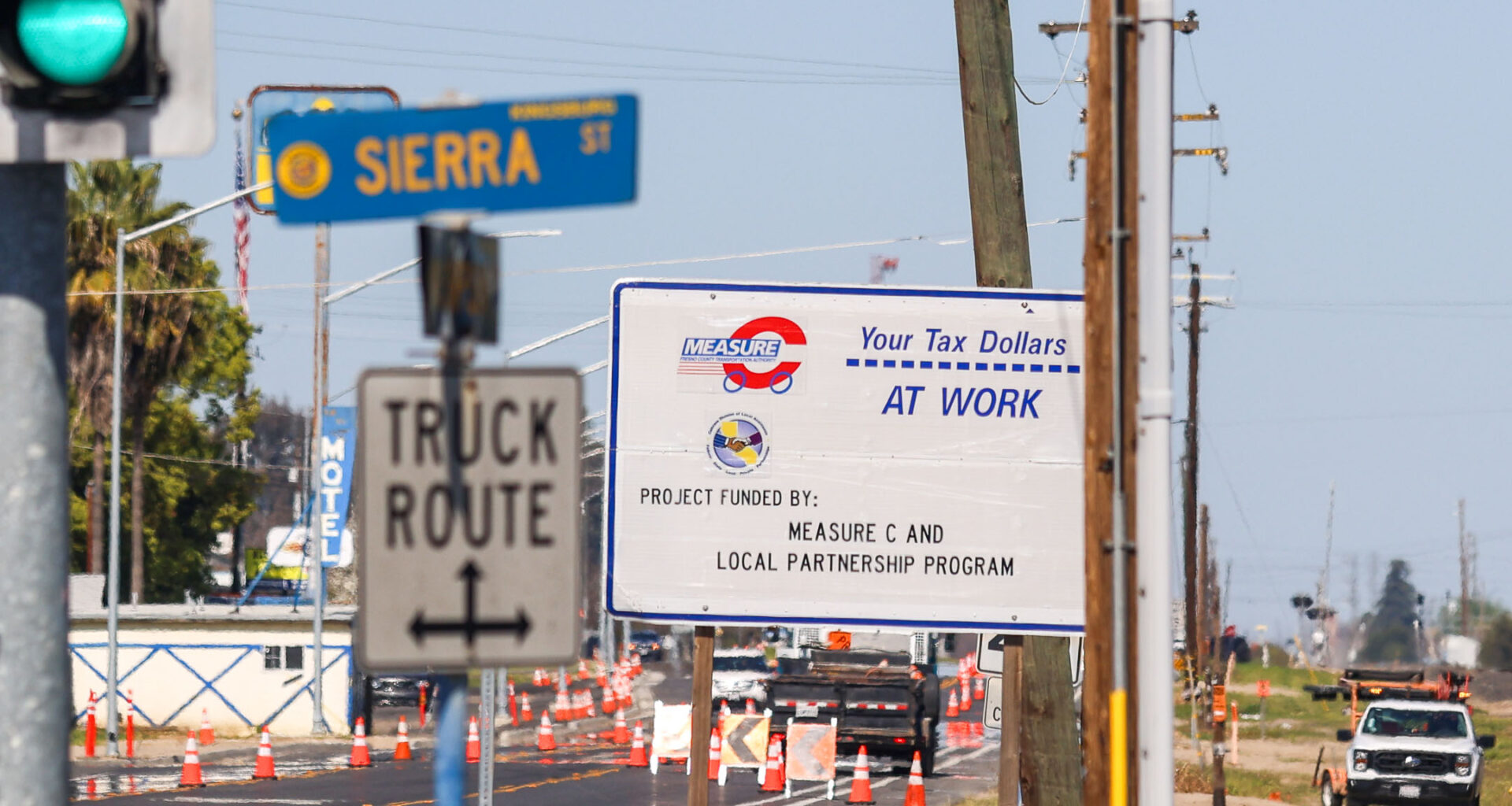
In place since 1987, Measure C is a half-cent sales tax imposed across Fresno County and used for all sorts of transportation projects — paving roads, expanding freeways and operating public transit. The tax is set to expire at the beginning of 2027, and without it, the county would lose nearly a quarter of a billion dollars in funding generated every year.
A countywide tax such as Measure C takes a lot more work to put on the ballot than a tax for a single city.
Whereas a single city just needs its council to pass a resolution placing a measure on the ballot, each city council in Fresno County, along with the board of supervisors, has to vote on a resolution to place the measure on the ballot.
Further, in order for Measure C to appear on the November 2026 ballot for all county voters, it must receive approval from the county board of supervisors and a majority of the cities that represent a majority of the county’s population.
This means that if the board of supervisors doesn’t approve the measure proposal, it can’t go onto the ballot. Additionally, because Fresno’s population is slightly more than half of the county’s total population, the measure proposal must have the support of the Fresno City Council.
Different cities, different needs
Although the general purpose and amount of the tax is not changing, Fresno County leaders are looking to adjust exactly how the tax revenue from Measure C would be used in the next 30 years to meet the needs and desires of residents.
Named the “high-priorities proposal,” the allocation plan approved by the policy board would direct 65% of the funds to existing neighborhood roads, 25% to public transportation, 5% to regional connectivity projects, 4% to transportation innovation projects and 1% to administrative costs.
The allocation for public transportation is slightly higher than what it is currently, while the allocation for existing neighborhood roads is nearly double — 65% compared to the current 34.6%. To get to that number, the high-priorities proposal took away most of the funding for regional connectivity projects, which is currently at 36.4%.
While some members of the policy board said they felt that public transportation does not need as much as 25%, most who opposed the allocation plan took issue with the small percentage for regional connectivity projects.
Reedley Mayor Matthew Tuttle said regional connectivity projects, such as the expansion and improvement of Manning Avenue between Reedley, Parlier and the 99 freeway, have significantly benefited residents. He noted that half of his city’s population travels outside of Reedley every day.
“We could put our blinders on, just look at the city limits, and this is a great allocation — 65%, not even including (active transportation projects),” Tuttle said. “But when half of my population in the city of Reedley travels outside the city of Reedley and depends on those other roads, … the 5% for regional connectivity is a huge flag for me.”
Policy board members debated how they might boost the regional connectivity allocation, with many referring to a letter sent by former local transportation officials that suggested giving public transportation an allocation of just 11%. Most said they thought 11% would be too low, but did feel it could decrease.
However, Fresno Mayor Jerry Dyer and Clovis Mayor Vong Mouanoutoua said any major decrease to public transportation funding would seriously hurt their constituents. Instead of looking to public transportation, Mouanoutoua suggested cities consider taking some of the neighborhood streets allocation and putting it back into regional connectivity.
Mouanoutoua said the Measure C Steering Committee delivered exactly what the policy board first wanted, which was a much higher allocation for existing neighborhood streets.
“We said, ‘no, this time we want it, my neighborhood, my streets, me, me, me,’ and so they said, ‘OK, you want it so much, we’ll give it to you,’” Mouanoutoua said. “… So if we want regional more, we all have to come up here and go, what will you give?”
He said that he would be willing to give up some of Clovis’s allocation for neighborhood streets and put that toward regional projects if it meant rural cities could keep their funding for neighborhood streets, but that was a conversation that they would all have to have.
With the approval of the allocation plan, the steering committee and Fresno County Transportation Authority still have to draft implementation guidelines for the funding that will determine how regional projects are decided on and how cities can get their share of the revenue. That will also go before the policy board before being sent up to the county and cities for approval.