
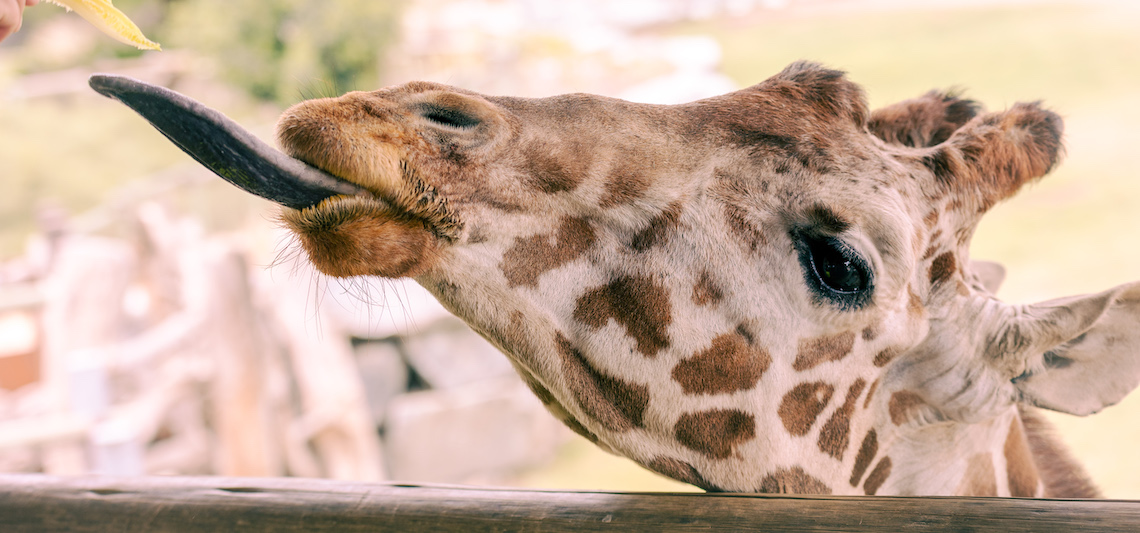
Baba the reticulated giraffe accepts a lettuce leaf at Fresno Chaffee Zoo’s giraffe feed station. Fresno Chaffee Zoo photo
Fresno Chaffee Zoo said goodbye to a long time friend on Friday announcing the death of Baba, a female reticulated giraffe.
Baba, 31, was one of the oldest of her species in the United States. She was humanely euthanized Friday due to declining age-related health conditions, including advancing arthritis. Baba has lived at the Fresno Chaffee Zoo for 30 years.
Reticulated giraffes are the tallest land animals, growing upwards of 19 feet tall. Baba was 15-feet tall.
According to Dr. Audrey Siegrist, senior director of veterinary services, the Zoo’s animal care and veterinary teams had worked for several years to manage Baba’s arthritis through medication, treatments and therapeutic approaches.
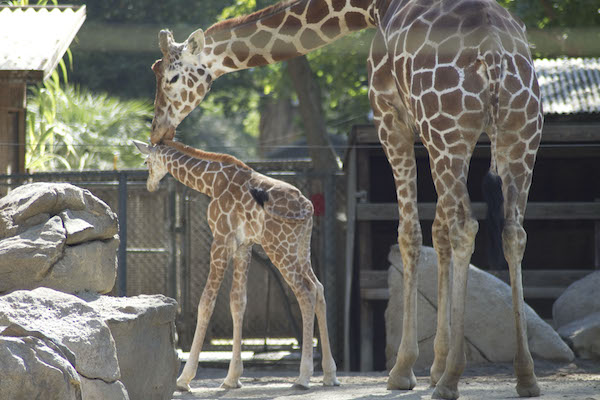 Baba gave birth to seven calves and played a key role in establishing the Zoo’s giraffe herd. Fresno Chaffee Zoo photo
“In the last few days, it became clear that her arthritis had progressed to the point that we could no longer prevent further pain,” Siegrist said. We made the difficult but compassionate decision to humanely euthanize Baba while she was surrounded by her herd and care givers. We will miss her tremendously.”
Zoo Director and CEO Jon Forrest Dohlin said Baba became a symbol of longevity for the species and created lasting connections with the community. He said her loss will be deeply felt by both staff and visitors.
“She was an important part of our Zoo’s history and became an enduring symbol of longevity for her species,” Dohlin said. Her loss will be felt deeply by our entire Zoo staff and the community.”
She made appearances at the giraffe feeding, where visitors young and old offered them leaves of green lettuce.
Baba gave birth to seven calves and played a key role in establishing the Zoo’s giraffe herd. Her son, Jabari, remains at the Zoo as its tallest resident at 17 feet.
Reticulated giraffe populations have declined by more than 80% over the last 30 years, and the Zoo continues conservation efforts through funding, research and education programs.