
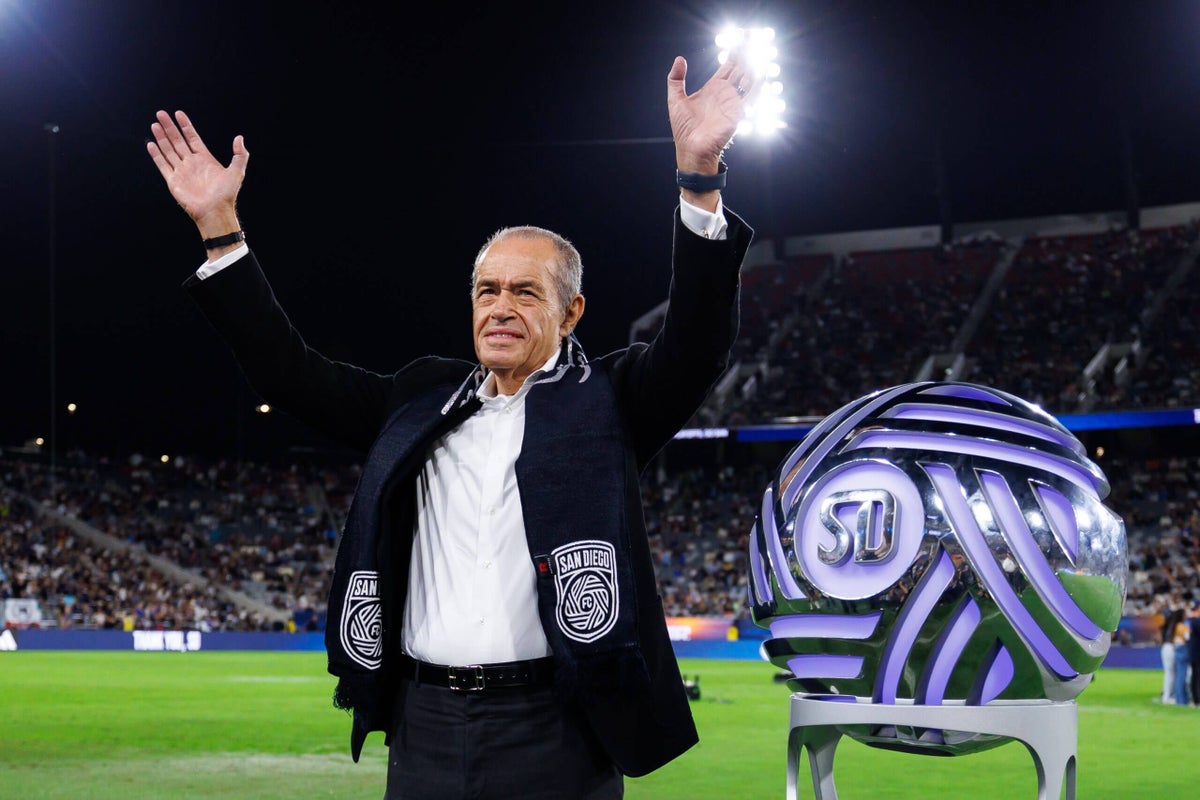
On the morning that San Diego FC kicked off its inaugural season on February 23 against the LA Galaxy, owner and chairman Sir Mohamed Mansour spoke to his players. The Egyptian-born billionaire was a bit concerned.
Eight weeks prior, when he checked in on the team’s initial roster build, he was told that San Diego had signed just seven players. Fear set in. The anxiety Mansour felt was real.
“Every week I was calling and asking, ‘How many players do we have now?’” he told The Athletic.
San Diego would eventually fill out its squad with a combination of players with MLS experience, some European players and Mexican international winger Hirving Lozano, the club’s premier signing. Lozano and Anders Dreyer, a Denmark national team striker, wound up as the team’s two designated players.
Accustomed to building profitable businesses worldwide, Mansour, the chairman of Man Capital LLP and Mansour Group (both UK-based), understands the value of long-term planning. He’s familiar with scrutiny as a former senior treasurer of the UK’s Conservative Party. Mansour is college-educated in the U.S., so he also comprehends the idiosyncrasies of American sports culture.
Still, the initial San Diego roster build was a lesson in patience. When there is no history to lean on and no championships to point to, a blank canvas can be both exciting and unsettling.
There are no second chances for expansion teams. How that inaugural year goes is a reflection of the decisions made by those in charge. Mansour had already elevated San Diego’s expectations before it signed its first player with a record-breaking $500 million expansion fee to make San Diego MLS’ 30th club. It was a declaration of purpose that made global headlines.
Yet, Mansour, who received a knighthood in the UK last year, was unsure what to expect when San Diego faced LA nine months ago. The Galaxy remain a premier brand in American soccer, having won its sixth MLS Cup in 2024. Additionally, the league matched San Diego against the Galaxy for MLS’ first Sunday Night Soccer showcase of the season. A poor showing would be magnified.
“The (MLS) pundits were predicting we’d be number 30th out of the 30 teams,” Mansour said.
Mansour’s gameday team talk was well-intentioned. He’s a hands-on owner who comes from a famous football family in Egypt. His uncle, Mustafa Kamel Mansour, was the national team goalkeeper at the 1934 World Cup. Football, San Diego’s owner said, is in his blood. But Mansour’s dreams of following in his uncle’s footsteps took a nearly tragic turn when he was 10. A car accident severely injured both of his legs and left him incapacitated for three years.
“I’m passionate about the game. I love the game,” he said.
Today, San Diego FC is both a newfound love and a novel source of competitive stress. “Was I expecting this? To be honest, no,” Mansour confessed. “It’s the most exciting thing in my life now, to be honest with you. It keeps me up at night.”
When he addressed the San Diego players after their team breakfast, he leaned into his sporting background and delivered an inspirational pitch. “I met with them and I said, ‘We’re winners, you guys. I can see it in your eyes,” he said. “You guys are winners. I can see it. You’re hungry.”
He then admitted what he was truly thinking at the time. “To be honest, I was hoping for a respectable result,” Mansour said. “Just not a bad loss.”
San Diego defeated the Galaxy 2-0 before a sellout crowd at LA’s Dignity Health Sports Park. Dreyer scored both goals and Lozano provided an assist. The seeds were planted for a historic expansion season.
“When we scored our first goal, I was jumping like a child,” says Mansour. “(San Diego sporting director) Tyler Heaps was sitting beside me. I was so nervous. I said something like ‘What are they doing here? What’s happening?’”
San Diego went unbeaten in six of its first seven matches to start the year. The players have gelled throughout the season, with Dreyer, MLS’ Newcomer of the Year, leading the side with 19 goals and 19 assists.
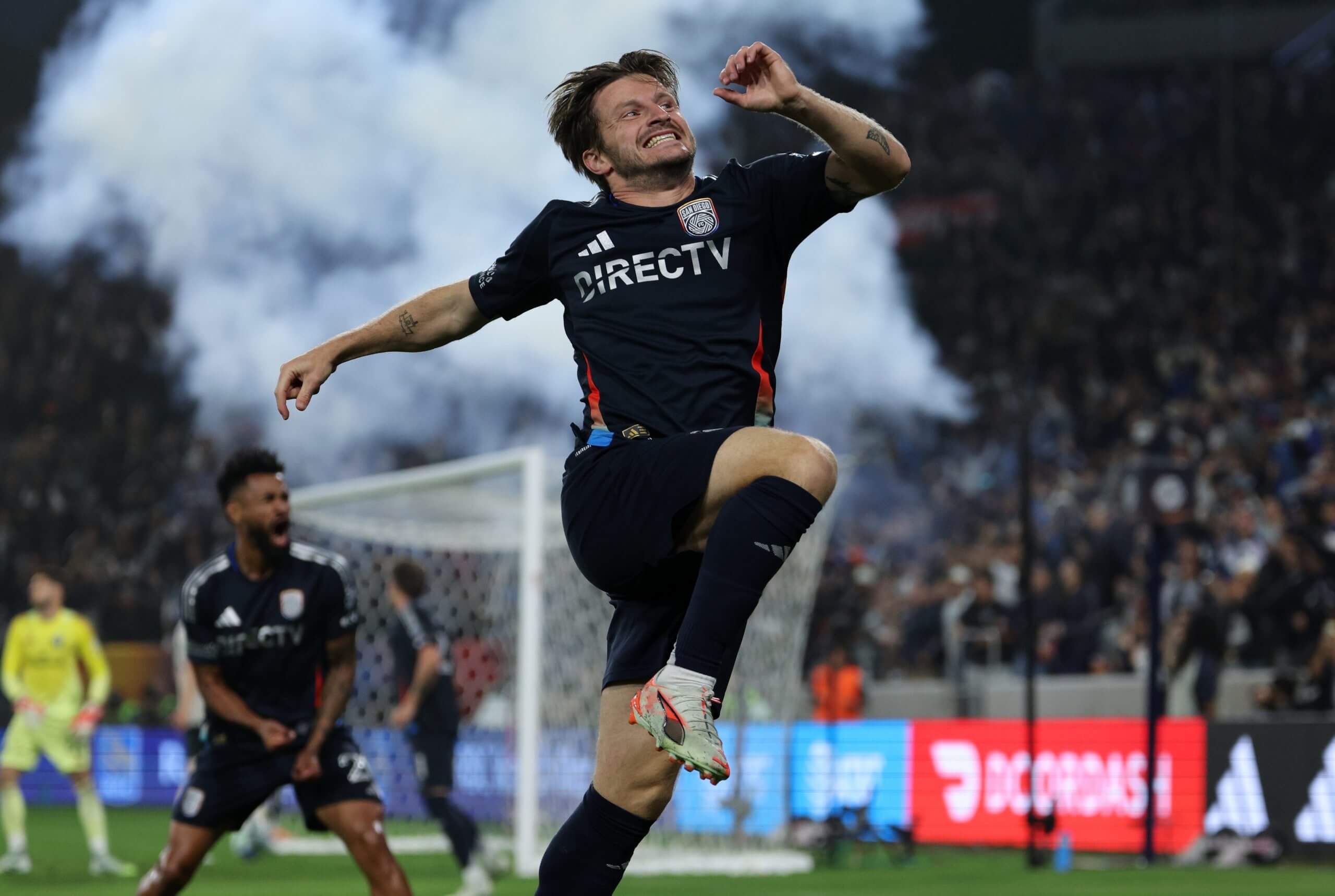
Anders Dreyer has been the driving force behind San Diego FC’s record-setting expansion season (Kevork Djansezian/Getty Images)
More importantly, and perhaps more surprisingly, San Diego topped the Western Conference and entered the 2025 MLS playoffs as its No. 1 seed, with an expansion-record 63 points and 19 wins in the regular season. After defeating Portland in the best-of-three first-round series, San Diego will host Minnesota United on Monday in the single-elimination conference semifinals, where the winner will book a date with the Vancouver Whitecaps.
Head coach Mikey Varas, 42 and a former U-20 U.S. national team head coach and an assistant under Gregg Berhalter with the senior side, was a surprise hire when San Diego came into the league. Coaches from around the world see MLS as a league with high-end facilities and growing interest. San Diego could’ve lured a big name to the West Coast, but instead, the ownership group and team CEO Tom Penn went in another direction.
“The trust was there. (Varas and Heaps) have full control. They run it,” said Mansour. “The manager runs the team because that’s what we believe. My style of management and my son’s style of management have always been: delegate and let the person responsible (work). Delegate and see the results, and if they perform, they perform. If they don’t perform, they’re the wrong person.”
So far, they’ve performed. Heaps, 34, became the youngest sporting director in MLS. He was previously the head of analysis and insights at AS Monaco and spent six years at U.S. Soccer in the federation’s analytics department. He also has a touchpoint to San Diego ownership’s other big soccer entity.
Before joining San Diego, Heaps was the Group Head of Recruitment and Insights at Right to Dream, a global football system with academies and professional clubs in Ghana, Denmark, and Egypt. The Mansour family acquired Right to Dream and established San Diego FC as its U.S. club. Heaps has brought in a diverse collection of players who have made San Diego a well-rounded MLS debutant.
While San Diego, the club, has garnered all the attention in 2025, with purposeful attacking football and disciplined tactics, Right to Dream stands to be where the organization’s success will lie.
“I was bedridden for three years,” Mansour said, referencing his earlier accident. “At that time, all I did was dream because I was alone. I was a kid, a sportsman. How can I improve my life? Will I be able to stand again? Will I be able to walk again? That’s why (Right to Dream) struck a chord because these young kids today, they have a right to dream and they have a right to grow, and they have a right to improve their lives. Look where I am today.”
A handful of Right to Dream graduates play in the Premier League, including Tottenham and Ghana international midfielder Mohammed Kudus.
“It’s not a pay-to-play system,” Mansour insisted. “We have 150 professional players who have graduated from Right to Dream and who are playing in soccer clubs around the world. That pipeline coming out today is probably going to be better than those in the past because we’ve learned how to improve it and how to do it better.”
“This is what made Barcelona great: the academy,” Mansour continued. “My dream is to have homegrown players from the U.S. who will be world-class players. And it will happen.”
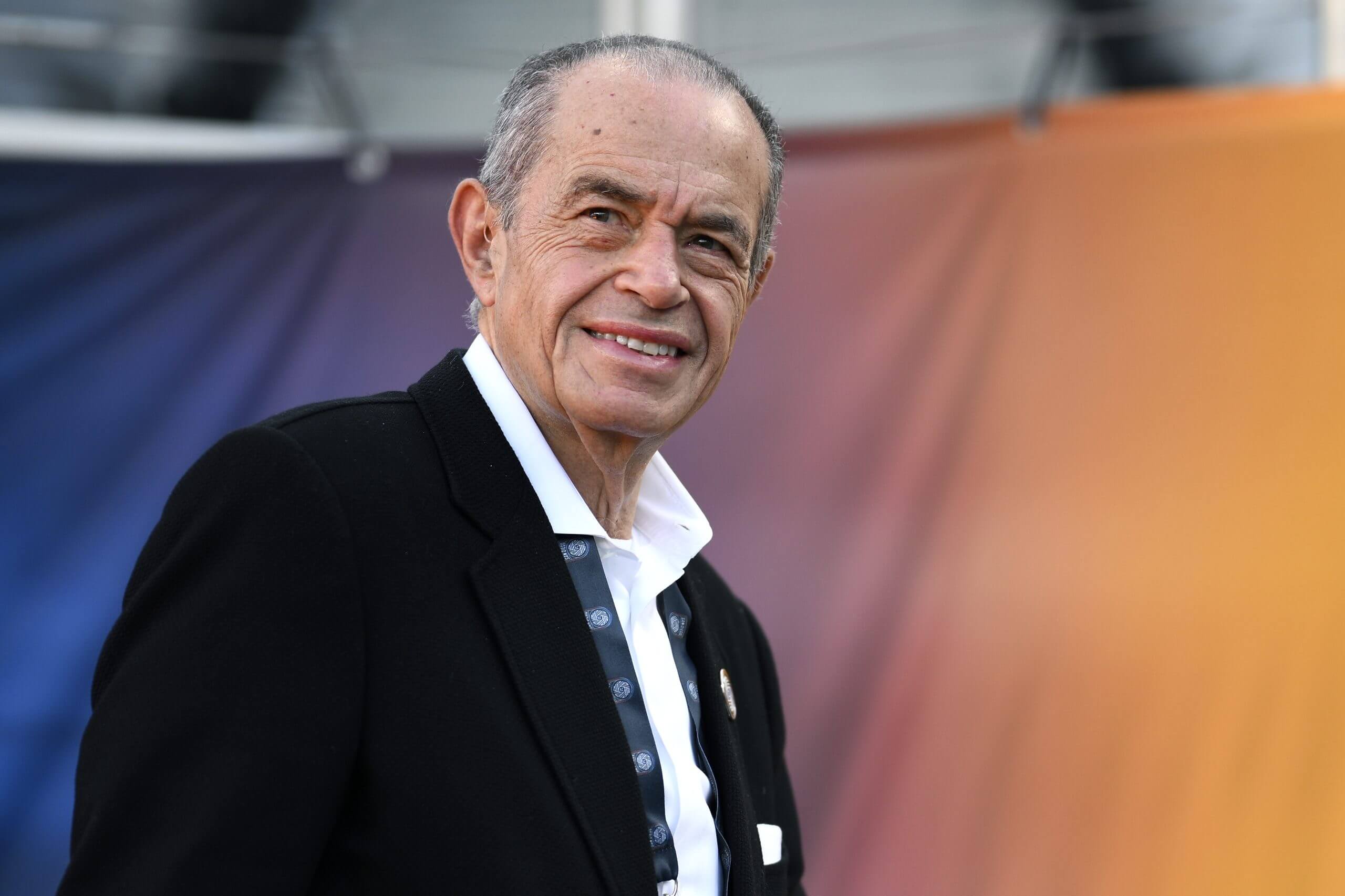
Mansour at Snapdragon Stadium during a September MLS match (Orlando Ramirez / Getty Images)
Mansour may have a focus on the grassroots, but there are major happenings on the other end of the spectrum as well. He was at the recent MLS Board of Governors meeting that resulted in a vote to flip the league’s competition calendar. Beginning in 2027, MLS’s 34-game regular season and postseason will be a summer-to-spring schedule, much like the top leagues from around the world.
There are several ways that MLS can benefit from that decision. The league will no longer compete for viewers with the NFL during its business end of the season, for example. The MLS product, though, which must continue to improve, could stand to benefit the most. By aligning fully with the global transfer market windows, MLS clubs will be in a better position to recruit international talent to the U.S. And beginning in 2026, MLS will no longer be behind a separate paywall on Apple TV.
“I think the takeaway with the (new) timing of the league, that it equates with the FIFA (calendar), is a good move,” Mansour said. “It’ll show what MLS really is to the world. And people can watch it more and get more excited about it. I’m a firm believer in MLS because I’m a firm believer first in American athleticism and American sports. I’ve lived here for maybe 10 years of my life when I was a college undergrad and a grad student.
“MLS and I can see also that it’s right at the tip of the iceberg for us,” he continued. “That’s why we made a sizable investment.” Mansour made a point to credit MLS commissioner Don Garber with this important step.
“MLS last year had 12.1 million attendees,” he said. “That’s second only to the Premier League and above the Bundesliga. When I saw that figure, I was taken aback. I was astonished. Why? Because, of course, there’s a population of 350 million people in the U.S. and soccer will pick up. The World Cup is coming. Fans will be more interested in soccer.”
San Diego’s unprecedented run as an expansion team is a story of triumph. The club doesn’t need to win the MLS Cup final this December — only one MLS expansion club has ever won MLS Cup, the 1998 Chicago Fire — to validate its foundational plan. Instead, San Diego will be judged by what happens in year two, year three and so on. Consistency and a winning culture are the truest signs of success in professional sports.
And on the subject of attracting global stars to San Diego, which would be a departure from the inaugural roster, Mansour left the door open.
“This is a thing that’s in progress,” he said. “We’re always looking to improve. We will do whatever it takes as owners to support the San Diego Football Club. The first year was an amazing year. This is the year we’re talking about. But the coming years, I think, are going to be more challenging.”