
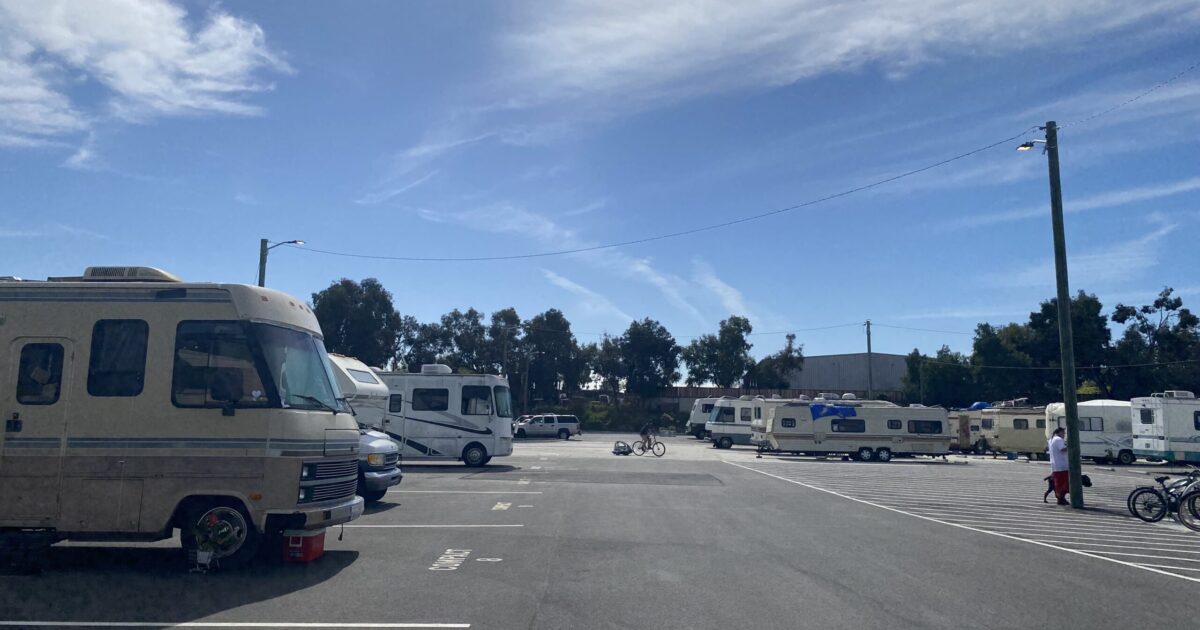
In a short time, one homeless services provider operating a safe parking site has connected dozens of unhoused people to housing.
In the eight months since the Berryessa safe parking site opened, nonprofit WeHOPE has moved 24 people into permanent housing and 11 people into temporary housing. That’s compared to the 15 residents moved from the Santa Teresa VTA light rail station safe parking site into permanent housing from July 2023 to June 2025. The latter location is run by nonprofit LifeMoves. Both locations were designed to accommodate residents living in their RVs, as the city bans unhoused RV dwellers from the streets.
WeHOPE Chief Operating Officer Alicia Garcia said the “secret sauce” lies in its case management and hiring people who reflect values of compassion and service.
“We put a lot of time into training our case managers, and our case managers engaging with our clients,” Garcia told San José Spotlight.
WeHOPE trains case managers for one week, which covers note taking, dealing with implicit bias, problem solving, resource building, navigating clients with substance use, housing placements and more. After that, new case managers will shadow experienced workers until they are ready to go solo.
Garcia said they often like to promote from within when someone demonstrates strong skills. She cites an example of a security guard promoted to case manager at the Berryessa site.
“He was just so good, the way he engaged, his character, just so much about him,” Garcia said. “This is a normal thing with us.”
Santa Teresa was San Jose’s first safe parking site, which opened July 2023 and can accommodate 42 RV residents. Berryessa is the second. Together, the city has a total of 128 spaces, but there are nearly 900 lived-in RVs and cars. So far there are no concrete plans to open more as the city has significantly scaled up its temporary housing sites this year, nearly tripling the number of spaces available through tiny homes, motels converted to shelter and more.
The Berryessa safe parking site, which opened in March, provides meals, laundry access and security. San Jose has capped the number of case managers to three. There is also one housing specialist.
It was a number that Garcia was initially uncomfortable with, given the 1.5 case managers they had at a East Palo Alto safe parking site, which had 20 spaces. But her concerns eased when she saw her staff managing the site efficiently. The East Palo Alto site no longer exists after WeHOPE helped place all 61 households into housing over a two-year period.
“I’ve been really happy with WeHOPE,” Councilmember David Cohen, whose District 4 includes the site, told San José Spotlight.
Cohen said that as a result of WeHOPE being able to move people quickly through the safe parking site, it’s been able to service more RVs in the area.
“The community doesn’t even know it’s there, which is a testament to how well it’s operating and how well it was designed,” Cohen said. “We haven’t heard the dissatisfaction at that site like we have from some of the other sites. But that’s just different clientele, different locations, different circumstances.”
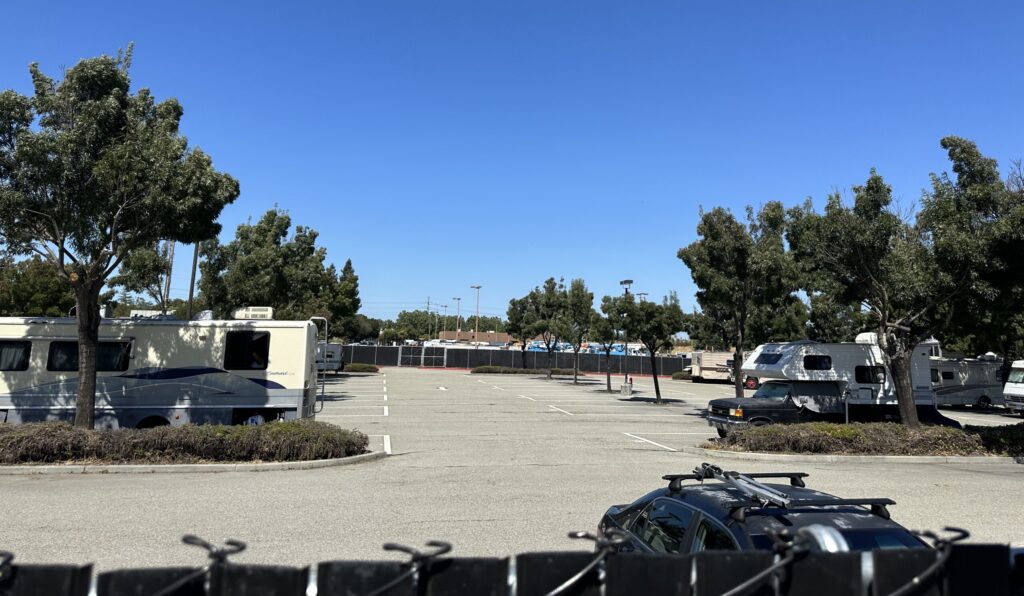 The first safe parking site is located at the Santa Teresa VTA light rail station in San Jose. File photo.
Heidi White, a former resident at the Santa Teresa safe parking site, chose to leave the site in the summer. She previously told San José Spotlight she felt hassled by workers after advocating for herself and other residents. She pushed for longer visitor hours, bottled water when the water source at the site wasn’t working for three weeks, and for LifeMoves to pay to fix her septic tank, which she said was broken by the contractor who flushed it.
LifeMoves did not respond to multiple requests for an update on the site status, including how many more residents have been moved into temporary or permanent housing since this news outlet reported on story in June.
LiveMoves spokesperson Maria Prato told this news outlet in June the nonprofit was in the process of hiring a housing specialist.
She previously said that systemic challenges such as limited affordable housing stock, increased cost of living and stagnant wages impacted residents’ ability to exit into permanent housing.
“While we work closely with clients to prepare them for stable housing, these external factors often create barriers that are beyond the scope of the program,” Prato previously said.
Prato also previously said case managers engaged in continuous training and learned nonviolent crisis interventions, motivational strategies, self care and more.
Carol Roberts, an RV resident at the Berryessa safe parking site, said WeHOPE staff have been responsive to addressing concerns she’s brought up. She sees her case manager every week and they are working toward finding a permanent housing placement– though it’s been challenging due to her limited income.
“We’ve been trying, but I can’t find any place that we really can afford,” Roberts told San Jose Spotlight. “But the staff have been very helpful.”
Contact Joyce Chu at [email protected] or @joyce_speaks on X.