
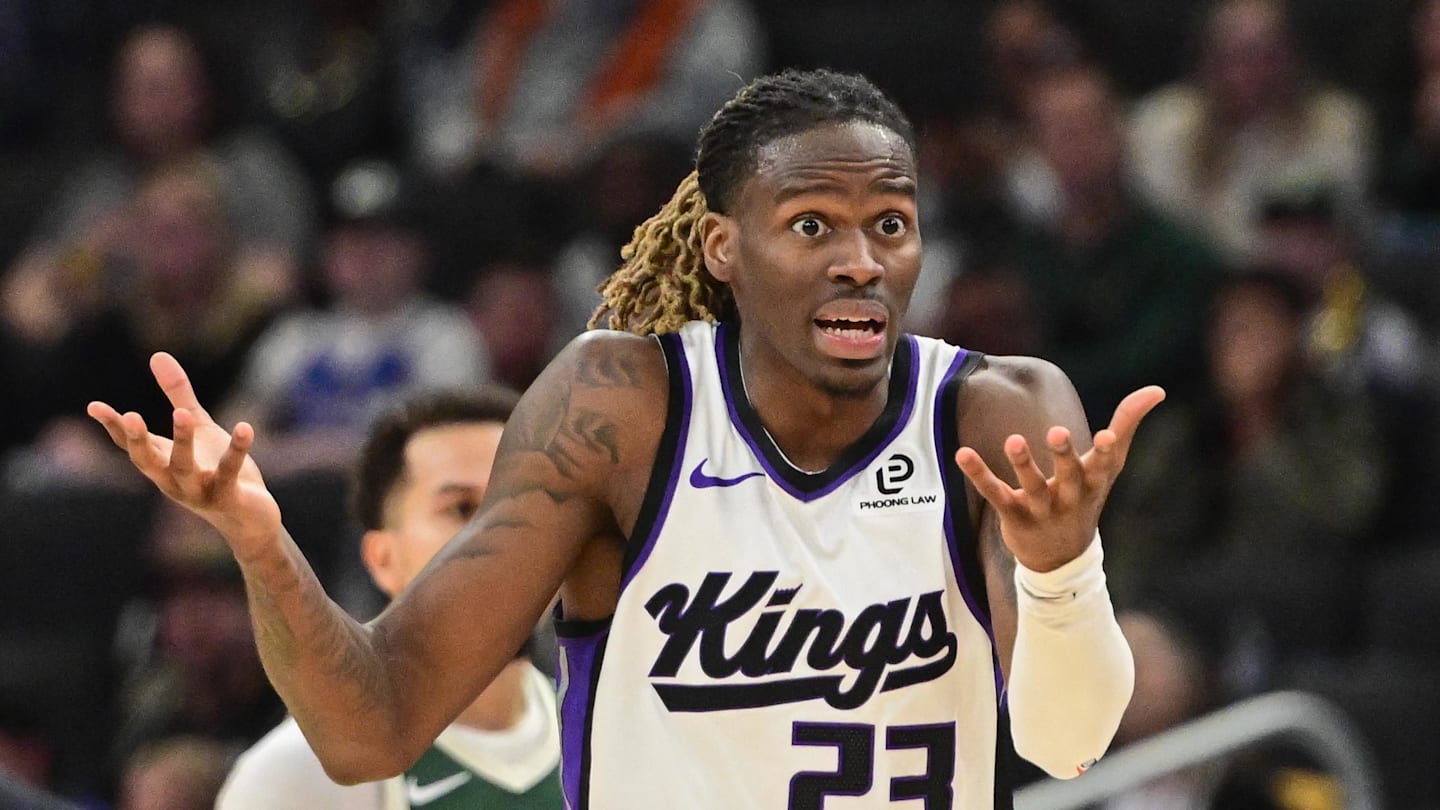
Despite a good win over the Denver Nuggets on Saturday, it is widely known that Sacramento’s roster simply cannot stay as is for much longer. Now, about 25% of the way through the season, potential changes are starting to crystallize.
As NBA insider Jake Fischer reported on Sunday, more than half the league has checked on Keon Ellis’s availability.
This makes a lot of sense. We do not need to relitigate the kind of player Ellis has become since entering the league as an undrafted free agent. Simply put, it is very easy to find Keon Ellis propaganda nowadays.
Keon Ellis – defensive playmaking 😈 pic.twitter.com/QNtaamW1OC
— Brett Usher (@UsherNBA) February 11, 2025
Naturally, the Kings, in dire need of shooting and perimeter defense, do not play him.
Despite coach Doug Christie repeatedly emphasizing that the Kings’ identity will be built on defense, he cites a logjam to rationalize not playing Ellis. So, it appears there is leaguewide interest in Ellis, and Christie does not seem too interested in playing him over the veterans.
There are three routes potential Ellis trades could go should Sacramento’s new regime look to cash in on one of their inherited positive value assets, each with some merit.
1. Draft capital
Fischer reports that league executives believe Ellis could fetch Sacramento a first-round pick. Not all firsts are created equal – protections and swap rights make it difficult to predict the caliber of first Sacramento could get for Ellis.
Regardless, the general idea of a 1RP being on the table will appeal to a new regime that reportedly acknowledges the need for a multi-year rebuild. Younger, cost-controlled talent provides the most flexibility – something at a premium as teams navigate Apron restrictions.
While exciting, this does not feel realistic. Ellis’s contract situation limits Sacramento’s leverage. Acquiring teams will have four (4) days before Ellis is extension eligible. They will be negotiating on the fly while seeing how he fits their system, potentially losing him for nothing if he is not extended before hitting UFA. Teams will assuredly bake this into their willingness to offer valuable draft capital for what may be a short-term rental.
Compensation for tertiary players like Ellis has recently centered around multiple second-round picks. The 2024 Dallas/Detroit Quentin Grimes/Tim Hardaway Jr. (expiring contract) and three 2RPs feels like a semi-realistic return. However, Grimes had a full year remaining on his first contract before hitting restricted free agency.
Rui Hachimura (Jan. ‘23) was also an impending RFA and was traded for 2RPs. Ellis will hit unrestricted free agency just months after this trade – giving the acquiring team considerably less control if they do not extend him and, in turn, giving Ellis considerable leverage in extension negotiations.
A more similar contract situation would be Xavier Tillman (impending UFA), who was traded from Memphis to Boston for two 2RPs and Lamar Stevens. So, a 1RP might be wishful thinking. I would be impressed if Scott Perry made an Ellis trade that returns a first.
2. Talent
Trying to go the Caruso-for-Giddey route is probably the most difficult to execute given Ellis’s minuscule salary ($2.3M). We have assessed potential trade targets before, and most still make some sense.
Swapping Ellis for another young player on a rookie-scale contract could serve as another way to obtain first-round caliber talent if Scott Perry cannot manage to find a 1RP on the market.

Oct 24, 2025; Sacramento, California, USA; Sacramento Kings guard Keon Ellis (23) between plays against the Utah Jazz during the first quarter at Golden 1 Center. | Kelley L Cox-Imagn Images
If Sacramento chooses this route, they need to consider fit and their ability to keep the newly acquired player in Sacramento. For example, Tari Eason brings a lot of the traits the organization allegedly wants to build. It could be very easy to fall in love with that idea.
Given how much leverage Sacramento has willingly (possibly knowingly?) ceded throughout the Ellis situation, good process must be prioritized moving forward.
Sacramento would need to spend far more time considering Eason’s upcoming RFA market, assessing whether he would want to be in Sacramento (BJ Armstrong’s Wasserman ties should help), what they are comfortable spending should a team choose to push them and give Eason an offer sheet, and what the downstream effect of a sizable RFA contract means for the rest of their roster.
3. Sweetener for Salary Relief
Fischer’s report mentions this as a route other teams will absolutely explore. As boring as this would be for Kings fans, it is also probably the most productive framework for both sides of a potential trade. The individual talent in Sacramento is undeniable, but the perception of key players’ contract values is not good. It might take attaching an asset to entice a team to take on the multiple years of Domantas Sabonis or the massive 2026-27 player option held by Zach LaVine.
The Michael Porter Jr./Cam Johnson trade last summer is a good example here. Denver got off Porter Jr.’s two remaining years at 25% of the cap, sending an unprotected 2032 first to Brooklyn with him for Johnson’s cheaper contract (just ~13% of the cap, also for 2 seasons). So, the first was a way to bridge that 12% difference while getting a similar enough player to fit Denver’s system and keep them competitive.
What kind of gap in cap percentage or years of control Ellis approximates will largely be in the eye of the beholder, but teams seem to think highly of him (go figure!), so it could come close to that sort of value trade-off.
Opportunistic teams could certainly believe their system can integrate one of Sacramento’s veterans, netting them two contributors for matching salary and not much else. Ellis being part of a larger deal like this is (IMO) the most likely scenario as Sacramento reworks their roster.
This is a long-winded way of saying that, although trading Ellis would sting, there are multiple ways that the move can help Sacramento in the long run. If Ellis keeps collecting DNP-CDs as the Kings toil at the bottom of the standings, they might as well get some value for one of their positive value assets to help Scott Perry begin rebuilding.
Recommended Articles