
Things were looking bleak for Oakland last month after a Kentucky bankruptcy judge ruled that Oakland interfered with a coal developer’s efforts to build an export terminal, forcing them into insolvency.
The judgment put Oakland on the hook for potentially hundreds of millions of dollars in damages – money the cash-strapped city would have virtually no way of covering without asking voters to approve new bond measures. It also handed a major victory to the coal company, Insight Terminal Solutions. On Monday, the New York Times published a gloomy article speculating that Oakland was headed toward bankruptcy.
But the city won a reprieve on Friday after a federal district judge who reviewed the case found that the bankruptcy court overstepped its authority.
In a two-page order, Judge Benjamin Beaton ruled that the bankruptcy court lacked authority to enter a final judgment on core disputes in the case. He also found that the judgment only dealt with liability, not damages, which means that it wasn’t really a “final” judgment.
Beaton vacated the judgment, which gives the city a second chance to argue its case against the claims that it interfered with the coal terminal and that it owes money to the developers. He directed Oakland to submit a new motion that outlines objections to the bankruptcy court’s summary judgment ruling.
“This Court will consider the substance of Oakland’s disagreements with and ITS’ defenses of that decision during the next phase of this litigation,” Beaton wrote in his ruling.
Andrew Stosberg, an attorney for Insight Terminal Solutions, told The Oaklandside that Beaton merely vacated the “final” judgment, but did not vacate or alter the bankruptcy judge’s findings of fact and conclusions of law.
“In fact, days prior to the entry of Judge Beaton’s Order, my client actually presented a simple proposed stipulation to the City vacating the judgment,” Stosberg wrote in an email. “ITS believed that was an appropriate step because the damages component of this case is unresolved. However, the City declined to enter into the stipulation for reasons unclear to ITS.”
A spokesperson for the City Attorney’s Offices noted that the city’s legal challenges to the bankruptcy court’s summary judgment order will be dealt with in the federal district court over the next two months.
“The City believes the bankruptcy court’s rulings on summary judgment was wrong in numerous respects,” the spokesperson told The Oaklandside in an email.
Anti-coal activists in Oakland are happy with this news. In a post announcing the ruling, the organization No Coal in Oakland claimed that Insight Terminal Solutions had “forum-shopped” for a bankruptcy judge “who had no business handling the case in the first place.”
“We are glad to see that a higher-ranking judge has rejected the judgment entered by the bankruptcy judge,” the group wrote. “We hope this is a sign that the City will get a fairer shake as the case moves along.”
Beaton is a curious savior for Oakland. He has participated in Federalist Society event and was appointed to the bench by Donald Trump. Early in his career, he clerked for the liberal Supreme Court Justice Ruth Bader Ginsburg.
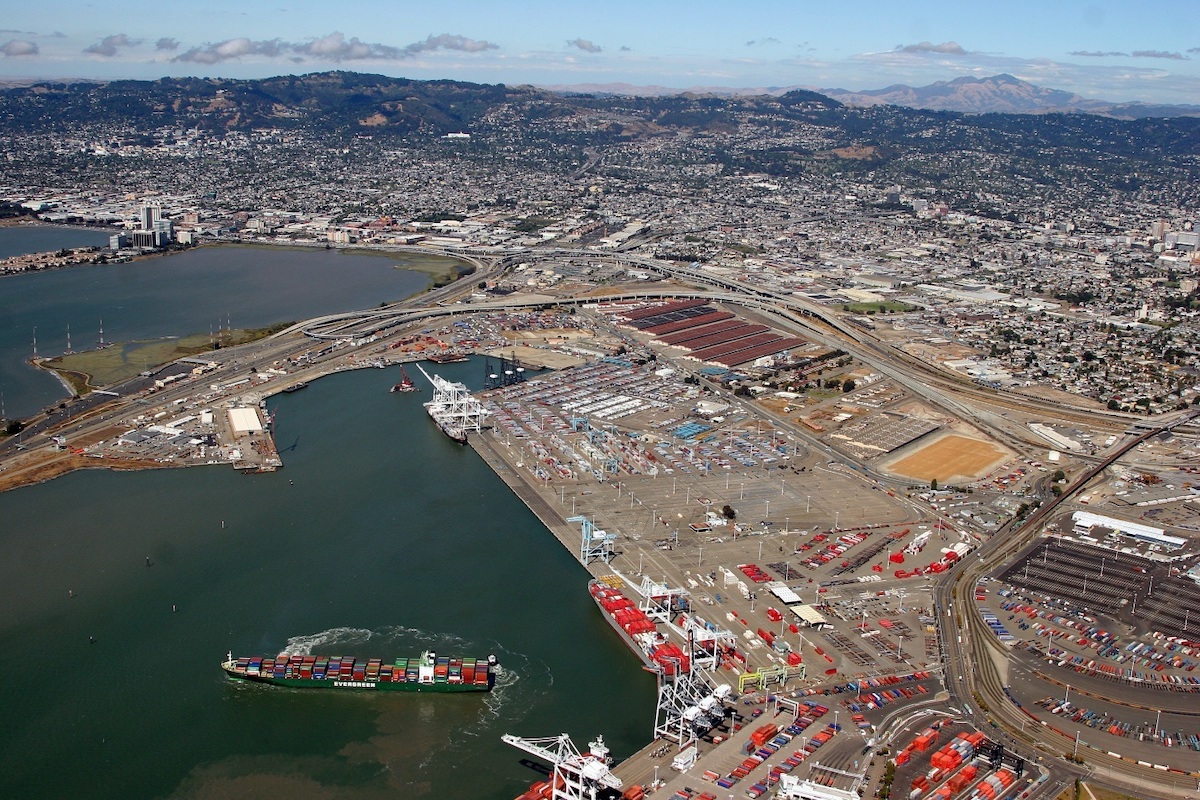
The legal dispute dates back nearly a decade, when Insight Terminal Solutions and the developer Oakland Bulk and Oversight Terminal conceived a plan to export coal through a marine terminal stationed at Oakland’s waterfront. City officials fought this proposal and engaged in a legal battle that took the parties through state and federal courts.
Insight Terminal Solutions ended up in bankruptcy court after it was unable to pay back loans. One of its creditors, Autumn Wind Lending, was to take control of Insight Terminal Solutions’ lease to property on the former Army Base, which Oakland objected to in court.
Oakland lost its other legal battle with developer Phil Tagami, who leads OBOT. A state court granted OBOT the right to keep and extend its lease to the city-owned land to restart the terminal project. Next Tuesday, the City Council will approve a partial settlement to pay OBOT $700,000 in attorney’s fees and costs. The city has also agreed to perform “certain administrative items” relating to the construction and development of the terminal.
As a result, Tagami gets to keep and extend its lease on the city-owned land to restart the terminal project.
“*” indicates required fields