

The city has calculated what President Donald Trump’s so-called Big Beautiful Bill will cost San Francisco. And it’s not pretty.
According to a report put together by the Department of Public Health and the Human Services Agency, the city will lose up to $315 million annually by fiscal year 2027 both from the Trump administration making direct cuts to federal programs that return tax revenue to the states, and from new federal rules that are intended to make it harder for low-income individuals to access welfare programs. That loss will go up to $400 million by 2038.
Between 25,400 to 50,500 San Franciscans are projected to lose Medi-Cal coverage and almost 20,000 could lose CalFresh benefits by the end of 2027, according to the report. That would result in fiscal losses for both the Department of Public Health and the Human Services Agency, which connects low-income residents to public services like healthcare, jobs, and food programs.
“These changes at the state and federal level represent a real threat to San Francisco — to our residents and to our budget,” Mayor Daniel Lurie said in a statement. “Over the next several months, I will work with the Board of Supervisors, community leaders, and residents across the city to ensure we take care of San Franciscans and deliver another responsible budget that supports our residents and strengthens our recovery.”
The Department of Public Health expects to lose $90 million to $180 million a year starting in fiscal year 2027- 28 due to more people losing eligibility and cuts to Medi-Cal payments and safety-net funding. The Human Services Agency would lose $26 million a year in federal funding since the federal share of CalFresh administrative costs will be reduced from 50 percent to 25 percent.
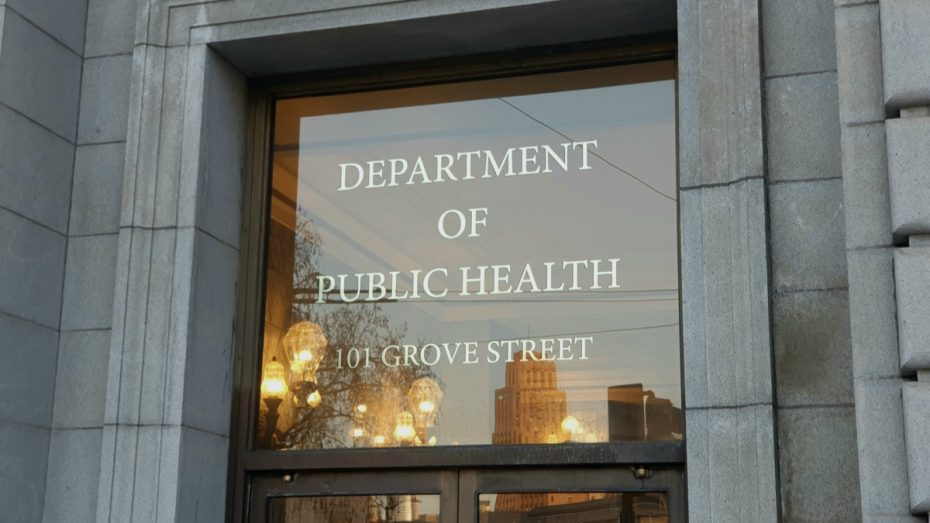 The Department of Public Health has its headquarters at 101 Grove St. Photo by David Mamaril Horowitz.
On July 4, 2025, Trump signed into law his One Big Beautiful Bill Act of 2025, a sweeping, 870-page law that makes significant tax changes and enacts long-term cuts to programs such as Medicaid, which funds Medi-Cal, and SNAP, which funds CalFresh. It also slashed aid to students.
Currently, almost 216,000 San Franciscans rely on Medi-Cal for their health insurance through the Human Services Agency, according to the report. The Trump bill’s cuts to the program would decrease enrollment by 12 to 23 percent.
Undocumented immigrants who are 19 years old and above will also no longer be able to enroll in full scope of Medi-Cal starting Jan. 1, 2026 because of the bill. Undocumented immigrants who have enrolled may lose coverage permanently if they missed the required renewal steps.
Starting January 2027, Medi-Cal will start checking people’s eligibility every six months instead of just once a year, which means more paperwork and more chances to lose coverage if forms aren’t submitted on time.
Federal changes will also make it harder to access CalFresh, which is California’s name for the federal food stamp program called “Supplemental Nutrition Assistance Program,” or SNAP.
For the first time in 20 years, many adults will have to meet certain work requirements in California to qualify for CalFresh. San Francisco’s DPH expects that about 21,000 people could lose access if they fail to turn in the right paperwork proving they are exempt.
San Francisco has been preparing for such impacts. On July 15, the city passed Lurie’s budget proposal, which includes $400 million in reserve in anticipation of federal cuts. Lurie’s office made the choice to shore up reserves despite an $800 million deficit in the city’s $15.9 billion budget.
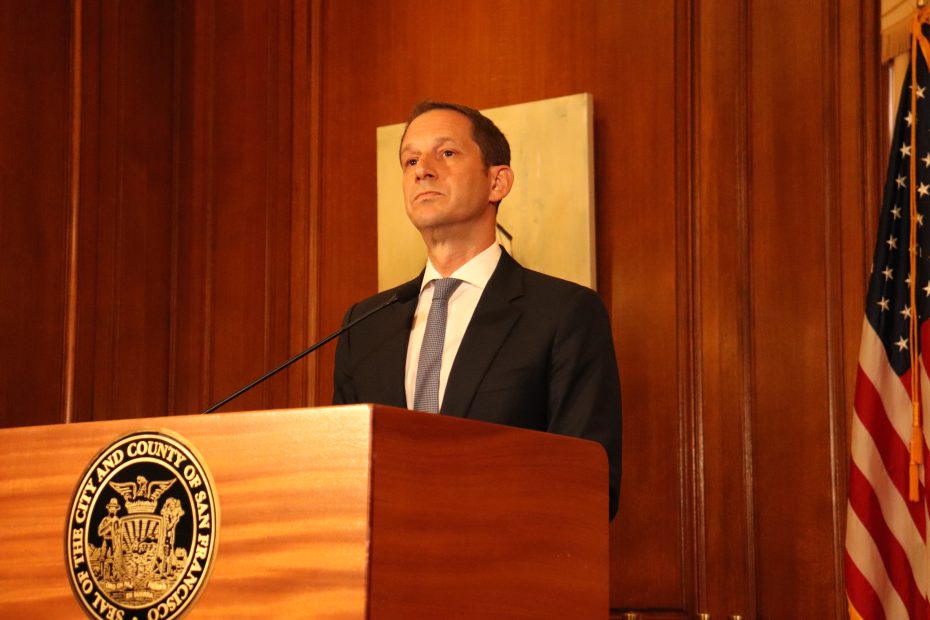 Mayor Daniel Lurie addresses the press in Room 200, following the release of his budget proposal on May 30. Photo taken by Marina Newman.
Because the projected city budget losses come almost entirely due to stricter rules for Medi-Cal and CalFresh, and because work eligibility verification is handled by the state, spending more to help residents keep their benefits is one way to try and head off the budgetary disaster.
Helping residents to stay enrolled despite the more onerous federal requirements could look like improving reporting systems, adding staff to help with paperwork, and expanding workforce services to help clients meet work requirements (like helping someone who is caring for an elderly relative get registered as an in-home caregiver). This could cost tens of millions of dollars annually — but pay off in terms of keeping federal funds flowing locally.
The city’s top priority is to keep people enrolled in Medi-Cal. For those at risk of losing it, the city is also looking to expand Healthy SF, a program at the public health department that provides health care services for those who are ineligible for Medi-Cal and Medicare. As of September 2025, about 2,900 individuals are enrolled in Healthy SF, according to the report.
The Department of Public Health also aims to boost Medi-Cal revenue by $550 million over two years through better documentation and billing. The Human Services Agency will work to reduce CalFresh payment errors to avoid federal penalties.
“Despite these actions, the City will face difficult financial decisions, and we will need to prioritize programs, services, and staffing,” the report read. “City and County departments will closely monitor any actions taken by the State including actions taken by State agencies such as CA Health and Human Services.”