
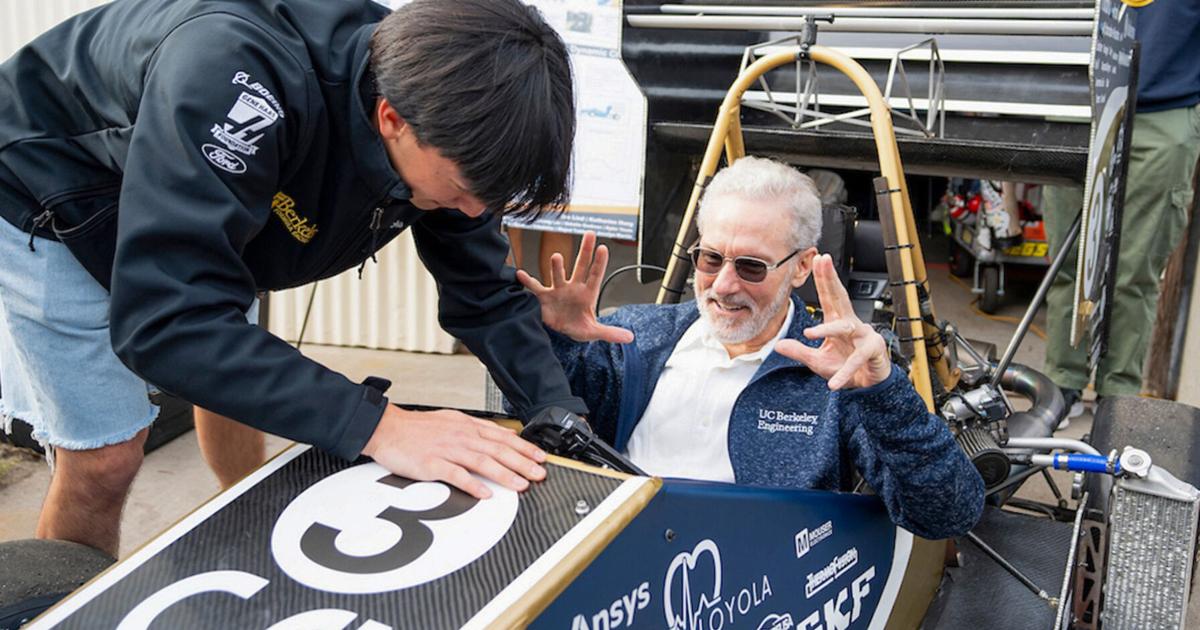
UC Berkeley’s Richmond Field Station, or RFS, launched its first large-scale student fabrication facility earlier this month that is meant to house engineering organizations such asBerkeley Formula Racing, Space Technologies and Rocketry and Formula Electric at Berkeley.
However, student engineering clubs claim the new space is “in no way an upgrade,” according to Space Enterprise at Berkeley president Rebeca Mendoza.
The Student Organization Applied Research Labs, or SOAR, consolidates workplaces for registered student organizations, or RSOs, that were previously at the RFS into a central upgraded facility. The upgraded facility comes with new fabrication equipment as well as expanded safety protocols and greater training requirements.
The RFS hosts select engineering registered student organizations, RSOs, workspaces on site, including CalSol, Space Technologies and Rocketry, and Space Enterprise at Berkeley. These clubs have held access to RFS workspaces, where students are able to access the equipment and staff support necessary to build and test prototypes for competitions in rocketry, aerocraft design and formula racing.
The College of Engineering began plans for a new facility with expanded safety protocols and greater supervision over two years ago in response to safety violations including chemical, fabrication and electrical hazards, as well as a lack of oversight over student operations at the RFS.The college invested more than $3 million dollars into the project.
However, student engineering clubs argue that the new facilities operate under reduced operational hours, limited staffing and increased supervision that is limiting to their club activities.
“These were not isolated incidents but systemic issues that required immediate action to protect student safety and the university’s ability to continue hosting RSOs at RFS,” said an email response from the RFS to the RSOs.
According to Mendoza, student concerns stem primarily from restricted access to the new facilities and limited staffing. Under the new policies, access to the SOAR lab facilities will be from 8:30 a.m. to 10 p.m., posing a challenge to students who typically work late at night after work and other class responsibilities.
Mendoza said members of her club — Space Enterprise at Berkeley, or SEB — are skipping class to complete their work during these hours.
She added that “anything beyond light assembly work” must now be supervised. The two current SOAR labs staff members operate on a more limited schedule, which makes productive work on their projects even more limited, preventing SEB from“making progress at the same pace that (they) normally do,” according to Mendoza.
Some fabrication tools have remained unavailable as construction and installation at the facility continues, according to Mendoza.
Student representatives of these clubs wrote and signed a petition to the College of Engineering expressing frustration at these changes and asking for greater transparency. The petition has over 100 signatures from members of engineering clubs at the RFS, according to Mendoza.
In response to the petition, the College of Engineering has held town hall meetings with student representatives, asked RSOs to designate communication leads and proposed the creation of a student advisory board.
To address the staffing concerns, the RFS may allow students to play a role in the hiring process of an additional staff supervisor, according to Joey Gottbrath, who oversees the fabrication and equipment facilities at the RFS.
In its email response to the student petition, campus cited security concerns at the RFS as another reason for stricter measures and for denying after-hour access. Between December 2024 and January 2025, a collective $32,000 of equipment was stolen from the RFS.
“We didn’t really have a choice here,” said Mark Asta, interim Dean of the College of Engineering. “Either do what we’ve done (implementing security measures), or not support these activities at all and let them go find other places to do it, which we didn’t think was in the best interest of the students.”
Mendoza said students are concerned their suggestions have not been taken into serious consideration.
As of now, no exceptions have been made to allow around the clock access during weeks leading up to competitions or for teams that have been following all rules and policies, according to Mendoza.
“Some students may feel they’re not going to have enough access right off the bat. This is a dynamic process, and we’re going to make it work, so there will be good feedback back and forth, and I’m sure we’re going to figure it out,” Asta said.